
博物馆级艺术微喷或帆布版画,制作高效,并提供多种饰面选择。 ( 订购纯手工绘制画作 切换至数字图像销售渠道)





























您可以从与原作比例一致的预设尺寸中进行选择。

请输入您所需的宽度和高度,以适配您的画框或墙面。由于印刷品只能进行裁剪,无法超出原图尺寸,因此若比例不一致,画面的一部分将会被裁切。在正式印刷之前,我们会为您发送一份数字效果图供您确认。本页面显示的图片并非最终裁剪后的效果——只有效果图才能展示真实的裁剪情况。
L'ASIE
复刻品尺寸
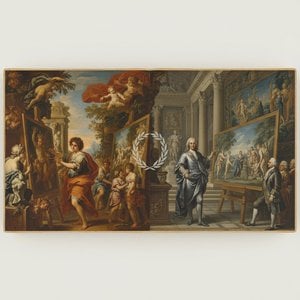
Michel Dorigny's "L’Asie," painted in 1653, is more than just a depiction of an allegorical scene; it’s a meticulously crafted meditation on prosperity, dominion, and the quiet grandeur characteristic of the French Baroque. Born in Saint-Quentin, Dorigny was deeply influenced by the humanist scholarship prevalent at the Académie de peinture et de sculpture, grounding his artistic practice in classical principles while embracing the dynamism of the era. This painting, now housed within the Louvre Museum, offers a rare glimpse into a world where idealized beauty and symbolic weight converge to create an enduring image of power and grace.
The composition immediately draws the eye to a reclining female figure, embodying Asia itself. Her posture is one of serene authority, her gaze direct yet contemplative. Above her, an angel, rendered with delicate precision, extends branches laden with laurel leaves – a potent symbol of victory, honor, and divine recognition. The scene unfolds within a richly ornamented interior, suggesting a royal court or a grand palace, further reinforcing the theme of imperial power. Dorigny’s skill lies not merely in replicating reality but in imbuing it with layers of meaning through carefully chosen elements.
Dorigny's masterful technique is immediately apparent in the painting’s luminous quality and subtle gradations of tone. He employs a restrained palette dominated by muted pinks, blues, creams, and yellows – colors that evoke a sense of age and tranquility, as if reflecting upon centuries of history. The brushstrokes are deliberate yet refined, creating a smooth surface punctuated by delicate highlights that capture the play of light on fabric and skin. The artist’s use of layering—a hallmark of Baroque painting—builds depth and richness, allowing the eye to wander across the intricate details of the drapery and the angel's wings.
Notably, Dorigny demonstrates a keen understanding of perspective, though it is somewhat flattened compared to later Renaissance approaches. This deliberate choice contributes to the overall atmosphere of serenity, avoiding jarring contrasts and maintaining a sense of harmonious balance. The composition’s verticality emphasizes the figure’s centrality, while the surrounding elements serve to amplify her importance within the scene.
“L’Asie” is deeply rooted in the symbolic language of its time. The laurel branches, a traditional emblem of victory and honor, suggest Asia's dominion and prosperity. The crown adorning the figure further reinforces this notion of imperial authority, while the pearls scattered around her symbolize wealth, purity, and divine favor. These symbols, combined with the allegorical representation of the continent itself, create a complex tapestry of meaning that speaks to the political and cultural climate of 17th-century France.
Painted during the reign of Louis XIV, “L’Asie” reflects the grandeur and ambition of the French monarchy. The Baroque style, with its emphasis on drama, emotion, and opulent decoration, was favored by the court as a means of projecting power and prestige. Dorigny's work exemplifies this trend, offering a visually stunning representation of an idealized vision of Asia—a testament to both artistic skill and historical context.
“L’Asie” endures not merely as a beautiful painting but as a poignant meditation on power, prosperity, and the enduring allure of classical ideals. Dorigny's meticulous attention to detail, combined with his masterful use of color and symbolism, creates an image that is both captivating and deeply resonant. It invites viewers to contemplate the complexities of human ambition and the timeless beauty of the Baroque aesthetic. Reproductions of this remarkable work offer a chance to bring this serene vision into any space, evoking a sense of quiet grandeur and historical significance.
"L'ASIE" 与 米歇尔·多里尼 的其他作品一样,都体现了 Baroque 风格以及其一贯的主题:classical ideals, serene landscapes, french baroque, courtly scenes, religious allegory, symbolic meaning, dorigny’s signature detail”, “refined style”。
米歇尔·多里尼 的《L'ASIE》 的原作收藏于 卢浮宫, Paris, France。通过复制品,您也可以在居家环境中欣赏这部杰作。

在法国巴洛克时代那宏大且往往波澜壮阔的艺术织锦中,戏剧性的阴影与奔涌的动态常常占据着观者的视线,而米歇尔·多里尼(Michel Dorigny,1616–1665)却开辟出了一片独特且持久的艺术天地。这位出生于法国圣康坦的画家,其作品并非旨在描绘戏剧性的风暴或狂暴的神话场景,而是一位捕捉宁静的大师。他的生命与创作体现了对自然界微妙律动的深切奉献,通过捕捉那些足以让灵魂进入深度沉思的静谧瞬间,凭借其敏锐细腻的双眼,使叶片上转瞬即逝的光影细微变化,或是水面上轻柔的涟漪,都成为了具有永恒意义的主题。
多里尼的艺术根基是在巴黎享有盛誉的绘画与雕塑学院(Académie de peinture et de sculpture)中奠定的。在乔治·拉勒芒和极具影响力的西蒙·沃埃等大师的悉心指导下,他吸收了那些定义其结构精准度的古典主义原则。通过迎娶沃埃的女儿,他进一步稳固了自己在巴黎艺术核心圈的地位,这一联姻使他置身于一个充满活力的知识与创意中心。他生命中的这段时期充满了对人文主义学术的研究,这种深厚的学养赋予了他对古典母题和均衡构图的崇高敬意,并最终在后来的风景画创作中得到了升华。
多里尼天才的真正精髓,在于他能够将严谨的技术与情感的宁静完美融合。尽管他的创作题材非常广泛——涵盖了肖像、日常生活的情景画以及神话题材——但其风景画才是他对艺术史最深远的贡献。不同于许多试图通过宏大尺度和戏剧冲突来追求崇高感的同代画家,多里尼在微观世界中寻找美感。对于枝叶的描绘、静水中的细腻倒影,以及古典建筑那带有岁月痕迹的纹理,他都投入了一种近乎科学般的专注与热忱。
他的技法是一场光与影的高级舞蹈,深受沃埃大师级色彩运用之影响。通过运用复杂的罩染技法,多里尼实现了一种通透的光泽感,仿佛为画布注入了生命。每一层油彩的叠加都在构建深度与亮度,使光线看起来就像是穿透了真实的森林树冠,或是闪烁在田园牧歌般的草地上。这种精益求精的方法,使得他的作品不仅仅是单纯的描绘,更像是通往一个平和且理想化现实的窗口。
除了他个人的杰作,多里尼的影响力还延伸到了法国绘画的未来。作为学院的教授,他在培养下一代艺术人才方面发挥了至关重要的作用,传承了巴洛克风景画中那种细致入微的传统。他的影响力或许通过他的儿子们——尼古拉与路易·多里尼——得到了最亲密的延续,他们将对细节的执着和古典和谐之美带入了各自辉煌的艺术生涯。这一血脉传承确保了其作品中那种静谧、敏锐的精神,在1665年他逝世后依然能够产生深远的回响。
时至今日,米歇尔·多里尼的作品依然是“克制之美”的有力见证。在一个往往以繁复与过剩为特征的时代,他的画作提供了一个秩序与和平的避难所。作为法国风景画传统发展史上的关键人物,他架起了17世纪早期结构化古典理想与随后出现的更具自然主义观察力之间的桥梁。观赏一幅多里尼的风景画,就像是经历了一个时间停滞的瞬间,大地之美在最宁静、最完美的境界中被定格了下来。

1616 - 1665 , 法国
Explore the life & art of Simon Vouet, a pivotal French Baroque painter who introduced Italian styles to France. Discover his masterpieces and lasting influence on 17th-century art.

深入探索巴洛克艺术的辉煌历史、独特风格与持久影响。了解卡拉瓦乔、贝尼尼等大师的作品,洞悉反宗教改革运动下的艺术变革。WahooArt.com为您提供专业的艺术解读与高清画作欣赏。

Explore the life & art of Charles Le Brun, master of French Baroque Classicism. Discover his royal commissions, influence on Versailles, and enduring legacy through detailed analysis & stunning artworks.

探索巴洛克艺术的辉煌!本文精选十部巨作,带您领略卡拉瓦乔、伦勃朗等大师的光影魔法与戏剧张力。从黄金时代到宗教绘画,感受奢华与精致。WahooArt.com为您提供博物馆品质的艺术复制品和家居装饰灵感。尽在WahooArt.com!

探索巴洛克艺术的辉煌与奢华!WahooArt提供精湛的手工油画复制、定制服务和专业艺术咨询,助您将经典作品融入当代室内设计,提升家居品味。投资艺术,传承价值。

 实景预览
实景预览
 分享
分享 分享
分享
 详情
详情 指南
指南

 下载作品
下载作品
 相似作品
相似作品 X射线
X射线 幻灯片播放
幻灯片播放 问答
问答
 统计数据
统计数据


 展开全文
展开全文









 玻璃选项仅适用于110厘米以下的尺寸。


