
 OilWallArtEarly Netherlandish Painting
 1485Renaissance
 22.0 x 14.0 cm
 斯特拉斯堡美术馆
博物馆级艺术微喷或帆布版画,制作高效,并提供多种饰面选择。 ( 订购此收藏品的纯手工复刻画作 切换至数字图像销售渠道)





























您可以从与原作比例一致的预设尺寸中进行选择。

请输入您所需的宽度和高度,以适配您的画框或墙面。由于印刷品只能进行裁剪,无法超出原图尺寸,因此若比例不一致,画面的一部分将会被裁切。在正式印刷之前,我们会为您发送一份数字效果图供您确认。本页面显示的图片并非最终裁剪后的效果——只有效果图才能展示真实的裁剪情况。
Vanity
复刻品尺寸说明
In the realm of Early Netherlandish painting, few works possess the haunting beauty and profound contemplation of Hans Memling's "Vanity," a small yet remarkably powerful oil on wood panel housed within the Musée des Beaux-Arts in Strasbourg. Measuring just 22 x 14 cm, this intimate piece transcends its modest size to deliver a complex meditation on human nature, mortality, and the elusive pursuit of earthly pleasure. It’s part of a larger triptych, “Earthly Vanity and Divine Salvation,” a visual narrative that invites viewers to confront their own desires and aspirations alongside the promise of spiritual redemption.
At first glance, "Vanity" presents a deceptively simple scene: a young woman stands before a mirror, her reflection gazing back at her with an expression of serene contemplation. She is adorned with a delicate necklace – a potent symbol of material wealth and worldly possessions – yet her gaze remains fixed on the image presented to her. However, the painting’s true depth lies in its carefully orchestrated symbolism. A dog sits attentively on the left, while two cats occupy the right side, adding layers of interpretation to the composition. Crucially, a bird is positioned near the center, often interpreted as representing the soul, poised between the allure of earthly pleasures and the potential for spiritual ascension.
The historical context surrounding “Vanity” is fascinatingly debated among art historians. Initially attributed to Hans Memling himself, the painting was later reassigned to Simon Marmion in 1890 by Wilhelm von Bode. A thorough examination conducted in 1994 definitively confirmed Memling’s authorship, solidifying its place as a cornerstone of his artistic legacy. This attribution is particularly significant because it highlights the meticulous detail and emotional resonance characteristic of Memling's work – qualities that distinguish him from many of his contemporaries. The painting exemplifies his mastery of oil painting techniques, particularly in the remarkably realistic rendering of the woman’s reflection within the mirror, a feat achieved through careful layering and blending of colors.
“Vanity” is not merely a portrait; it's a carefully constructed allegory. The mirror itself serves as a central metaphor – a potent symbol of self-reflection, but also of the transience of earthly beauty. Memling masterfully uses light and shadow to emphasize this duality, creating an atmosphere that is both alluring and melancholic. The woman’s long, flowing hair contributes to her elegant appearance, yet it also hints at the fleeting nature of youth and beauty. The presence of the dog and cats further enriches the symbolism, suggesting a contemplation on loyalty, instinct, and perhaps even the duality of human nature – the animal within us.
The necklace, a clear representation of material wealth, stands in stark contrast to the spiritual themes explored through the bird and the overall composition. Memling’s deliberate arrangement of these elements creates a visually engaging image that compels viewers to consider the relative importance of earthly possessions versus spiritual values. The painting isn't simply about vanity; it’s an invitation to examine one’s own motivations and desires, prompting a deeper understanding of the human condition.
“Vanity” stands as a remarkable example of the artistic innovations that defined Early Netherlandish painting. Memling's work embodies the period’s emphasis on realism, meticulous detail, and symbolic depth – qualities that set it apart from its Italian counterparts. The use of oil paints allowed for unprecedented levels of subtlety and nuance in color and texture, contributing to the painting’s luminous quality and lifelike appearance. It is a testament to Memling's ability to convey complex moral themes through visually striking compositions.
At WahooArt, we are dedicated to preserving the artistic legacy of masters like Hans Memling. Our skilled artisans meticulously recreate "Vanity" in exquisite detail, ensuring that every nuance and subtlety of the original is faithfully reproduced. Whether you’re an art enthusiast, a collector seeking a unique addition to your collection, or simply someone drawn to the beauty and contemplation of this timeless masterpiece, our hand-painted reproductions offer an unparalleled opportunity to own a piece of history. Explore the full reproduction here.
Furthermore, you can delve deeper into the world of “Earthly Vanity and Divine Salvation” through this comprehensive article: Wikipedia Article. And for a closer look at Memling’s life and work, visit the Hans Memling: Vanity page on WahooArt.


德国

Delve into the luminous revolution of Early Netherlandish painting. Unveil how Jan van Eyck and Flemish masters pioneered oil techniques to achieve unparalleled depth, sacred symbolism, and breathtaking realism, forever shaping the legacy of Western art history.

Explore the profound symbolism of mirrors in fine art history. From Surrealist distortions to Vanitas themes, discover how masters use reflections to capture reality and the metaphysical soul.

Discover the profound allure of oil on canvas. Explore the mastery of impasto textures, the science of pigment longevity, and expert guides to selecting museum-quality reproductions that elevate your collection with timeless elegance and tactile depth.

Embark on a sophisticated journey through art history's most captivating masterpieces of reflection. Explore how legendary artists used mirrors to explore identity, surrealism, and the soul through expert art historical analysis.
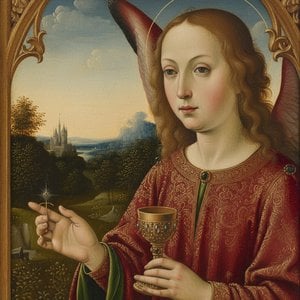
Embark on a journey through the luminous world of Early Netherlandish art. Discover the revolutionary oil techniques, microscopic realism, and sacred symbolism used by masters like Jan van Eyck to redefine Western art history in this expert-led guide.


 实景预览
实景预览
 发送
发送 分享
分享
 详情
详情 指南
指南

 下载图片
下载图片
 相似作品
相似作品 X射线
X射线 幻灯片播放
幻灯片播放 统计数据
统计数据 阅读全文
阅读全文









 玻璃选项仅适用于110厘米以下的尺寸。


