
博物馆级艺术微喷或帆布版画,制作高效,并提供多种饰面选择。 ( 订购此收藏品的纯手工复刻画作 切换至数字图像销售渠道)





























您可以从与原作比例一致的预设尺寸中进行选择。

您可以输入自定义尺寸,以适配特定的画框或空间。如果您选择的尺寸与原图比例不符,我们将对作品进行裁剪,或通过镜像填充/纯色填充边缘的方式来扩展图像。在开始制作之前,我们会向您发送一份数字效果图供您确认。
请注意,屏幕上的预览并不能反映实际的裁剪或扩展效果。只有效果图才能准确展示最终的构图。
虽然我们提供定制尺寸,但为了保持原图比例,我们建议您从预设列表中选择尺寸。
Untitled
复刻品尺寸说明
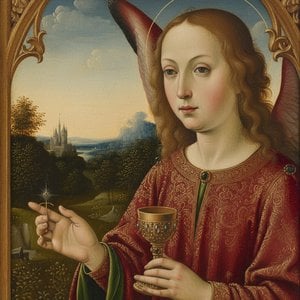
Hans Memling's “Untitled (D2X7SN),” painted around 1480, is not merely an image; it’s a quiet revelation. The work depicts Jesus Christ, rendered with the meticulous detail and serene grace that define his style, holding a luminous sphere in his hand. This isn’t a depiction of triumphant power or dramatic suffering, but one of contemplative stillness. The painting invites us into a moment of profound introspection, set against a backdrop of rolling hills, verdant trees, and a distant, castle-like structure – elements that ground the divine figure within a recognizable, earthly realm. The oil on wood panel technique lends itself beautifully to Memling’s style; the medium allows for layers of translucent glaze, creating a rich depth of color and texture that seems to emanate light from within.
To understand this painting is to understand Hans Memling himself. Born in Germany around 1430, he rose to prominence as one of the leading figures of the Early Netherlandish school. His journey began with an apprenticeship under Rogier van der Weyden in Brussels, a master renowned for his emotional intensity and refined realism. From Van der Weyden, Memling absorbed a dedication to precise detail and a nuanced understanding of human expression. However, Memling’s work distinguishes itself through its inherent tranquility and clarity. He settled in Bruges by 1465, becoming a respected citizen and prolific artist within the thriving artistic community of Flanders. Bruges at this time was a hub of commerce and culture, attracting patrons from across Europe – individuals who sought not only religious devotion but also sophisticated artistry in their commissions.
The central element demanding our attention is, undoubtedly, the sphere held by Christ. Its smooth, polished surface reflects light and draws the eye, yet its meaning remains tantalizingly ambiguous. Spheres, in Renaissance art, often symbolize the world, or *cosmos*, representing God’s creation and dominion over it. In this context, it could signify Christ's role as both creator and sustainer of all things. Alternatively, the sphere might represent divine wisdom or perfection – qualities embodied by Christ himself. The landscape behind him isn’t merely decorative; it reinforces this idea of a world held in balance, overseen by a benevolent power. The castle in the distance could symbolize the heavenly city, a destination for the faithful, or perhaps allude to earthly power structures existing under divine authority. Memling doesn't offer easy answers; he presents symbols that invite contemplation and personal interpretation.
Memling’s paintings possess an enduring quality – a sense of peace and spiritual resonance that transcends centuries. “Untitled (D2X7SN)” is no exception. It's a work that speaks to the human desire for connection with the divine, offering not grand pronouncements but quiet contemplation. The painting exemplifies Memling’s ability to blend meticulous realism with profound spirituality, creating an image that is both visually stunning and emotionally moving. Today, his works are treasured in museums worldwide, including the Memling Museum in Bruges – housed within the historic Sint Jans Hospital – a testament to his lasting influence on art history. Owning a reproduction of this piece isn’t simply acquiring a beautiful object; it's inviting a moment of serenity and spiritual reflection into your space.
汉斯·梅姆林 的《Untitled》 的主色调为 Walnut (#814c2b)。
汉斯·梅姆林 的《Untitled》 的色彩饱和度记录为 Balanced Soft。
汉斯·梅姆林 的《Untitled》 采用 Square 格式。该格式描述了构图的比例。
汉斯·梅姆林 的《Untitled》 的主导色调为 Golden Yellow Range。该色调构成了整个色板的基调。
汉斯·梅姆林 的《Untitled》 属于 仍受版权保护。此版权状态决定了该作品图像的复制方式。
汉斯·梅姆林 的《Untitled》 描绘了:jesus christ, sphere, landscape, religious art, medieval, oil painting, flemish primitives, portrait。
您可以在作品的预览页面查看汉斯·梅姆林 的《Untitled》的预览。


德国

Explore the exquisite precision of Flemish painting. From Jan van Eyck to Robert Campin, discover the revolutionary oil techniques and rich symbolism that defined the Northern Renaissance and continue to inspire fine art collectors today.

Embark on a journey through the exquisite precision of Flemish Art. Discover the pioneering oil techniques, profound symbolism, and luminous realism that define the Northern Renaissance masters in this expert guide for art enthusiasts.

Delve into the luminous revolution of Early Netherlandish painting. Unveil how Jan van Eyck and Flemish masters pioneered oil techniques to achieve unparalleled depth, sacred symbolism, and breathtaking realism, forever shaping the legacy of Western art history.

Explore the dramatic brilliance of the Flemish Baroque movement. Discover how masters like Peter Paul Rubens utilized chiaroscuro and dynamic composition to redefine art history through light, shadow, and unparalleled emotion.
Embark on a journey through the luminous world of Early Netherlandish art. Discover the revolutionary oil techniques, microscopic realism, and sacred symbolism used by masters like Jan van Eyck to redefine Western art history in this expert-led guide.


 实景预览
实景预览
 发送
发送 分享
分享
 详情
详情 指南
指南

 下载图片
下载图片
 相似作品
相似作品 X射线
X射线 幻灯片播放
幻灯片播放 统计数据
统计数据


 阅读全文
阅读全文









 玻璃选项仅适用于110厘米以下的尺寸。


