
 Oil On BoardWallArtEarly Netherlandish Painting
 1475Renaissance
 70.0 x 30.0 cm
 国家美术馆
国家美术馆由我们的艺术家按需定制,为您提供您所选尺寸及画框的布面手工油画。 ( 切换至版画销售渠道 切换至数字图像销售渠道)





























从与原作比例一致的预设尺寸中进行选择。

您可以输入自定义尺寸,以适配特定的画框或空间。如果所选尺寸与原图比例不符,我们将通过裁剪作品或添加手绘元素来扩展画面。数字样稿将在制作开始前发送给您确认。
请注意,屏幕预览无法准确反映实际的裁剪或扩展效果,只有样稿才能真实呈现最终的构图。
虽然我们提供定制尺寸服务,但为了保留原作比例,建议您从预设列表中选择尺寸。

The Donne Triptych (left wing)
复制品尺寸
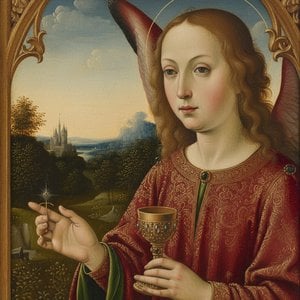
In the quiet, luminous world of Early Netherlandish painting, few works capture the delicate intersection of earthly status and divine grace as poignantly as Hans Memling’s The Donne Triptych (left wing). Created around 1475, this exquisite panel serves as a window into a period where every brushstroke was an act of prayer and every detail a vessel for meaning. As part of a larger devotional masterpiece commissioned by the Welsh diplomat Sir John Donne, this specific wing presents us with a profound encounter with Saint John the Baptist. The scene is not merely a religious icon but a masterclass in Northern Renaissance intimacy, where the boundaries between the viewer and the sacred begin to dissolve through Memling's unparalleled ability to render light, texture, and spirit.
The composition draws the eye immediately to the figure of the Saint, whose presence is both commanding and humble. Clad in a rich, deep purple robe that cascades with heavy, realistic folds, he stands as a pillar of strength against a backdrop that suggests a threshold between worlds. In his hands, he cradles a white lamb—the Agnus Dei—a symbol of purity and the ultimate sacrifice. The contrast between the soft, organic texture of the lamb's wool and the structured, architectural elements of the doorway creates a visual tension that is quintessential to Memling’s style. This interplay of textures invites the observer to linger, finding beauty in the meticulous realism that defines the Bruges Master’s hand.
To behold this work is to witness the pinnacle of 15th-century oil painting technique. Memling, a student of the legendary Rogier van der Weyden, utilized the unique properties of oil glazes to achieve a depth of color and a luminosity that tempera could never permit. The way light catches the edge of the Saint's robe or reflects off the subtle contours of the lamb suggests a world breathed into existence by light itself. Furthermore, the exterior panels of the triptych were famously rendered in grisaille—a technique designed to mimic the solemnity of stone sculpture. This clever illusionism creates a breathtaking transition when the triptych is opened, moving from the monochromatic, sculptural austerity of the exterior to the vibrant, jewel-toned reality of the interior panels.
For the discerning collector or interior designer, this piece offers more than mere decoration; it provides an anchor of historical depth and sophisticated elegance. The muted yet profound palette of purples, whites, and earthy tones allows the artwork to integrate seamlessly into a variety of high-end settings, from classical studies to contemporary galleries. It is a work that demands attention through its subtlety rather than through clamor, making it an ideal centerpiece for those who appreciate art that rewards slow, contemplative viewing.
Beyond the technical mastery lies the heart of the piece: the humanist spirit of the late Middle Ages. The Donne Triptych was a personal testament to the piety and political allegiances of its patron, Sir John Donne. By placing himself and his family within the same visual plane as the saints, Donne bridged the gap between the temporal and the eternal. This movement toward humanism—the celebration of human emotion and individual experience within a religious framework—is what gives this painting its enduring emotional resonance. When we look upon the left wing today, we are not just looking at a relic of the past; we are participating in a centuries-old tradition of seeking beauty, meaning, and a sense of peace through the mastery of light and form.


德国

Explore the profound iconography of Saint Jerome through art history's most iconic masterpieces. From Renaissance serenity to Baroque drama, discover how legendary painters captured divine devotion in breathtaking oil paintings and fine art reproductions.

Embark on a scholarly journey through the sacred beauty of High Medieval art. Discover the profound symbolism, luminous iconography, and spiritual depth of Gothic masterpieces in this expert guide for classical art enthusiasts.
Embark on a journey through the luminous world of Early Netherlandish art. Discover the revolutionary oil techniques, microscopic realism, and sacred symbolism used by masters like Jan van Eyck to redefine Western art history in this expert-led guide.

Delve into the luminous revolution of Early Netherlandish painting. Unveil how Jan van Eyck and Flemish masters pioneered oil techniques to achieve unparalleled depth, sacred symbolism, and breathtaking realism, forever shaping the legacy of Western art history.

Embark on a visual journey through Early Medieval art. Explore the profound beauty of illuminated manuscripts, sacred symbols, and golden light through an expert historical lens, celebrating the enduring legacy of medieval craftsmanship and divine artistry.


 效果预览
效果预览
 分享
分享 分享
分享
 详情
详情

 下载
下载
 相似作品
相似作品 X射线
X射线 幻灯片播放
幻灯片播放 统计数据
统计数据 展开详情
展开详情









 玻璃选项仅适用于110厘米以下的尺寸。


