
 Oil On CanvasWallArtFauvism
 1967Modern
 121.0 x 91.0 cm
 Canada Council Art Bank
博物馆级艺术微喷或帆布版画,制作高效,并提供多种饰面选择。 ( 订购纯手工绘制画作 切换至数字图像销售渠道)





























您可以从与原作比例一致的预设尺寸中进行选择。

请输入您所需的宽度和高度,以适配您的画框或墙面。由于印刷品只能进行裁剪,无法超出原图尺寸,因此若比例不一致,画面的一部分将会被裁切。在正式印刷之前,我们会为您发送一份数字效果图供您确认。本页面显示的图片并非最终裁剪后的效果——只有效果图才能展示真实的裁剪情况。
Cocktail Party- Three
复刻品尺寸
In the vibrant, swirling energy of Cocktail Party- Three, created in 1967, we encounter the masterful hand of Maxwell Bennett Bates at the height of his expressive powers. This oil on canvas is not merely a depiction of a social gathering; it is a profound exploration of human interaction through the lens of Canadian modernism. The scene unfolds as a crowded, dynamic assembly where figures overlap and intertwine, creating a sense of movement that feels almost breathless. As one gazes upon the composition, there is an immediate sensation of being swept into the thick of a social event—an art gallery opening or a lively soirée where the air is heavy with conversation, observation, and the subtle tension of shared space.
Bates, a pivotal figure who brought European modernist sensibilities to the Canadian prairies, utilizes a style that leans heavily toward figurative expressionism. The painting eschews the polite boundaries of realism in favor of a bold, Fauvist-inspired palette. Intense, saturated colors collide across the canvas, driving the viewer's eye through a labyrinth of simplified forms and flattened perspectives. There is no singular light source to guide us; instead, a generalized, atmospheric glow illuminates the subjects, casting shadows that serve more to define emotional weight than physical depth. This deliberate distortion of space creates an immersive, almost dreamlike quality, where the boundaries between individuals and their environment begin to blur.
The Texture of Human ConnectionTechnically, the work is a triumph of texture and tactile energy. Bates employs thick, visible brushstrokes that build up layers of pigment, lending a sculptural quality to the figures. This impasto-like application does more than just create depth; it mirrors the psychological complexity of the subject matter. The heavy application of paint captures the "broken up" forms and shifting planes that became Bates's signature, allowing the viewer to feel the physical presence of the crowd. Every stroke contributes to a sense of dynamism, suggesting that the figures are caught in a fleeting moment of transition—a snapshot of life that is simultaneously chaotic and deeply structured.
Beyond the surface beauty lies a deeper layer of symbolic resonance. Within this crowded social landscape, one can detect themes of alienation and the complexities of human relationships. While the characters are physically close, many appear lost in their own private thoughts, observing others or retreating into internal monologues. This creates a poignant contrast between the outward vibrancy of the "cocktail party" and the inward solitude of the individual. For the collector or interior designer, this piece offers more than just a splash of color; it provides a sophisticated narrative anchor for a room, inviting contemplation on the nature of community and the beautiful, messy reality of social existence.
Whether displayed in a contemporary gallery setting or as a centerpiece in a curated residential collection, Cocktail Party- Three serves as a testament to Bates's ability to distill the essence of an era. It is a work that demands attention, rewarding the observer with every subsequent viewing through its intricate interplay of color, form, and emotion.
Maxwell Bennett Bates 的《Cocktail Party- Three》 的建议打印尺寸为 Large。
Maxwell Bennett Bates 的《Cocktail Party- Three》 中的色彩呈现出 Balanced 的强度。
在Restaurant中,建议将"Cocktail Party- Three"打印为Large的大小。

Maxwell Bennett Bates was a man of dual disciplines, navigating the structured world of architecture and the emotive, swirling realms of expressionist painting with equal mastery. Born in Calgary, Alberta, his artistic journey began much earlier than his professional architectural career, with works like In the Kitchen emerging when he was only fifteen years and a few months old. As the son of William Stanley Bates, a prominent architect responsible for landmarks such as the Burns Building, Maxwell was immersed in the principles of design from a young age. He eventually followed this path, working within his father's architectural firm and contributing to significant structures like St. Mary's Cathedral.
However, it was through the canvas that Bates truly found his voice, bringing a profound European modernist sensibility to the Canadian prairies. His education at the Provincial Institute of Technology and Art in Calgary provided a foundational technical skill, but his spirit sought broader horizons. In 1931, he moved to England, a period of immense personal and artistic growth where he lived a life of struggle and discovery, even supporting himself as a vacuum salesman while exhibiting his work at the Wertheim Gallery. During this time, he associated with influential figures such as Barbara Hepworth and Victor Pasmore, absorbing the burgeoning modernist currents that would later define his painterly language.
Bates's artistic evolution was marked by a departure from the polite boundaries of realism. His work is often characterized by a vibrant, swirling energy that explores human interaction through the lens of Canadian modernism and figurative expressionism. In masterpieces such as Cocktail Party- Three, one can witness the height of his expressive power. The composition does not merely depict a social gathering; it creates a symphony of movement where figures overlap and intertwine in a breathless dance. Drawing inspiration from Fauvist-inspired palettes, he utilized intense, saturated colors that collide across the canvas to drive the viewer's eye through a labyrinth of simplified forms.
The technique employed by Bates was deeply tactile. He favored thick, visible brushstrokes and an impasto-like application of pigment that lent a sculptural quality to his subjects. This heavy texture served as a mirror to the psychological complexity of his themes, where flattened perspectives and a lack of a singular light source created an immersive, dreamlike atmosphere. In his hands, the boundaries between individuals and their environment began to blur, capturing the very essence of human connection and the subtle tensions of shared space.
Throughout his life, Bates's work resonated far beyond the borders of Alberta. His experiences as a prisoner of war in Thuringia during World War II added a layer of profound depth to his perspective, a period he later captured in his writing. As his career progressed, his art found homes in prestigious institutions across Canada and beyond, including:
His contributions to the Canadian art landscape were formally recognized through honors such as the Order of Canada and his membership in the Royal Canadian Academy of Arts. Whether through the architectural precision of a cathedral or the emotive, broken-up forms of an expressionist oil painting, Maxwell Bennett Bates remains a pivotal figure who bridged the gap between structural discipline and the raw, unbridled energy of modern art.

1906 - 1980 , Canada

Explore the vibrant world of Fauvism with our expert guide. Discover how Matisse and Derain revolutionized art through bold colors and expressive strokes. Perfect for classic art enthusiasts seeking to deepen their passion for modern masterpieces.

Explore the vibrant revolution of Fauvism. Discover how masters like Matisse liberated color to redefine modern art. Dive into an expert-led journey through the 'Wild Beasts' movement and learn how to bring this bold, expressive energy into your personal collection.
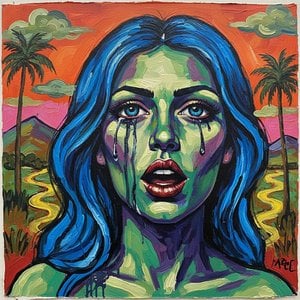
Embark on a journey through the vibrant world of Fauvism. Discover how masters like Henri Matisse revolutionized art through bold colors and raw emotion in this expert-led guide to one of modern art's most powerful movements.


 实景预览
实景预览
 分享
分享 分享
分享
 详情
详情 指南
指南

 下载作品
下载作品
 相似作品
相似作品 X射线
X射线 幻灯片播放
幻灯片播放 Q&A
Q&A 统计数据
统计数据 展开全文
展开全文









 玻璃选项仅适用于110厘米以下的尺寸。


