Acrylic On CanvasWallArtContemporary Art
 1999Contemporary
 90.0 x 90.0 cm
 布里斯托博物馆与美术馆
购买高分辨率增强版数字图像,其品质远超在线预览。
每一份文件都由我们的内部专家使用先进工具与专业的后期润色技术精心打造。我们确保每一张图像都具备卓越的清晰度、精准的色彩还原度以及细腻的细节表现。
最终文件将在 72 小时内通过电子邮件交付,并针对专业、编辑及印刷用途进行了优化。其品质与顶级设计工作室、出版社和画廊所信赖的标准完全一致。
下载高分辨率文件,用于个人展示、打印及创意项目。 ( 切换至版画销售渠道 订购此收藏品的纯手工复刻画作)
选择 WahooArt.com,您获得的不仅仅是一张图像——您收到的是经过专业级增强、精雕细琢的数字艺术作品,并享有满意保证。以下是您的订单中自动包含的所有内容:

您的高分辨率数字图像文件将在下单后 72 小时内通过电子邮件发送给您 —— 即可立即使用。

您的艺术品经过专业优化,结合先进的 AI 技术与人工修饰,确保呈现极致的细节、清晰度与色彩准确度。

不小心删除了文件或找不到了?没关系——我们将随时为您免费重发。

即刻拥有您的艺术作品,无需支付任何关税、税费或运费——数字下载始终免税。

我们通过专业工具与色彩管理技术,确保您的数字图像尽可能真实地还原原作色彩。

如果您对所购数字图像不满意,我们将在100天内为您进行修改或提供100%的全额退款——无需任何理由。

不满意?在收到数字文件后的100天内,您可以申请全额退款——无需任何理由。

购买 3 张享 10% 折扣 - 购买 5 张享 15% 折扣 - 购买 10 张以上享 20% 折扣。非常适合创意项目、画廊及机构使用。
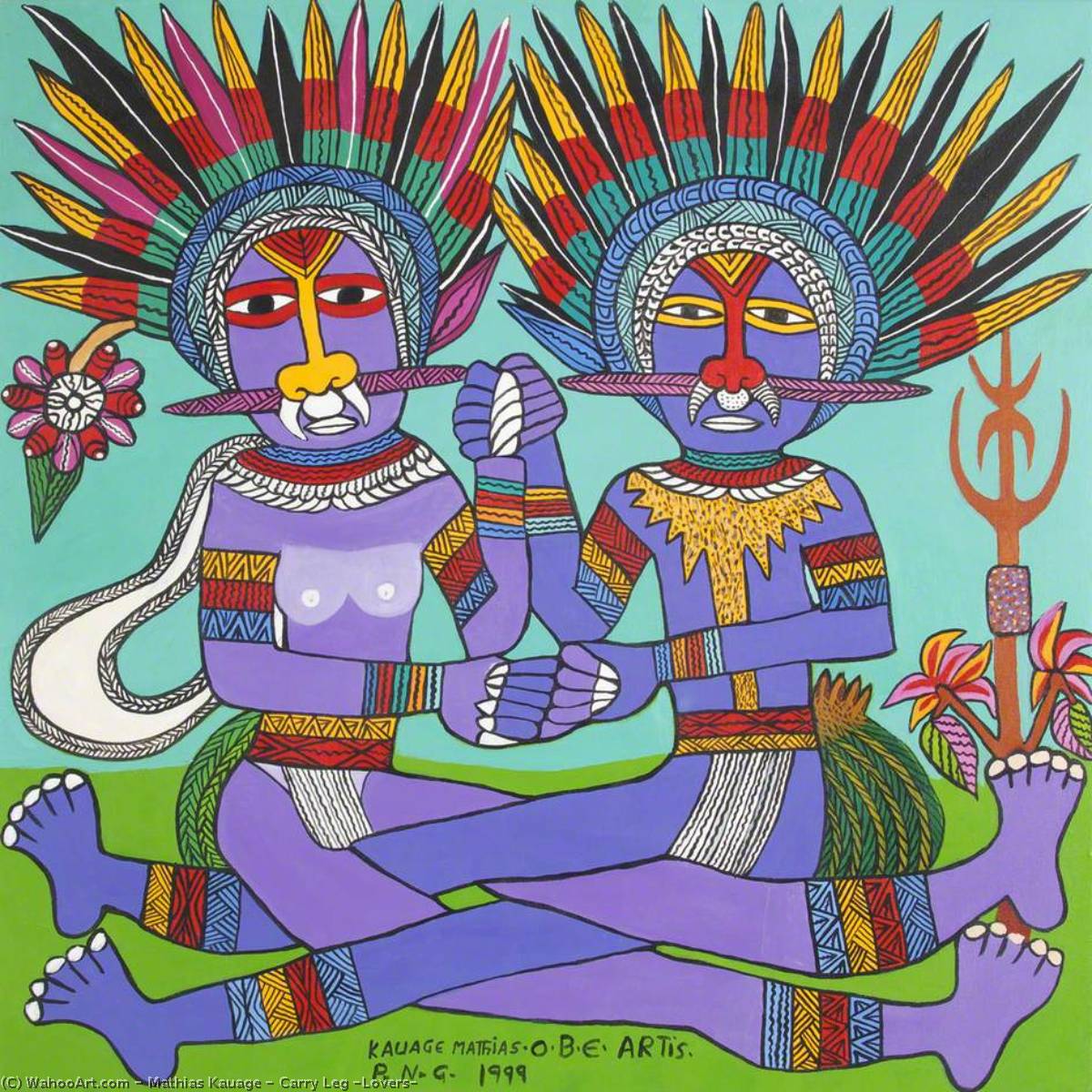
In the vibrant tapestry of contemporary Melanesian art, few works capture the raw, pulse-pounding essence of human intimacy quite like Mathias Kauage’s Carry Leg (Lovers). Created in 1999, this striking acrylic on canvas serves as a profound window into the artist's ability to blend the ceremonial grandeur of Papua New Guinea with the deeply personal nuances of romantic connection. The painting presents two figures entwined in a moment of profound vulnerability and strength; their faces, adorned with kaleidoscopic patterns of color, suggest a ritualistic significance that transcends the physical plane. As they hold hands, a silent dialogue of devotion is established, drawing the viewer into a space where the boundaries between the individual and the spiritual world begin to blur.
The composition is masterfully balanced, utilizing a 90 x 90 cm format that allows the energy of the embrace to radiate outward. Kauage employs a bold, expressive technique, using thick applications of acrylic to create textures that feel as alive as the subjects themselves. The figures, depicted with a sense of naked honesty, are positioned in a way that suggests both weight and weightlessness—a physical "carrying" that mirrors the emotional support inherent in love. A subtle touch of greenery, provided by a potted plant nestled in the lower corner, grounds this celestial encounter in a terrestrial reality, offering a breath of organic calm amidst the swirling, vivid hues of the lovers' skin.
To understand Carry Leg (Lovers), one must look through the lens of Kauage’s heritage. His work is deeply rooted in the ritual landscapes of Papua New Guinea, where color is rarely merely decorative; it is a language of identity, status, and ancestral presence. The intricate, colorful markings on the figures' faces evoke the traditional face painting used during significant ceremonies, suggesting that this moment of love is itself a sacred rite. By integrating these cultural motifs into a scene of romantic tenderness, Kauage elevates a private emotion to the level of a communal, spiritual event.
For the discerning collector or interior designer, this piece offers more than just visual splendor; it provides an emotional anchor. The painting’s ability to evoke warmth and stability makes it an ideal centerpiece for spaces designed for reflection and intimacy. Whether placed in a contemporary gallery setting or a sophisticated residential lounge, the work commands attention through its rhythmic energy and its celebration of the enduring human spirit. It is a testament to the power of art to bridge the gap between the ancient traditions of the Pacific and the universal language of the heart.
In the rich, kaleidoscopic tapestry of contemporary Melanesian art, few names resonate with as much profound cultural authority as Mathias Kauage. Born in 1944 in the village of Miugu, within the Chimbu Province of Papua New Guinea, Kauage emerged not merely as a painter, but as a visual storyteller for an entire nation’s soul. His life’s work serves as a bridge between the ancient, ritualistic rhythms of his ancestors and the evolving landscape of modern global art. Though he passed away in 2003, his presence remains felt through every bold stroke and vivid pigment he left behind, capturing the very essence of Papua New Guinea’s ceremonial grandeur and its enduring spiritual vitality.
Kauage's artistic journey was ignited by a transformative encounter with the works of Timothy Akis in 1969, an event that catalyzed his transition from observer to creator. As he developed his unique visual language, he became a pioneer of the contemporary art movement in his homeland. His style is instantly recognizable for its exuberant use of color and meticulous attention to the intricate patterns that define Melanesian identity. Whether working with acrylic on canvas or exploring the graphic depths of woodcuts, Kauage possessed a rare ability to translate the intangible—the whispers of ancestral spirits and the energy of ritual dances—into tangible, breathtaking compositions. His technique often involved a masterful layering of color, creating luminous effects that mirror the atmospheric humidity and vibrant flora of the Papua New Guinean landscape.
To gaze upon a Kauage masterpiece is to enter a world where the boundaries between the physical and the spiritual are perpetually blurred. His subject matter was deeply rooted in the cosmology of his people, frequently portraying scenes of warrior ceremonies, traditional dances, and the presence of ancestral deities. In works such as Mudmen, he captures the haunting beauty of ceremonial masks, while pieces like Buka War bring the tension and movement of tribal life to the forefront. Even in more intimate moments, such as his 1999 work Carry Leg (Lovers), Kauage weaves together the personal and the communal; the figures are adorned with kaleidoscopic patterns that suggest a ritualistic significance, turning a moment of human connection into a celestial encounter.
The symbolism within his paintings extends far beyond mere decoration. Every pattern, every choice of pigment, and every arrangement of figures serves as a language of status, identity, and myth. His art does not seek to provide a Western-style narrative or individual portraiture; instead, it prioritizes the collective experience. Through his eyes, we see the importance of the communal ritual, the weight of tradition, and the sacredness of the natural world. This focus on the essence of shared existence allowed his work to transcend geographical borders, speaking a universal language of human devotion and cultural pride.
The impact of Mathias Kauage’s career reached far beyond the shores of Papua New Guinea. He achieved significant international acclaim, with his works finding homes in prestigious institutions such as the National Gallery of Australia and the Glasgow Museums Resource Centre. His ability to engage global audiences was further cemented through collaborations with museums like Ham House in Virginia, which helped introduce the complexities of Melanesian culture to a Western audience. In 1998, his immense contribution to the arts was formally recognized when he was awarded the Order of the British Empire (O.B.E.) by Queen Elizabeth II, a testament to his role as a cultural ambassador.
The legacy of Mathias Kauage is one of both innovation and preservation. He did not simply replicate the past; he reimagined it through a modern lens, ensuring that the traditions of Papua New Guinea remained dynamic and visible on the world stage. His influence can be seen in the ongoing dialogue between heritage and contemporary indigenous art globally. As we reflect on his life, we see an artist who successfully captured the echoes of a ritual landscape, leaving behind a vibrant, permanent record of a culture’s heartbeat.

 实景预览
实景预览
 发送
发送 分享
分享
 详情
详情 指南
指南

 下载图片
下载图片
 相似作品
相似作品 X射线
X射线 幻灯片播放
幻灯片播放 统计数据
统计数据 阅读全文
阅读全文