
 Oil On CanvasWallArtBaroque
 1630Early Modern
 169.0 x 100.0 cm
 冬宫博物馆 (Hermitage Museum)
博物馆级艺术微喷或帆布版画,制作高效,并提供多种饰面选择。 ( 订购纯手工绘制画作 切换至数字图像销售渠道)





























您可以从与原作比例一致的预设尺寸中进行选择。

请输入您所需的宽度和高度,以适配您的画框或墙面。由于印刷品只能进行裁剪,无法超出原图尺寸,因此若比例不一致,画面的一部分将会被裁切。在正式印刷之前,我们会为您发送一份数字效果图供您确认。本页面显示的图片并非最终裁剪后的效果——只有效果图才能展示真实的裁剪情况。
Cleopatra
复刻品尺寸
To gaze upon Massimo Stanzione's "Cleopatra" is to be transported across the currents of time, into an era steeped in myth, power, and breathtaking beauty. This magnificent painting, executed in 1630, captures not merely a portrait, but an embodiment of legendary allure. The subject, Cleopatra herself, reclines with an undeniable regal grace upon a chair, her posture suggesting both languid contemplation and inherent command. Draped in sumptuous red fabric, she commands the viewer's attention, drawing the eye to the delicate curve of her crossed legs and the object—be it a book or fruit—held gently in her hand. The work resonates with the enduring fascination humanity has held for figures who blended earthly splendor with divine mystique.
Stanzione, an Italian Baroque master whose career flourished in Naples, stands as a fascinating bridge between artistic giants. While his undeniable debt to Caravaggio's dramatic use of light and shadow—that stark, almost theatrical illumination that sculpts form from darkness—is evident, the painting possesses a distinct lyrical quality. This is where Stanzione distinguishes himself; he marries the raw realism of the early Baroque with the more classical, graceful mannerism associated with Bolognese painters. The resulting effect in "Cleopatra" is one of heightened reality—the figures feel palpably present, yet their bearing suggests an almost idealized narrative moment. It is a masterful tension between brutal verisimilitude and sublime elegance.
The choice of color plays a pivotal role in the painting's emotional resonance. The deep, passionate red of Cleopatra’s gown speaks volumes of passion, wealth, and perhaps even danger—a visual shorthand for imperial power. Her pose itself is highly symbolic; the crossed legs are not merely decorative but suggest a studied confidence, an ease that comes from absolute authority. Furthermore, the object she holds invites scholarly speculation. Is it knowledge, represented by the book, suggesting her intellect matched her beauty? Or is it sustenance, hinting at earthly pleasures? Regardless of its precise meaning, this small detail anchors the grand narrative, giving the viewer a focal point for their own interpretation.
Housed originally in the esteemed collection of the Hermitage Museum, "Cleopatra" offers collectors and designers an unparalleled opportunity to connect with high Baroque drama. Reproducing this piece allows one to bring the sophisticated narrative tension of 17th-century Italian painting into a contemporary space. The dramatic chiaroscuro, the rich texture suggested by the drapery, and the subject's timeless magnetism make it a centerpiece worthy of any discerning interior design scheme or private gallery. Owning a reproduction is not just acquiring art; it is curating an atmosphere steeped in historical grandeur and enduring romance.
Massimo Stanzione 的《Cleopatra》 属于 Baroque 流派,创作于其作者的 Early Modern 时期。
Massimo Stanzione 的《Cleopatra》 的色彩构成将 Bold 的对比与 Strong Color Unity 的和谐融为一体。
针对 Massimo Stanzione 的《Cleopatra》,我们为您提供以下两项建议:用途为 (Accent),适宜空间为 (Living Room)。

In the vibrant, sun-drenched streets of seventeenth-century Naples, a period when the city stood as one of the most significant urban centers in Europe, a painter emerged who would redefine the visual language of the Italian Baroque. Massimo Stanzione, born in Frattamaggiore in 1585, was not merely a participant in the artistic ferment of his time; he was a transformative force. While many of his contemporaries were content to follow a single stylistic path, Stanzione possessed a rare, dualistic vision. He achieved what many thought impossible: the seamless marriage of the raw, visceral shadows of Caravaggio with the refined, lyrical grace of the Bolognese school. This unique synthesis earned him the prestigious moniker, the Neapolitan Guido Reni, marking him as an artist of unparalleled elegance and dramatic power.
The foundations of Stanzione’s artistry were laid in the fertile soil of Naples, likely under the tutelage of masters such as Fabrizio Santafede and Battistello Caracciolo. However, the true catalyst for his stylistic evolution was the profound impact of Caravaggio’s tenebrism. From this revolutionary approach, Stanzione adopted a mastery of light and shadow that lent his figures a startling, tactile presence. Yet, it was during his formative journeys to Rome—most notably between 1617 and 1630—that his palette began to bloom with a new, classical sophistication. Immersed in the Eternal City, he absorbed the balanced compositions of Annibale Carracci and the luminous, revamped Caravaggism of Simon Vouet. This period of Roman exposure allowed him to temper the brutal realism of his youth with an idealized naturalism, creating works that were as much about poetic beauty as they were about dramatic tension.
Stanzione’s ascent within the social and artistic hierarchies of Europe was nothing short of meteoric. His talent was recognized not only by the clergy but by the highest echelons of nobility and the Papacy itself. The year 1621 marked a significant milestone when Pope Gregory XV bestowed upon him the prestigious title of Knight of the Golden Spur. His honors continued to accumulate, and under the reign of Urban VIII, he was invested with the Order of Christ, an achievement that granted him the esteemed title of Caballero Massimo in Spain. Such accolades reflect a career that transcended the boundaries of local craftsmanship, positioning him as a figure of international importance.
His body of work is characterized by a remarkable versatility, ranging from intimate, psychologically penetrating portraits to monumental altarpieces and sweeping frescoes. Some of his most enduring contributions to the art world include:
As the mid-seventeenth century approached, Stanzione stood alongside Jusepe de Ribera as the titan of the Neapolitan painting scene. Together, they dominated the artistic landscape, creating a period of intense competition and creative flowering. While Ribera leaned into the gritty, earthy realism of the Spanish tradition, Stanzione offered a more polished, colorful alternative that appealed to the aesthetic sensibilities of the era's elite. His influence was profound and far-reaching; his method of blending dramatic chiaroscuro with classical grace became a blueprint for subsequent generations of local artists, most notably the great Francesco Solimena.
Tragically, the very era of prosperity that allowed his art to flourish also brought the devastation of the plague. In 1656, a catastrophic outbreak swept through Naples, claiming many lives and bringing much of the city's vibrant culture to a standstill. It is believed that Stanzione himself fell victim to this epidemic, passing away at the height of his influence. Though his life was cut short, his legacy remained etched in the stone and canvas of Naples. Through his ability to harmonize the rugged with the refined, Massimo Stanzione ensured that the Neapolitan Baroque would forever be remembered as a period of profound emotional depth and exquisite classical beauty.
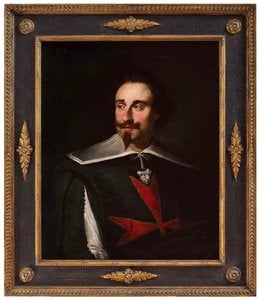
1585 - 1656 , Italy

Elevate your collection with the dramatic grandeur of Baroque oil masterpieces. WahooArt offers exquisite, hand-painted reproductions of the Great Masters, featuring authentic chiaroscuro and premium textures. Discover bespoke artistry and expert consultation for elite collectors worldwide.

Embark on a sophisticated journey through Italian Baroque art. Discover the dramatic interplay of light and emotion in Caravaggio’s masterpieces and explore how to bring this timeless grandeur into your collection with expert art insights.


 实景预览
实景预览
 分享
分享 分享
分享
 详情
详情 指南
指南

 下载作品
下载作品
 相似作品
相似作品 X射线
X射线 幻灯片播放
幻灯片播放 Q&A
Q&A 统计数据
统计数据 展开全文
展开全文









 玻璃选项仅适用于110厘米以下的尺寸。


