
 WatercolorWallArtBotanical Illustration
 192319th Century
 26.0 x 18.0 cm
由我们的艺术家按需定制,为您提供您所选尺寸及画框的布面手工油画。 ( 切换至版画销售渠道 切换至数字图像销售渠道)





























从与原作比例一致的预设尺寸中进行选择。

您可以输入自定义尺寸,以适配特定的画框或空间。如果所选尺寸与原图比例不符,我们将通过裁剪作品或添加手绘元素来扩展画面。数字样稿将在制作开始前发送给您确认。
请注意,屏幕预览无法准确反映实际的裁剪或扩展效果,只有样稿才能真实呈现最终的构图。
虽然我们提供定制尺寸服务,但为了保留原作比例,建议您从预设列表中选择尺寸。

Bastard Toadflax (Comandra pallida)
复制品尺寸
Mary Vaux Walcott's Bastard Toadflax (Comandra pallida), painted in 1923, is a captivating watercolor botanical illustration that exemplifies the precision and artistry of her work. This piece isn’t merely a depiction of a plant; it's a testament to meticulous observation, scientific accuracy, and an appreciation for the subtle beauty found within the natural world.
The artwork focuses entirely on the Comandra pallida, commonly known as bastard toadflax. Walcott’s style is firmly rooted in botanical illustration—a genre that prioritizes accurate representation over artistic interpretation. However, her skill transcends mere documentation; she imbues the plant with a sense of life and vibrancy through delicate washes of color and precise detailing. The composition centers on the plant's stem and branches, extending diagonally across the frame to create visual interest. There’s an intentional flatness to the perspective, which draws attention to the intricate details of the leaves, flowers, and seed heads. This style was characteristic of 19th-century botanical art, emphasizing scientific accuracy for identification purposes.
Walcott's mastery of watercolor is evident in every brushstroke. The painting utilizes layered washes to build depth and create a slightly grainy texture that mimics the natural surface of plant tissue. She expertly employs subtle gradations of green and yellow, capturing the delicate hues of the flowers and foliage. The precision with which she renders each element—the veins on the leaves, the intricate structure of the seed heads—demonstrates her keen eye for detail and technical proficiency. The inscription "M.Y.W." (Mary Vaux Walcott) along with “Russian Hot Springs” and the date “G. T. 1893” at the bottom left corner provides valuable provenance information, adding to the artwork's historical significance.
Created in 1923, this painting reflects a period of renewed interest in botanical study and documentation. Walcott’s work is particularly significant because she contributed extensively to the Smithsonian American Art Museum, providing a valuable record of North American flora. She has often been referred to as "the Audubon of Botany," recognizing her dedication to documenting wildflowers with the same level of detail and passion that John James Audubon brought to bird illustration. Her illustrations were eventually compiled into a five-volume work entitled North American Wild Flowers, published by the Smithsonian in 1925.
While primarily a scientific record, Bastard Toadflax (Comandra pallida) evokes a sense of tranquility and appreciation for the natural world. The soft color palette and delicate rendering create a soothing visual experience. The painting’s appeal lies in its ability to reveal the hidden beauty within an often-overlooked plant species. It serves as both a testament to Walcott's artistic skill and a reminder of the importance of botanical study and conservation, making it a compelling piece for art lovers, collectors, and those seeking to bring a touch of natural elegance into their homes.


1860 - 1940 , 美国

Discover the ethereal beauty of watercolor through an art-historical lens. Master the delicate balance of light, fluidity, and pigment to capture the luminous essence of nature, inspired by the legendary techniques of the Old Masters and Impressionist greats.
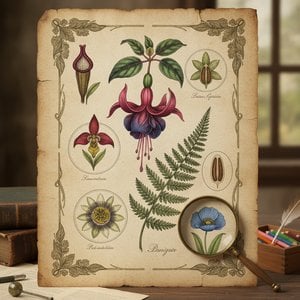
Discover the exquisite world of Victorian botanical art. Explore the intersection of scientific precision and luxury aesthetics through masterfully curated floral illustrations and hand-painted oil reproductions for discerning collectors and fine interiors.

Discover the exquisite intersection of science and fine art. Explore the history of scientific illustration, from botanical watercolor masters to nature's intricate geometry, through an expert lens of art history and technical precision.

Explore the exquisite intersection of science and art in botanical illustration. Discover the history, technical mastery, and timeless beauty of scientific floral studies from Renaissance masters to modern collectors.


 效果预览
效果预览
 分享
分享 分享
分享
 详情
详情

 下载
下载
 相似作品
相似作品 X射线
X射线 幻灯片播放
幻灯片播放 统计数据
统计数据 展开详情
展开详情









 玻璃选项仅适用于110厘米以下的尺寸。


