
由我们的艺术家按需定制,为您提供您所选尺寸及画框的布面手工油画。 ( 切换至版画销售渠道 切换至数字图像销售渠道)





























从与原作比例一致的预设尺寸中进行选择。

您可以输入自定义尺寸,以适配特定的画框或空间。如果所选尺寸与原图比例不符,我们将通过裁剪作品或添加手绘元素来扩展画面。数字样稿将在制作开始前发送给您确认。
请注意,屏幕预览无法准确反映实际的裁剪或扩展效果,只有样稿才能真实呈现最终的构图。
虽然我们提供定制尺寸服务,但为了保留原作比例,建议您从预设列表中选择尺寸。

White and Greens in Blue
复制品尺寸
Mark Rothko’s “White and Greens in Blue,” painted in 1957, isn’t merely a painting; it’s an invitation. An invitation to surrender to the quiet intensity of color, to contemplate the vastness within, and perhaps, to glimpse something akin to the divine. Born Markus Yakovlevich Rothkowitz in Dvinsk, Latvia – a landscape steeped in both beauty and historical turmoil – Rothko carried with him from his earliest years a profound sensitivity to human suffering, a theme that would become a recurring motif throughout his career. This early experience of displacement, coupled with his family’s intellectual and political engagement, shaped an artist deeply attuned to the complexities of existence.
The painting itself is deceptively simple at first glance. Three horizontal rectangles – a dominant dark green, a luminous white, and a subtle blue – float within a deep field of color. These aren't sharply delineated forms; rather, they bleed into one another, creating an atmosphere of hazy contemplation. The technique employed is characteristic of Rothko’s “Color Field” style: broad, unmodulated washes of pigment applied with a remarkable lack of detail. He eschewed traditional brushwork, opting instead for a process of layering and blending that results in surfaces that seem to shimmer and vibrate. This deliberate flatness – the rejection of illusionistic depth – forces the viewer to engage directly with the color itself, creating an immersive experience.
While Rothko famously resisted definitive interpretations of his work, art historians and critics have consistently identified powerful symbolic resonances within “White and Greens in Blue.” The dark green rectangle, often described as a ‘void,’ represents the unknown, the unconscious, or perhaps even death. It’s a space of profound darkness, yet paradoxically, it contains the potential for light and transformation. The white rectangle, conversely, embodies hope, spirituality, and transcendence – a luminous presence that draws us towards it. The blue acts as a mediator, connecting these two realms and suggesting a sense of equilibrium.
Interestingly, Rothko’s own words reveal his intention to evoke an emotional response rather than depict a specific subject. He described his paintings as “windows on another world,” aiming to create a space where viewers could experience a profound sense of awe and contemplation. The painting's power lies not in its representational qualities but in its ability to tap into our deepest feelings – our anxieties, our hopes, our yearning for meaning.
The influence of Rothko’s early life—his Jewish heritage, his family's intellectual pursuits, and his personal struggles with loss and identity—is palpable in his work. The painting echoes themes found in religious iconography, particularly the concept of the ‘numinous’ – that sense of overwhelming awe and mystery experienced when encountering something sacred. As art historian Susan Brown Berger notes, Rothko sought to create a space for “religious experience” through color alone. This is powerfully demonstrated by his later work, notably the Rothko Chapel in Houston, where fourteen monumental paintings were installed as a meditative space.
“White and Greens in Blue” stands as a testament to Rothko’s ability to transform abstract forms into vehicles for profound emotional expression. It's a painting that invites repeated viewing, each encounter revealing new layers of meaning and resonance. Its enduring appeal lies in its capacity to connect us with something larger than ourselves – a timeless exploration of the human condition.

1903 - 1970 , 拉脱维亚

Explore the profound emotional depth of Color Field painting. Discover the history of mid-century abstraction, from Rothko to Newman, and learn how pure color transforms the viewer's experience through our expert art history guide.

Explore the profound emotional depth of Color Field painting. Our expert guide delves into the post-war origins of Abstract Expressionism, analyzing masterpieces by Rothko and Newman. Discover museum-grade, hand-painted oil reproductions that bring art history to your walls.
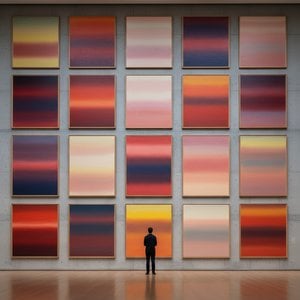
探索马克·罗斯科25幅杰作,感受抽象表现主义的色彩力量与深刻情感。从经典色域绘画到无题系列,了解艺术史上的大师及其作品背后的故事。WahooArt.com提供博物馆级高质量复制品,为您的家居装饰带来艺术灵感!立即探索完整收藏。
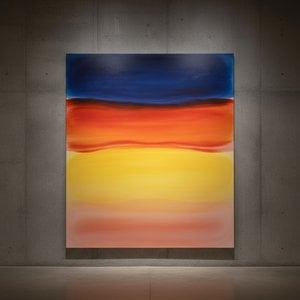
Explore the profound emotional depth of Mark Rothko's abstract expressionism. Discover the history, techniques & lasting impact of this pivotal Color Field painter. Expert insights for collectors and art enthusiasts.

探索抽象表现主义的十幅经典杰作!波洛克、罗斯科等大师作品,揭秘艺术史上的重要瞬间。WahooArt.com为您呈现高品质艺术品复制和精选家居装饰方案,感受现代艺术的力量与魅力。立即浏览全系列!


 效果预览
效果预览
 分享
分享 分享
分享
 详情
详情 指南
指南

 下载
下载
 相似作品
相似作品 X射线
X射线 幻灯片播放
幻灯片播放 统计数据
统计数据
 展开详情
展开详情









 玻璃选项仅适用于110厘米以下的尺寸。


