
由我们的艺术家按需定制,为您提供您所选尺寸及画框的布面手工油画。 ( 切换至版画销售渠道 切换至数字图像销售渠道)





























您可以从与原作比例一致的预设尺寸中进行选择。

请输入您需要的宽度和高度,以适配您的画框或墙面。由于作品为手工绘制,若您选择不同的尺寸比例,艺术家可能会在画面边缘多画一些或稍作裁剪 —— 由您决定。在开始绘画之前,我们会为您发送一份数字效果图供您确认。本页面上展示的图片并非最终实物 —— 只有效果图才能反映真实结果。
Untitled 63
复刻品尺寸说明
Mark Rothko's "Untitled 63" isn’t merely a painting; it’s an immersion. Born in 1903 in Dvinsk, Latvia – a region steeped in historical tension and shifting borders – Rothko’s early life profoundly shaped his artistic vision. His family’s journey from the Pale of Settlement to Portland, Oregon, in 1913 marked a dramatic cultural upheaval, a displacement that resonated deeply within him. The loss of his father at a young age, coupled with the challenges of assimilation and the ever-present anxieties of Jewish life under Tsarist rule, instilled a sensitivity to human suffering – a core theme that would permeate much of his work. This early experience of loss and uncertainty isn’t just biographical; it's woven into the very fabric of the painting, manifesting as an underlying sense of melancholy and yearning.
Rothko’s upbringing was remarkably intellectual. His father, a pharmacist and socialist, fostered a home filled with debate and learning, exposing young Mark to radical ideas and encouraging critical thinking. This environment instilled in him a deep appreciation for knowledge and a questioning spirit – qualities that would later inform his approach to art. The move to the United States wasn’t simply a geographical shift; it was a severing of ties to a familiar past, forcing Rothko to confront new identities and grapple with the complexities of belonging. This foundational experience of displacement is arguably the key to understanding the emotional depth of "Untitled 63" – a painting that speaks volumes about the human condition through its carefully orchestrated fields of color.
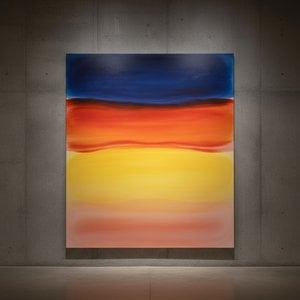
"Untitled 63" exemplifies Rothko’s signature style within Color Field Painting, a movement he helped pioneer. The work eschews traditional representation, instead focusing on the pure emotional impact of color itself. Large, rectangular blocks of deep violet, verdant green, and resonant red dominate the canvas, layered upon one another to create an almost palpable sense of depth and atmosphere. These aren’t simply colors; they are vessels for feeling – evoking a range of emotions from quiet contemplation to profound sorrow. Rothko meticulously applied thin layers of paint, allowing the colors to bleed subtly into each other, creating hazy, luminous effects that seem to vibrate with inner light.
The technique is deceptively simple yet incredibly complex. Rothko’s process involved applying multiple coats of thinned paint, often using a squeegee to create smooth, even surfaces. He avoided brushstrokes, opting instead for a flat, almost sculptural quality that further emphasizes the colors' inherent luminosity. This deliberate flatness invites the viewer to step into the painting, to lose themselves within its chromatic depths and experience it not as an object to be observed, but as a space to be inhabited.
While Rothko vehemently resisted any attempt to interpret his paintings literally, the arrangement of the vases and cups within "Untitled 63" offers intriguing clues. The central vase, holding a single cup, can be seen as a symbol of containment – perhaps representing the human spirit struggling against the weight of existence. The surrounding vases, in varying sizes and positions, suggest a network of interconnectedness, hinting at relationships, memories, and the cyclical nature of life and death. The scattered cups, both near and far from the central composition, could symbolize fleeting moments of joy or sorrow, reminders of past experiences that linger in our consciousness.
However, Rothko’s intention wasn't to provide a concrete narrative. Instead, he sought to create paintings that would evoke a profound emotional response in the viewer – a sense of awe, mystery, and perhaps even transcendence. The ambiguity of the imagery allows for individual interpretation, inviting each observer to project their own experiences and emotions onto the canvas. It’s this very openness that makes "Untitled 63" such a powerful and enduring work of art.
Mark Rothko's “Untitled 63” stands as a testament to the power of color to communicate profound emotions. Reproductions, like those offered by WahooArt.com, allow viewers to experience this emotional depth firsthand, bringing Rothko’s evocative vision into their own spaces. The painting’s enduring appeal lies in its ability to tap into universal human experiences – loss, longing, and the search for meaning – making it a timeless masterpiece that continues to resonate with audiences today.
马克·罗斯科 的《Untitled 63》 推荐陈列于 Living Room。此建议是基于作品的主题、色彩与意境而定。
马克·罗斯科 的《Untitled 63》 属于 Modern 时期的 Color Field Abstraction 流派。两者共同确立了该作品在艺术史上的地位。
马克·罗斯科 的《Untitled 63》 采用了 Earthy 色调。这一色调概括了作品整体的色彩特征。

1903 - 1970 , 拉脱维亚

探索抽象表现主义的十幅经典杰作!波洛克、罗斯科等大师作品,揭秘艺术史上的重要瞬间。WahooArt.com为您呈现高品质艺术品复制和精选家居装饰方案,感受现代艺术的力量与魅力。立即浏览全系列!

Explore the profound emotional depth of Color Field painting. Our expert guide delves into the post-war origins of Abstract Expressionism, analyzing masterpieces by Rothko and Newman. Discover museum-grade, hand-painted oil reproductions that bring art history to your walls.
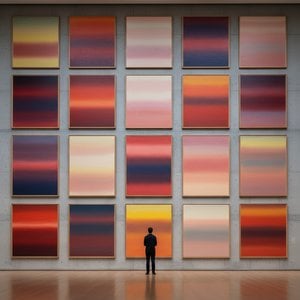
探索马克·罗斯科25幅杰作,感受抽象表现主义的色彩力量与深刻情感。从经典色域绘画到无题系列,了解艺术史上的大师及其作品背后的故事。WahooArt.com提供博物馆级高质量复制品,为您的家居装饰带来艺术灵感!立即探索完整收藏。
Explore the profound emotional depth of Mark Rothko's abstract expressionism. Discover the history, techniques & lasting impact of this pivotal Color Field painter. Expert insights for collectors and art enthusiasts.

Explore the profound emotional depth of Color Field painting. Discover the history of mid-century abstraction, from Rothko to Newman, and learn how pure color transforms the viewer's experience through our expert art history guide.


 实景预览
实景预览
 发送
发送 分享
分享
 详情
详情 指南
指南

 下载图片
下载图片
 相似作品
相似作品 X射线
X射线 幻灯片播放
幻灯片播放 统计数据
统计数据

 阅读全文
阅读全文









 玻璃选项仅适用于110厘米以下的尺寸。


