A Meditation on Color and Absence: Examining Mark Rothko’s “No. 9”
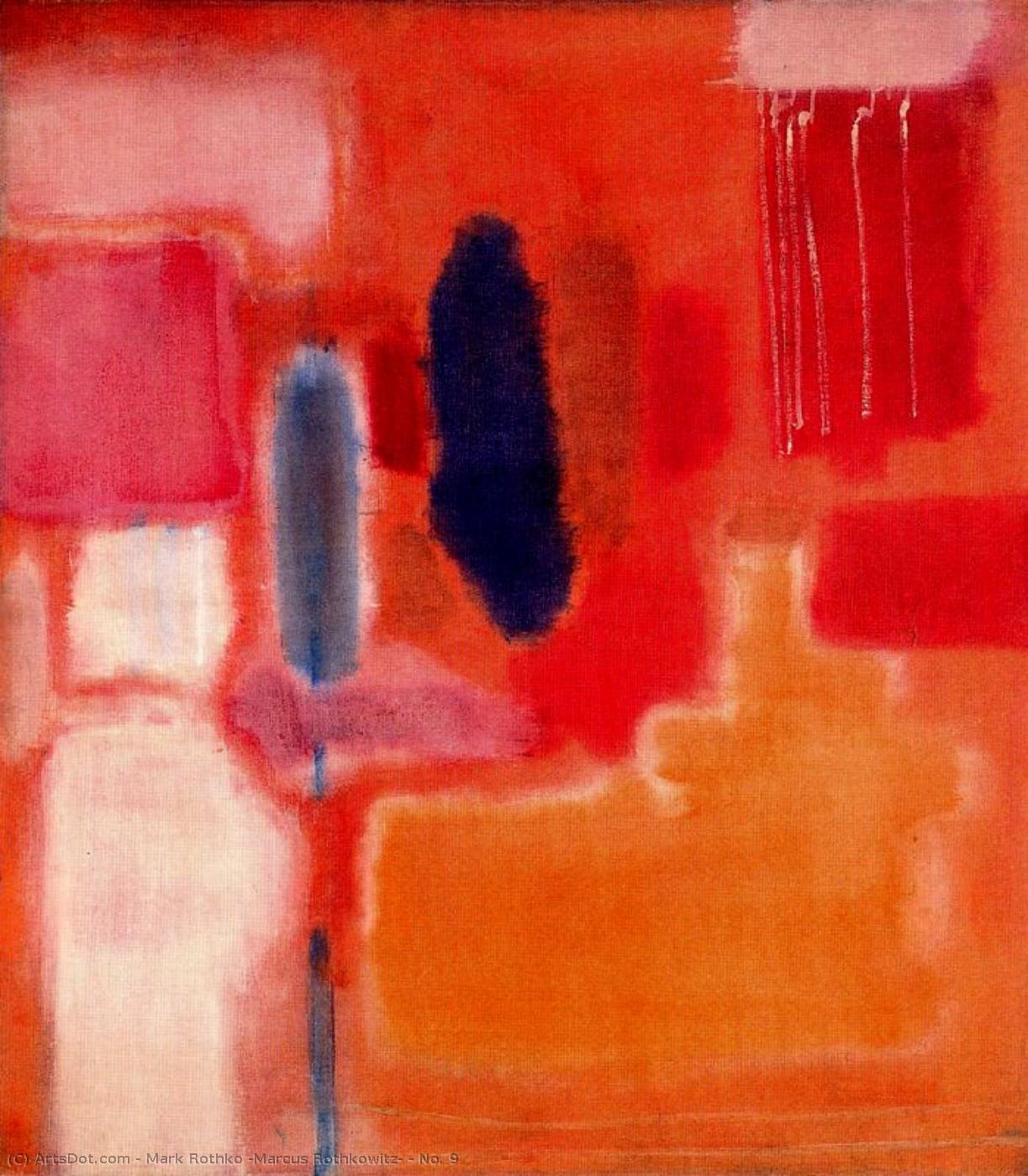
“No. 9,” painted in 1948, stands as a cornerstone of Abstract Expressionism and embodies the profound emotional resonance that characterizes Mark Rothko's oeuvre. More than just pigment on canvas, it represents an attempt to distill experience into its purest form—a deliberate stripping away of detail to reveal the underlying essence of feeling. The artwork’s deceptively simple composition consists of stacked rectangles of crimson and tangerine hues, punctuated by subtle bands of azure. These shapes aren't merely decorative; they are carefully calibrated to create a visual rhythm that draws the viewer inward, fostering contemplation rather than active observation.
The Genesis of Color Field Painting
Rothko’s approach to painting—often termed “Color Field”—was revolutionary for its time. Rejecting traditional representational art, he sought to bypass intellectual analysis and tap directly into primal emotions. Influenced by Zen Buddhism and Eastern philosophy, Rothko believed that color itself could convey spiritual truths. He meticulously layered thin washes of pigment onto the canvas, achieving a velvety surface texture that seemed to absorb light rather than reflect it. This technique—a deliberate departure from brushstrokes—was painstakingly developed over years of experimentation, prioritizing tonal harmony and luminosity above all else. The resulting canvases are less about depicting a scene or subject matter and more about presenting an immersive experience for the viewer.
Symbolism Within Minimalism
Despite its apparent lack of visual complexity, “No. 9” is laden with symbolic significance. Rothko himself famously described his paintings as "windows onto eternity," suggesting that they aspire to transcend the limitations of human perception and access a realm beyond the tangible world. The dominant reds and oranges evoke feelings of warmth, passion, and vitality—colors associated with life force and primal instinct. Simultaneously, the blues introduce an element of melancholy and introspection, representing sorrow, contemplation, and perhaps even transcendence. These contrasting hues coexist in equilibrium, mirroring the complexities of human experience itself.
Historical Context: The Postwar Landscape
“No. 9” emerged from the aftermath of World War II, a period marked by disillusionment and uncertainty. Artists like Rothko responded to the trauma of the conflict with an earnest desire for spiritual renewal. Color Field painting arose as a reaction against the anxieties of Surrealism and Cubism, offering solace in its quiet contemplation and prioritizing emotional expression over intellectual precision. The canvas embodies the spirit of this era—a yearning for beauty amidst darkness, a belief in the transformative power of art to communicate profound truths about human existence.
Emotional Resonance: An Invitation to Reflection
Ultimately, “No. 9” succeeds in eliciting an emotional response that transcends mere visual stimulation. Its subtle gradations of color invite viewers to linger before it, allowing them to immerse themselves in its contemplative atmosphere. The absence of discernible form encourages a surrender to feeling—a recognition that art can communicate truths beyond the realm of rational thought. Like many of Rothko’s paintings, “No. 9” remains an enduring testament to the power of color and silence to provoke introspection and inspire awe. It serves as a poignant reminder that beauty can reside in simplicity and that profound emotion can be conveyed without resorting to elaborate imagery.
问答详情
马克·罗斯科 的《No. 9》 是否属于公有领域?
马克·罗斯科 的《No. 9》 的版权说明:该作品属于 仍受版权保护。这决定了是否可以自由进行图像复制。
"No. 9" 是在哪一年创作的?
马克·罗斯科 的《No. 9》创作于1948年。
在 1948 年创作“No. 9”时,马克·罗斯科 的年龄是多少?
马克·罗斯科 在 45 岁时创作了《No. 9》。艺术家出生于 1903,该作品创作于 1948 年。
在哪里可以找到关于马克·罗斯科 的《No. 9》的数据统计?
关于 马克·罗斯科 的《No. 9》 的统计数据可在该作品的 统计数据 页面查看:包括作品的每月访问量、艺术家作品的访问量,以及近期访客的国家和语言分布情况。
马克·罗斯科 的《No. 9》 的技法与风格具有哪些特征?
马克·罗斯科 的《No. 9》 将 Acrylic On Canvas 技法与 Color Field 流派风格完美融合。技法与流派分别描述了作品的创作手法及其艺术风格。
"No. 9" 的作者是谁?属于哪种艺术流派?
"No. 9" 由 马克·罗斯科 以 Color Field 流派风格创作而成。艺术家与艺术流派共同定义了作品的传承。
哪家博物馆收藏了《No. 9》的原作?
您可以在 国家美术馆, Washington, USA 欣赏到原件《No. 9》。
在“No. 9”中,融合了怎样的心境与情感?
《马克·罗斯科 的《No. 9》》所传达的意境为Serene,其情感基调为Reflective。