
由我们的艺术家按需定制,为您提供您所选尺寸及画框的布面手工油画。 ( 切换至版画销售渠道 切换至数字图像销售渠道)





























您可以从与原作比例一致的预设尺寸中进行选择。

请输入您需要的宽度和高度,以适配您的画框或墙面。由于作品为手工绘制,若您选择不同的尺寸比例,艺术家可能会在画面边缘多画一些或稍作裁剪 —— 由您决定。在开始绘画之前,我们会为您发送一份数字效果图供您确认。本页面上展示的图片并非最终实物 —— 只有效果图才能反映真实结果。
Music
复刻品尺寸说明
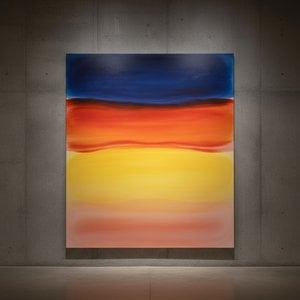
In the realm of American Abstract Expressionism, few works command the soul with such quiet intensity as Mark Rothko’s “Music,” painted in 1949. This masterpiece transcends the boundaries of mere visual representation, offering instead a profound meditation on emotion and spirituality. The canvas presents a striking composition of two rectangular blocks of color—predominantly deep crimson and vibrant orange—stacked vertically against one another. This arrangement creates an arresting juxtaposition that immediately captures the viewer's gaze, pulling them into a space where color becomes the primary language of human experience.
The technique employed by Rothko in “Music” is nothing short of miraculous. Rather than utilizing heavy, opaque layers, he meticulously applied thin washes of pigment to create luminous, breathing surfaces. Through a method known as “muted staining,” Rothko allowed each color to bleed subtly into its neighbor, resulting in hazy, atmospheric effects that dissolve the hard edges of the forms. The crimson block pulsates with an inner vibrancy, hinting at raw passion and intensity, while the orange rectangle radiates a sense of warmth and serenity. This delicate layering ensures that the colors remain pure and uncomprompered, maximizing their expressive potential and allowing them to glow from within the canvas.
Beyond its aesthetic allure, “Music” is steeped in deep symbolic meaning. The stacked rectangles serve as a visual metaphor for the interconnectedness of opposing forces—joy and sorrow, light and darkness—mirroring the harmonic complexities found in musical composition itself. Some scholars interpret the crimson tones as symbols of primal energy and instinct, while the orange hues embody compassion and contemplation. In this way, the painting acts as a conduit for accessing states of consciousness that exist beyond rational thought, inviting a personal dialogue between the artwork and the observer.
Emerging from a period of significant artistic experimentation following World War II, this work reflects the broader existential questions of its era. As artists grappled with the complexities of the human condition, Rothko sought to communicate profound truths through the pure emotional impact of color and form. For collectors and interior designers alike, a reproduction of “Music” offers more than just a decorative element; it provides a focal point for contemplation and a sanctuary of stillness. Whether adorning a modern gallery or a private residence, the painting’s minimalist form forces us to confront our own perceptions, reminding us that true beauty resides in the realm of feeling rather than visual illusion.

1903 - 1970 , 拉脱维亚

深入探索色域绘画的哲学基石,解读巴尼特·纽曼、马克·罗斯科等大师的作品。专业艺术分析,助您理解抽象表现主义与纯粹感知之间的关系,提升艺术收藏鉴赏力。

Explore the profound emotional depth of Color Field painting. Discover the history of mid-century abstraction, from Rothko to Newman, and learn how pure color transforms the viewer's experience through our expert art history guide.

探索抽象表现主义的十幅经典杰作!波洛克、罗斯科等大师作品,揭秘艺术史上的重要瞬间。WahooArt.com为您呈现高品质艺术品复制和精选家居装饰方案,感受现代艺术的力量与魅力。立即浏览全系列!

探索马克·罗斯科25幅杰作,感受抽象表现主义的色彩力量与深刻情感。从经典色域绘画到无题系列,了解艺术史上的大师及其作品背后的故事。WahooArt.com提供博物馆级高质量复制品,为您的家居装饰带来艺术灵感!立即探索完整收藏。
Explore the profound emotional depth of Mark Rothko's abstract expressionism. Discover the history, techniques & lasting impact of this pivotal Color Field painter. Expert insights for collectors and art enthusiasts.


 实景预览
实景预览
 发送
发送 分享
分享
 详情
详情 指南
指南

 下载图片
下载图片
 相似作品
相似作品 X射线
X射线 幻灯片播放
幻灯片播放 统计数据
统计数据

 阅读全文
阅读全文









 玻璃选项仅适用于110厘米以下的尺寸。


