
博物馆级艺术微喷或帆布版画,制作高效,并提供多种饰面选择。 ( 购买手绘画作 切换至数字图像销售渠道)
从与原作比例一致的预设尺寸中进行选择。

您可以输入自定义尺寸,以适配特定的画框或空间。如果您选择的尺寸与原图比例不符,我们将对作品进行裁剪,或通过镜像填充/纯色填充边缘的方式来扩展图像。在开始制作之前,我们会向您发送一份数字效果图供您确认。
请注意,屏幕上的预览并不能反映实际的裁剪或扩展效果。只有效果图才能准确展示最终的构图。
虽然我们提供定制尺寸,但为了保持原图比例,我们建议您从预设列表中选择尺寸。

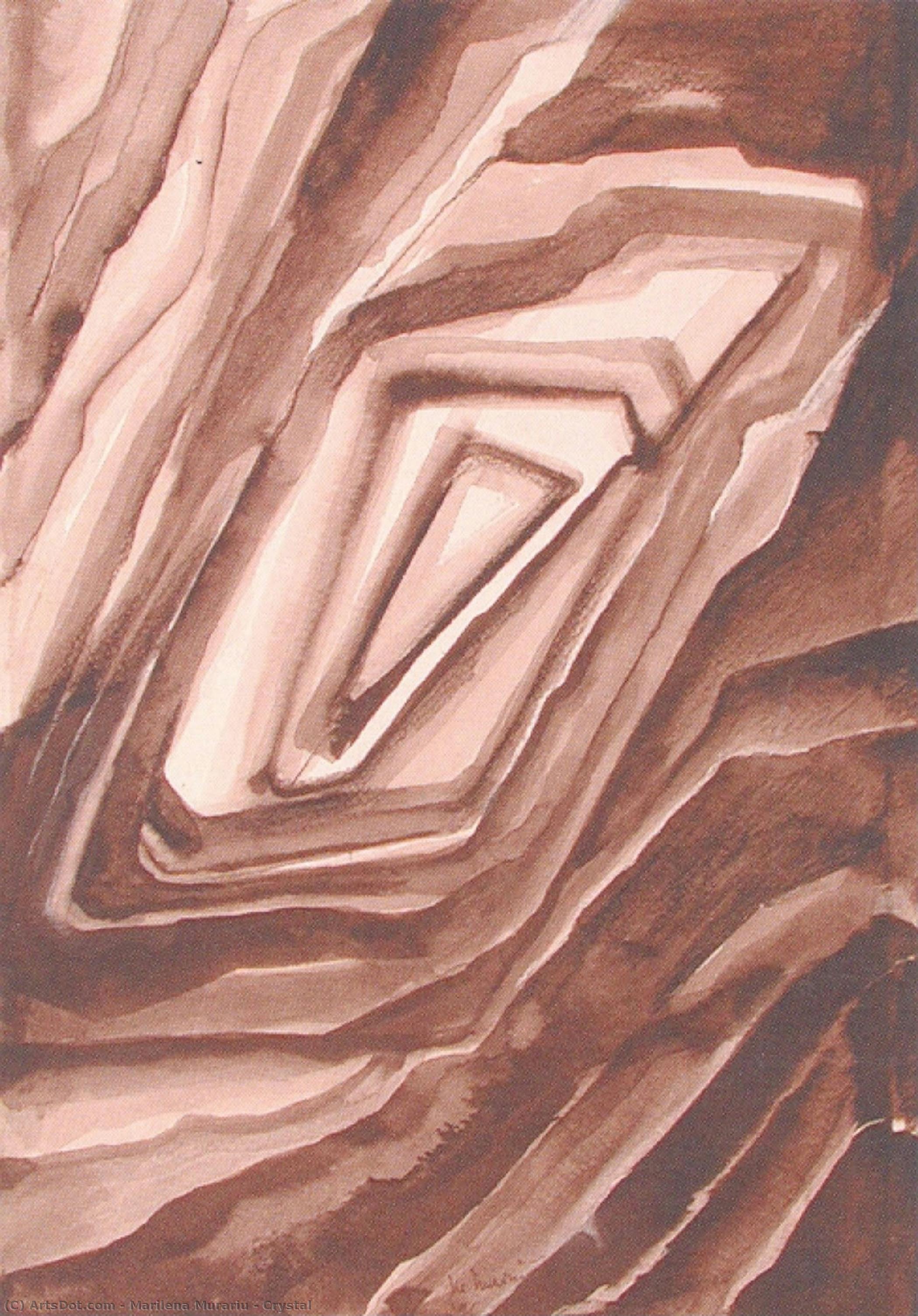
Crystal
复制品尺寸

Marilena Murariu, born in Iași, Romania, in 1954, emerged as a significant voice within the Romanian art scene following a period of intense political and social change. Her formative years were steeped in the atmosphere of communist Romania, an environment that undoubtedly shaped her later artistic concerns. Iași, a historic university city with a rich cultural heritage, provided a backdrop for Murariu’s early exposure to art, though opportunities for free expression were limited. She pursued formal training at the Bucharest National University of Arts, graduating in 1981 as a painter. This period was crucial in honing her technical skills and establishing a foundation in traditional painting techniques—skills she would later employ with subversive intent.
Murariu’s work is immediately recognizable for its bold, satirical depictions of political figures and events. She doesn't shy away from controversy; instead, she embraces it, using her art as a platform to expose what she perceives as the moral failings of politicians and the manipulative tactics employed by media outlets. Her paintings are not merely representations of reality but rather pointed commentaries on power dynamics, corruption, and societal hypocrisy. This critical stance sets her apart within Romanian contemporary art.
While firmly rooted in the Romanian context, Murariu’s artistic development reflects a broader engagement with Expressionism and Analytical Cubism. The fragmented forms and emotional intensity of Expressionism are evident in her often distorted figures and vibrant color palettes. The analytical approach of Cubism informs her deconstruction of traditional perspectives and her exploration of multiple viewpoints within a single composition. However, Murariu doesn’t simply replicate these styles; she synthesizes them with a uniquely Romanian sensibility, creating a visual language that is both intellectually stimulating and emotionally charged.
Central to Murariu's oeuvre is the exploration of political spectacle and its impact on public perception. Her series “About Elena in general…” (2011) exemplifies this focus, constructing a provocative discourse around Elena Ceaușescu—a figure synonymous with the excesses of the communist regime. The exhibition deliberately eroticized Elena, juxtaposing her image with contemporary Romanian politicians to expose perceived corruption and debauchery. Similarly, “Show-off, of, of!” (2012) further dissects the performative nature of politics, highlighting its inherent theatricality. Murariu’s technique is characterized by a masterful use of color, often employing jarring contrasts and exaggerated forms to create a sense of unease and disorientation. She frequently incorporates historical references and cultural allusions, adding layers of meaning to her work.
Marilena Murariu occupies a unique position in Romanian art history as an artist who dared to confront sensitive political issues head-on during a period of significant transition. Her willingness to challenge authority and expose hypocrisy has earned her both critical acclaim and controversy. She is not simply documenting events; she is actively engaging with them, prompting viewers to question the narratives they are presented with. Beyond her specific critiques of Romanian politics, Murariu’s work resonates more broadly as a commentary on the universal themes of power, corruption, and manipulation. Her legacy lies in her ability to combine technical skill with intellectual rigor and emotional depth, creating paintings that are both visually arresting and profoundly thought-provoking.

1954 - , Romania

 效果预览
效果预览
 分享
分享 分享
分享
 详情
详情 指南
指南

 下载
下载
 相似作品
相似作品 X射线
X射线 幻灯片播放
幻灯片播放 统计数据
统计数据
 展开详情
展开详情






































 玻璃选项仅适用于110厘米以下的尺寸。


