获取远超网页预览效果的印刷级文件。我们销售的每一张数字图像均源自库存数据库中的高分辨率母版——宽度通常在 5,000 至 15,000 像素之间——因此您可以放心地进行大幅打印、局部裁剪或还原细腻的细节。
每一件作品在离开我们的工作室前都经过了精心的处理。数字影像专家会对照原作核对色彩,并在必要时进行校正,随后利用专业修图工具提升清晰度与细节表现——且始终忠实于艺术家的笔触与风格。最终呈现的图像宛如原作本身,而非仅仅是一张加了滤镜的扫描件。
您可以在最终定稿前进行审核:我们的专家将在 72 小时内通过电子邮件向您发送图像以供审阅。如果不满意?您可以要求改进或修正;若质量未达预期,亦可申请退款。
这也是出版商、设计工作室、画廊及印刷厂所信赖的品质。
选择 WahooArt.com,您获得的不仅仅是一张图像——您收到的是经过专业级增强、精雕细琢的数字艺术作品,并享有满意保证。以下是您的订单中自动包含的所有内容:
您的高分辨率数字图像文件将在下单后 72 小时内通过电子邮件发送给您 —— 即可立即使用。
您的艺术品经过专业优化,结合先进的 AI 技术与人工修饰,确保呈现极致的细节、清晰度与色彩准确度。
不小心删除了文件或找不到了?没关系——我们将随时为您免费重发。
即刻拥有您的艺术作品,无需支付任何关税、税费或运费——数字下载始终免税。
我们通过专业工具与色彩管理技术,确保您的数字图像尽可能真实地还原原作色彩。
如果您对所购数字图像不满意,我们将在100天内为您进行修改或提供100%的全额退款——无需任何理由。
不满意?在收到数字文件后的100天内,您可以申请全额退款——无需任何理由。
购买 3 张享 10% 折扣 - 购买 5 张享 15% 折扣 - 购买 10 张以上享 20% 折扣。非常适合创意项目、画廊及机构使用。
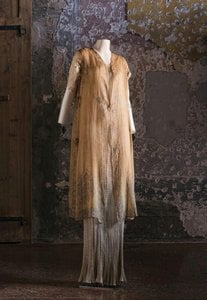
Mariano Fortuny y Madrazo (1871-1949), the Spanish artist and designer born in Venice, remains a figure of profound mystery and captivating beauty. More than simply a painter or textile innovator, he was a master orchestrator of sensation – a creator who seamlessly blended Orientalist dreams with European elegance, theatrical spectacle with intimate design. His legacy isn’t confined to a single style; it's woven into the very fabric of his creations, most famously embodied in pieces like this exquisite tunic, a testament to his revolutionary approach to color, texture, and light.
Fortuny’s artistic journey began not in Spain, but amidst the vibrant canals and artistic circles of Venice. His father, Mariano Fortuny y Marsal, a celebrated genre painter who tragically died when Mariano was just three years old, instilled in him a deep appreciation for visual storytelling and the power of capturing fleeting moments. This early exposure shaped his own approach – he wasn’t merely depicting reality; he was constructing an atmosphere, a mood, a carefully curated experience for the viewer. His work frequently draws upon the exoticism of the East, particularly Morocco, reflecting a fascination with its rich culture, vibrant colors, and intricate patterns, which he then reinterpreted through a distinctly European lens.
This particular tunic exemplifies Fortuny’s groundbreaking techniques. Crafted from Marocain silk crepe – a luxurious fabric known for its subtle sheen and ability to hold dye with remarkable intensity – it showcases his mastery of layering and manipulation. The design itself is a marvel of intricate stamping, a process he perfected over decades, allowing him to create incredibly detailed patterns directly onto the fabric without the need for traditional printing methods. This technique, combined with hand-painted embellishments, resulted in a surface that appears both meticulously planned and intuitively organic.
Notice the subtle variations in color – the deep blues and greens of the background, punctuated by delicate ivory accents. Fortuny’s use of color wasn't arbitrary; he understood its psychological impact, employing muted tones to evoke a sense of serenity and mystery while strategically placed highlights drew the eye to key elements within the design. The fabric itself is treated with a special finish that gives it a unique tactile quality – a slight sheen combined with a subtle matte effect, creating an illusion of depth and movement.
The tunic’s design isn't merely decorative; it’s laden with symbolic meaning. The geometric patterns—squares, rectangles, and stylized floral motifs—echo the aesthetic principles of ancient civilizations, particularly Egypt and Greece. Fortuny was deeply influenced by antiquities, collecting fragments of Roman mosaics and Egyptian textiles that informed his artistic vision. The arrangement of these shapes suggests a deliberate attempt to evoke a sense of timelessness, connecting the viewer to a distant past.
Furthermore, the tunic’s overall composition—the interplay of light and shadow, the carefully balanced proportions—recalls the principles of theatrical design, a field in which Fortuny made his most significant contributions. He revolutionized stage lighting with his “fortuny cyclorama dome,” a device that used reflected light to create seamless transitions between scenes, transforming the theater into a truly immersive experience. This same meticulous attention to detail and dramatic effect is evident in this tunic, suggesting a deliberate intention to transport the wearer – and the viewer—to another world.
Mariano Fortuny's work continues to resonate today, not only for its exquisite beauty but also for its innovative techniques and profound artistic vision. His influence can be seen in the work of countless designers, from Elsa Schiaparelli to Yves Saint Laurent. The “Delphos” gown, a signature piece of his oeuvre, remains an iconic symbol of elegance and sophistication. Reproductions of Fortuny’s textiles are highly sought after by collectors and interior designers alike, who appreciate their timeless appeal and the unique atmosphere they create. This tunic, in particular, stands as a powerful reminder of the artist's genius – a testament to his ability to transform simple materials into objects of extraordinary beauty and enduring significance.

1871 - 1949 , 西班牙

 切换至版画销售渠道
 分享
分享 分享
分享
 详情
详情 指南
指南

 下载作品
下载作品
 相似作品
相似作品 幻灯片播放
幻灯片播放 问答
问答 统计数据
统计数据


 展开全文
展开全文