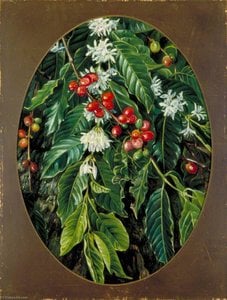
Acrylic On CanvasWallArtBotanical Illustration
 1870
1870 35.0 x 20.0 cm
 Marianne North Gallery
由我们的艺术家按需定制,为您提供您所选尺寸及画框的布面手工油画。 ( 切换至版画销售渠道 切换至数字图像销售渠道)





























从与原作比例一致的预设尺寸中进行选择。

您可以输入自定义尺寸,以适配特定的画框或空间。如果所选尺寸与原图比例不符,我们将通过裁剪作品或添加手绘元素来扩展画面。数字样稿将在制作开始前发送给您确认。
请注意,屏幕预览无法准确反映实际的裁剪或扩展效果,只有样稿才能真实呈现最终的构图。
虽然我们提供定制尺寸服务,但为了保留原作比例,建议您从预设列表中选择尺寸。

Study of Screw Pine
复制品尺寸
Marianne North's "Study of Screw Pine," painted in 1870, isn't merely a botanical illustration; it’s a carefully constructed tableau of tranquility and vibrant life. Captured with an almost painterly looseness, the work transports us to the humid heart of the Caribbean, specifically Jamaica, where North meticulously documented the region’s extraordinary flora during her extensive travels. The painting immediately draws the eye with its bold palette – deep blues mirroring the sky, punctuated by the striking emerald greens of the palm fronds and the warm ochre tones of the earth. It's a scene brimming with an almost palpable sense of warmth and stillness, a deliberate antidote to the often-harsh realities of Victorian exploration.
North’s technique is remarkably free and expressive for a botanical study. She eschews the rigid precision favored by earlier scientific illustrators, opting instead for a looser brushstroke that imbues the scene with a sense of immediacy and movement. The palm trees aren't rendered as static forms; they sway gently in an imagined breeze, their fronds cascading downwards like liquid emeralds. This dynamic approach, combined with her skillful use of light and shadow, creates a captivating illusion of depth and volume – you can almost feel the humidity hanging in the air.
Understanding Marianne North requires acknowledging the context of her extraordinary life. Born into privilege in Hastings, England, she defied societal expectations by embarking on a decades-long journey across continents, driven by an insatiable curiosity and a profound love for the natural world. Her travels weren’t simply expeditions; they were deeply personal quests fueled by a desire to document and celebrate the beauty of remote landscapes and their unique botanical treasures. “Study of Screw Pine” is a testament to this adventurous spirit – a tangible record of her dedication to observing and capturing the essence of distant lands.
North’s expeditions weren't undertaken alone. She often collaborated with other naturalists, including Frederic Edwin Church, whose patronage and encouragement played a significant role in supporting her work. Her gallery at the Royal Botanic Gardens, Kew, which opened in 1882, became a remarkable showcase for these paintings, offering the public an unprecedented glimpse into the wonders of the world through North’s artistic eye. The gallery itself is a testament to her vision – a vibrant space filled with over 800 botanical paintings, each telling its own story of exploration and discovery.
Beyond its purely aesthetic qualities, “Study of Screw Pine” carries subtle symbolic weight. The screw pine itself—a species native to the Caribbean—represents resilience and adaptability, thriving in challenging environments. The painting’s overall mood evokes a sense of peace and contemplation, inviting the viewer to escape the pressures of Victorian life and immerse themselves in the beauty of nature. There's an underlying current of melancholy too; North’s travels were often solitary, and her paintings serve as both a record of her experiences and a poignant expression of her longing for connection with the natural world.
Today, reproductions of “Study of Screw Pine” offer a captivating window into the Victorian era and the pioneering spirit of Marianne North. Whether adorning a living room wall or gracing a study, this painting’s serene beauty and evocative atmosphere continue to resonate with viewers, reminding us of the enduring power of art to transport us to distant lands and inspire a deeper appreciation for the natural world.


1830 - 1890 , 英国
Discover the exquisite world of Victorian botanical art. Explore the intersection of scientific precision and luxury aesthetics through masterfully curated floral illustrations and hand-painted oil reproductions for discerning collectors and fine interiors.

Discover the breathtaking botanical world of Marianne North. Explore her vibrant Victorian oil paintings of exotic landscapes, from Brazil to Jamaica, through an expert art-historical lens. Perfect for classic art enthusiasts and collectors of fine natural history art.


 效果预览
效果预览
 分享
分享 分享
分享
 详情
详情

 下载
下载
 相似作品
相似作品 X射线
X射线 幻灯片播放
幻灯片播放 统计数据
统计数据 展开详情
展开详情









 玻璃选项仅适用于110厘米以下的尺寸。