
 2013
2013 150.0 x 150.0 cm
购买高分辨率增强版数字图像,其品质远超在线预览。
每一份文件都由我们的内部专家使用先进工具与专业的后期润色技术精心打造。我们确保每一张图像都具备卓越的清晰度、精准的色彩还原度以及细腻的细节表现。
最终文件将在 72 小时内通过电子邮件交付,并针对专业、编辑及印刷用途进行了优化。其品质与顶级设计工作室、出版社和画廊所信赖的标准完全一致。
下载高分辨率文件,用于个人展示、打印及创意项目。 ( 切换至版画销售渠道 订购此收藏品的纯手工复刻画作)
选择 WahooArt.com,您获得的不仅仅是一张图像——您收到的是经过专业级增强、精雕细琢的数字艺术作品,并享有满意保证。以下是您的订单中自动包含的所有内容:

您的高分辨率数字图像文件将在下单后 72 小时内通过电子邮件发送给您 —— 即可立即使用。

您的艺术品经过专业优化,结合先进的 AI 技术与人工修饰,确保呈现极致的细节、清晰度与色彩准确度。

不小心删除了文件或找不到了?没关系——我们将随时为您免费重发。

即刻拥有您的艺术作品,无需支付任何关税、税费或运费——数字下载始终免税。

我们通过专业工具与色彩管理技术,确保您的数字图像尽可能真实地还原原作色彩。

如果您对所购数字图像不满意,我们将在100天内为您进行修改或提供100%的全额退款——无需任何理由。

不满意?在收到数字文件后的100天内,您可以申请全额退款——无需任何理由。

购买 3 张享 10% 折扣 - 购买 5 张享 15% 折扣 - 购买 10 张以上享 20% 折扣。非常适合创意项目、画廊及机构使用。

Born in the vibrant, historically layered landscape of Mexico City in 1975, Mariana Castillo Deball has emerged as a profound voice in contemporary art, one that refuses to accept history as a static or singular narrative. Her practice is not merely an act of creation but a deep, investigative excavation into the very fabric of how we remember and how we are remembered. To encounter her work is to enter a space where the boundaries between science and art, between the tangible object and the ephemeral ghost of the past, begin to dissolve. She does not simply present art; she orchestrally arranges fragments of reality to challenge our perceptions of cultural heritage and the authority of the archive.
Her artistic formation provided the intellectual scaffolding for this complex inquiry. After honing her foundational skills at the Universidad Nacional Autónoma de México, she moved to Europe to pursue postgraduate studies at the prestigious Jan Van Eyck Academie in Maastricht. It was during this period that her aesthetic sensibilities were deeply influenced by the pioneering spirit of Eduardo Paolozzi. From him, she inherited a fascination with the power of juxtaposition—the idea that by layering disparate elements, such as photographic reproductions and sculptural forms, one can generate entirely new, often contradictory, meanings. This mastery of collage-like thinking became a cornerstone of her methodology, allowing her to treat history itself as a medium to be cut, pasted, and recontextualized.
What distinguishes Castillo Deball from many of her contemporaries is her commitment to a process that mirrors the rigorous disciplines of archaeology, ethnography, and the history of science. She does not approach the studio as a solitary creator, but rather as a researcher immersed in archives, geological specimens, and textual histories. Her work often involves a painstaking process of cataloging and preserving materials, treating objects with the same reverence and scrutiny as a paleontologist might treat an Ediacaran fossil. This meticulousness allows her to explore the biographies of things—the itinerant lives of museum objects that have wandered through collections, losing or gaining meaning as they move across borders.
In her large-scale installations, she weaves together a kaleidoscopic array of media, including:
Through these mediums, she explores themes of fragmentation and reconstruction. She often draws upon indigenous imagery, such as the majestic yet fractured figure of the Aztec deity Coatlicue, to examine how ancient symbols persist and transform within modern globalized contexts.
The significance of Mariana Castillo Deball’s work lies in its ability to initiate a dialogue between contemporary art and the institutional weight of museums and ethnographic collections. By bringing the "forgotten" into new, provocative relationships, she creates alternative readings of history that allow for a more polyphonic and inclusive understanding of our shared past. Her recognition has been widespread, marked by prestigious honors such as the Preis der Nationalgalerie für Junge Kunst in 2013 and major exhibitions at institutions like the Hamburger Bahnhof in Berlin, the Guggenheim in New York, and the Biennale of Sydney.
As she continues to live and work in Berlin, her practice remains a vital interrogation of what survives the passage of time. She asks us to consider: What happens if we read contemporary art as future archaeology? In doing so, she ensures that her work is not just a reflection on what has been lost, but a profound investigation into how new territories of meaning can be discovered within the ruins of the old.
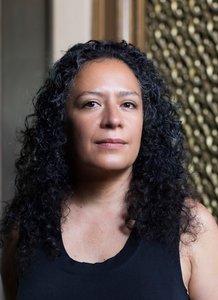
1975 - , Mexico


 实景预览
实景预览
 发送
发送 分享
分享
 详情
详情 指南
指南

 下载图片
下载图片
 相似作品
相似作品 X射线
X射线 幻灯片播放
幻灯片播放 统计数据
统计数据 阅读全文
阅读全文


