由我们的艺术家按需定制,为您提供您所选尺寸及画框的布面手工油画。 ( 切换至版画销售渠道 切换至数字图像销售渠道)
您可以从与原作比例一致的预设尺寸中进行选择。

您可以输入自定义尺寸,以适配特定的画框或空间。如果所选尺寸与原图比例不符,我们将通过裁剪作品或添加手绘元素来扩展画面。数字样稿将在制作开始前发送给您确认。
请注意,屏幕预览无法准确反映实际的裁剪或扩展效果,只有样稿才能真实呈现最终的构图。
虽然我们提供定制尺寸服务,但为了保留原作比例,建议您从预设列表中选择尺寸。

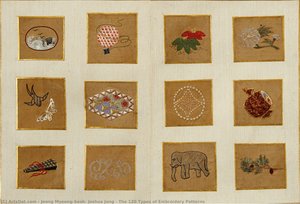
Embroidery design
复刻品尺寸说明

In the grand tapestry of art history, certain names shine with a particular brilliance, not merely for their technical mastery but for the barriers they shattered. Margaretha Helm (1659-1742) was one such luminary. Born in the industrious city of Nuremberg, Germany, Helm emerged during an era when the artistic landscape was overwhelmingly dominated by men. While many women of her time were relegated to the private sphere, Helm carved out a distinguished and public career that bridged the gap between delicate needlework and the rigorous discipline of copper plate engraving. Her life stands as a testament to the power of creative audacity, as she navigated the complex artisan guilds of Nuremberg to establish herself as both an educator and a published designer.
The foundation of Helm’s artistry was laid within the rich traditions of the German artisan class. Though the specific details of her early schooling remain shrouded in the mists of the seventeenth century, it is evident that she underwent a rigorous education in the essential crafts of her age. She mastered the intricate language of embroidery and the precise, demanding science of engraving—skills that allowed her to envision a design on metal before translating its soul into thread. This dual mastery gave her a unique perspective, enabling her to create templates that were as much works of graphic art as they were blueprints for textile decoration.
The pinnacle of Helm’s professional achievement arrived in 1720 with the publication of her monumental three-volume work, Kunst-und Fleiss-übende Nadel Ergötzungen, or Pleasing Embroidery Exercises. Published by Johann Christoph Weigel, this ambitious collection was far more than a mere instructional manual; it was a showcase of high Baroque aestheticism. Through these volumes, Helm presented meticulously engraved copper plates that served as exquisite templates for crafters. These designs were intended for a variety of ornamental purposes, ranging from the embellishment of fine clothing to the creation of elaborate shoe decorations, ensuring her influence reached the most fashionable corners of European society.
Her work within these volumes reveals a profound understanding of the late Baroque period's visual vocabulary. Her compositions are characterized by:
Beyond the physical beauty of her designs, Margaretha Helm’s historical significance lies in her role as a trailblazer for female authorship. In an age where women's contributions to the decorative arts were often anonymous or attributed to male heads of households, Helm had the courage to publish her work under her own name. This act of self-assertion transformed her from a mere practitioner of a craft into a recognized creator of fine art. Her ability to command respect in both the textile and printmaking communities remains an inspiration to historians studying the evolution of gender roles in the arts.
Today, we look back at Helm not just as an embroidery teacher, but as a visionary who utilized the medium of the printed plate to expand the boundaries of textile design. Her legacy lives on in the intricate patterns that continue to fascinate collectors and scholars alike, reminding us that true artistry knows no bounds of gender, only the limitless potential of the human imagination.

1659 - 1742 , Germany

Discover the timeless elegance of hand-painted botanical art. From Impressionist florals to Victorian realism, elevate your luxury interiors with museum-quality oil reproductions and bespoke commissions curated by WahooArt's master artists.


 实景预览
实景预览
 发送
发送 分享
分享
 详情
详情 指南
指南

 下载图片
下载图片
 相似作品
相似作品 X射线
X射线 幻灯片播放
幻灯片播放 统计数据
统计数据
 阅读全文
阅读全文






































 玻璃选项仅适用于110厘米以下的尺寸。