
博物馆级艺术微喷或帆布版画,制作高效,并提供多种饰面选择。 ( 订购此收藏品的纯手工复刻画作 切换至数字图像销售渠道)





























您可以从与原作比例一致的预设尺寸中进行选择。

请输入您所需的宽度和高度,以适配您的画框或墙面。由于印刷品只能进行裁剪,无法超出原图尺寸,因此若比例不一致,画面的一部分将会被裁切。在正式印刷之前,我们会为您发送一份数字效果图供您确认。本页面显示的图片并非最终裁剪后的效果——只有效果图才能展示真实的裁剪情况。
Rotary demisphere
复刻品尺寸说明
Marcel Duchamp’s Rotary Demisphere, created in 1925, isn't merely a painting; it’s an invitation to dismantle the very foundations of visual perception. This remarkable work, rendered in papier-mâché and meticulously assembled, transcends the boundaries of traditional art by challenging our ingrained assumptions about representation and spatial relationships. The piece immediately commands attention with its arresting circular form – a large, metallic demisphere reminiscent of an antique fan or perhaps a forgotten light fixture. However, it’s not the object itself that holds the primary intrigue, but rather the dynamic illusion it generates when rotated.
The photograph captures a moment frozen in time, revealing a complex interplay of elements. A clock, subtly positioned near the top left corner, and another clock towards the bottom right, serve as anchors within this shifting landscape, grounding the viewer while simultaneously emphasizing the work’s temporal dimension. Two small figures, their identities deliberately ambiguous, are nestled amongst the machinery – they could be observers, participants in a silent performance, or perhaps simply symbolic representations of the human experience caught within the mechanics of perception. Duchamp masterfully employs a copper collar and plexiglass dome to contain and amplify this visual effect, creating a contained spectacle that draws the eye into its mesmerizing spiral.
Rotary Demisphere is deeply rooted in the spirit of Dadaism, the anti-art movement that emerged during World War I. Duchamp, along with fellow Dadaists, sought to reject established artistic norms and challenge the very definition of art itself. Rather than aiming for aesthetic beauty or skillful execution, they prioritized conceptual ideas and explored the role of chance, absurdity, and critique. This piece embodies this ethos perfectly – it’s not about creating a visually pleasing image but about provoking thought and disrupting conventional ways of seeing. Duchamp's intention wasn’t to depict reality faithfully; instead, he aimed to expose the mechanisms by which our brains construct meaning from sensory input.
The work’s creation coincided with Duchamp’s exploration of optical devices and his fascination with creating illusions. He was deeply interested in how vision operates – not as a passive reception of external stimuli but as an active, interpretive process. As documented in archival audio (available via the MoMA link), Duchamp described the experience of viewing the rotating demisphere: “Vision is produced internally, and what Duchamp is doing with the *Rotary Demisphere* is creating a kind of vision that doesn’t have anything to do with what’s out there in the world.” This statement encapsulates the core of his artistic strategy – to shift the focus from representation to perception itself.
Despite its seemingly simple form, Rotary Demisphere represents a remarkable feat of engineering and craftsmanship. The intricate arrangement of gears, pulleys, and motors within the copper collar demonstrates Duchamp’s meticulous attention to detail and his willingness to embrace technological innovation as a means of artistic expression. The use of papier-mâché, combined with the polished metal components, creates a fascinating juxtaposition of materials – suggesting a dialogue between industrial precision and handmade artistry.
Furthermore, the inclusion of the engraved French phrase—"Rrose Sélavy et moi esquivons les ecchymoses des esquimaux aux mots exquis"—adds another layer of complexity to the work. This playful pun, referencing Duchamp’s pseudonym Rrose Sélavy and his exploration of language as a tool for subversion, underscores the artist's intellectual rigor and his commitment to challenging established conventions. Rotary Demisphere remains a pivotal work in the history of modern art, a testament to Duchamp’s revolutionary spirit and his enduring influence on generations of artists.
马塞尔·杜尚 的《Rotary demisphere》 传达出一种 Reflective 的情感基调。
"Rotary demisphere" 的色彩基调由以 Putty (#fce9b1) 为主的 Pastels 色系构成。
马塞尔·杜尚 的《Rotary demisphere》 推荐用于 Reflective,理想的摆放空间为 Living Room。通过结合使用场景与空间布局,可以更好地确定复制品的陈列位置。

1887 - 1968 , 法国
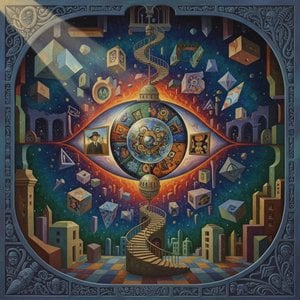
Embark on a visual journey through the world's most captivating illusions. From Trompe l'oeil realism to the geometric wonders of Op Art, explore how master artists manipulate perception and depth to create timeless masterpieces of optical wonder.

Master the nuances of three-dimensional art with our expert guide. Explore sculptural history, from Phidias to Neoclassicism, and learn to evaluate materiality, form, and technique like a true connoisseur. Elevate your collection with profound insights into the world of sculpture.

Embark on a visual journey through history's most captivating optical illusions. From Trompe l'oeil to Op Art, explore the masterpieces that challenge perception and redefine reality in the world of fine art.

Explore the profound world of optical art and masterpieces that redefine perception. From Vasarely’s geometric illusions to Farndon’s sensory reality, discover how legendary works challenge the eye and transform the viewer's experience through sophisticated abstraction.


 实景预览
实景预览
 发送
发送 分享
分享
 详情
详情 指南
指南

 下载图片
下载图片
 相似作品
相似作品 X射线
X射线 幻灯片播放
幻灯片播放 统计数据
统计数据

 阅读全文
阅读全文









 玻璃选项仅适用于110厘米以下的尺寸。


