
博物馆级艺术微喷或帆布版画,制作高效,并提供多种饰面选择。 ( 订购纯手工绘制画作 切换至数字图像销售渠道)





























您可以从与原作比例一致的预设尺寸中进行选择。

请输入您所需的宽度和高度,以适配您的画框或墙面。由于印刷品只能进行裁剪,无法超出原图尺寸,因此若比例不一致,画面的一部分将会被裁切。在正式印刷之前,我们会为您发送一份数字效果图供您确认。本页面显示的图片并非最终裁剪后的效果——只有效果图才能展示真实的裁剪情况。
Chessboard (Echiquier)
复刻品尺寸
Marcel Duchamp, a name synonymous with artistic revolution, consistently challenged the very definition of art throughout his prolific career. While celebrated for audacious “readymades” like *Fountain*, a porcelain urinal presented as sculpture, his explorations extended far beyond shock value. ‘Chessboard (Echiquier)’ from around 1937 offers a quieter, yet equally profound glimpse into Duchamp’s intellectual and artistic preoccupations. This isn't merely a depiction of a game; it is an embodiment of the artist’s lifelong fascination with strategy, intellect, and the dematerialization of art itself.
Duchamp’s relationship with chess was far from casual. He didn't simply play the game; he immersed himself in it, even contemplating a professional career as a chess master after largely abandoning painting in the early 1920s. This wasn’t a flight *from* art, but rather a redirection of artistic energy into a realm demanding logic, foresight, and abstract thought – qualities Duchamp increasingly valued over purely aesthetic concerns. ‘Chessboard (Echiquier)’ therefore becomes symbolic of this shift. The worn wood, the missing pieces, suggest not a game in progress, but a contemplation *of* the game, a frozen moment representing endless possibilities and strategic calculations. It’s a visual metaphor for the artist's own creative process: a deliberate arrangement of elements, a calculated disruption of expectations.
The simplicity of ‘Chessboard (Echiquier)’ is deceptive. Duchamp wasn’t interested in virtuoso painting or sculptural skill; his focus lay elsewhere. The work consists of sixty-four wooden squares nailed and glued onto plywood, a deliberately unrefined construction that emphasizes the object's conceptual nature over its aesthetic qualities. This deliberate lack of traditional artistic flourish aligns with Duchamp’s Dadaist principles – a rejection of bourgeois values and conventional artistic standards. By presenting a commonplace object—a chessboard—in an almost rudimentary form, he forces the viewer to question what constitutes art. Is it skill? Beauty? Or simply the artist's intention?
Duchamp’s impact on 20th and 21st-century art is immeasurable. He paved the way for Conceptual Art, Minimalism, and countless other movements that prioritize ideas over execution. ‘Chessboard (Echiquier)’ encapsulates this legacy perfectly. It's a work that doesn't demand to be *looked at* in the traditional sense; it demands to be *thought about*. Its enduring appeal lies not in its visual splendor, but in its ability to provoke questions and challenge assumptions. For collectors and interior designers alike, a reproduction of this piece offers more than just an aesthetic addition—it’s an invitation to engage with a pivotal moment in art history and a testament to the power of intellectual curiosity.
马塞尔·杜尚 也以 亨利-罗伯特-马塞尔·杜尚, Rrose Sélavy 等其他名称为人所知。
您可以通过亚麻画布手工油画复制品来订购《Chessboard (Echiquier)》的手绘复制品。您可以前往其手工油画复刻页面进行下单,并根据需求选择不同的尺寸。
“Chessboard (Echiquier)”创作于马塞尔·杜尚艺术生涯的Conceptual/Later Period时期。这一时期标志着该作品与艺术家艺术风格演进的紧密关联。


1887 - 1968 , 法国

探索抽象表现主义的十幅经典杰作!波洛克、罗斯科等大师作品,揭秘艺术史上的重要瞬间。WahooArt.com为您呈现高品质艺术品复制和精选家居装饰方案,感受现代艺术的力量与魅力。立即浏览全系列!

Explore the radical origins of Dadaism. From the chaos of WWI to Marcel Duchamp's revolutionary readymades, discover how this anti-art movement dismantled tradition and birthed modern conceptual art. An essential guide for students and collectors of fine art history.

探索几何抽象艺术的十大杰作!康定斯基、蒙德里安等大师作品,色彩构成与非具象之美。WahooArt.com提供博物馆级艺术复制品,为您的家居带来现代艺术灵感。立即在线探索完整系列!

Explore 25 iconic Kandinsky masterpieces and the birth of abstraction. Discover the full collection online at WahooArt.com.
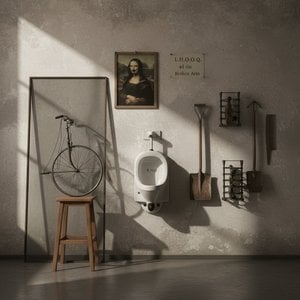
Explore the revolutionary art of Marcel Duchamp! Discover how his Dadaist readymades challenged artistic conventions & redefined modern art. A deep dive into 'Fountain', conceptual shifts, and his lasting impact.

 实景预览
实景预览
 分享
分享 分享
分享
 详情
详情 指南
指南

 下载作品
下载作品
 相似作品
相似作品 X射线
X射线 幻灯片播放
幻灯片播放 问答
问答
 统计数据
统计数据
 展开全文
展开全文









 玻璃选项仅适用于110厘米以下的尺寸。


