x






























从与原作比例一致的预设尺寸中进行选择。

您可以输入自定义尺寸,以适配特定的画框或空间。如果您选择的尺寸与原图比例不符,我们将对作品进行裁剪,或通过镜像填充/纯色填充边缘的方式来扩展图像。在开始制作之前,我们会向您发送一份数字效果图供您确认。
请注意,屏幕上的预览并不能反映实际的裁剪或扩展效果。只有效果图才能准确展示最终的构图。
虽然我们提供定制尺寸,但为了保持原图比例,我们建议您从预设列表中选择尺寸。

Vitebsk
复制品尺寸
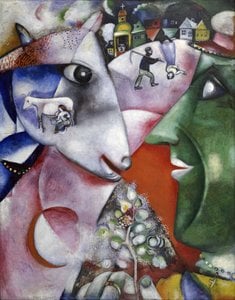
Marc Chagall's "Vitebsk," painted in 1914, isn’t merely a depiction of a town; it’s a shimmering portal into the artist’s deeply personal recollections. Born Moishe Shagal in the small Belarusian village of Liozna, Chagall’s early life was inextricably linked to Vitebsk – a vibrant confluence of Jewish and Russian cultures that would forever shape his artistic vision. This particular painting captures a fleeting moment, likely from the winter months, presenting a scene brimming with quiet activity against a backdrop of muted tones. The composition feels deliberately off-kilter, imbued with a gentle surrealism that’s characteristic of Chagall's early work, suggesting a memory filtered through time and emotion rather than a straightforward representation.
Image: Vitebsk, 1914 by Marc Chagall
The painting’s power lies in its stark simplicity. Dominated by a palette of black, grey, and white, “Vitebsk” eschews the vibrant hues often associated with Chagall's later work, opting instead for a graphic intensity achieved through meticulous hatching and cross-hatching. Lines aren’t precise or sharply defined; they possess a loose, expressive quality that lends the scene an almost childlike innocence. The forms of buildings are simplified, flattened, and subtly elongated – a deliberate departure from traditional perspective that contributes to the painting's dreamlike atmosphere. Notice how the circular wheels of the cart contrast with the angularity of the surrounding structures, creating a visual tension that draws the eye.
Beyond its formal elements, “Vitebsk” is rich in symbolic resonance. The central figure of a man in a coat and hat, accompanied by a dog, immediately evokes a sense of familiarity and perhaps even nostalgia – a direct reference to Chagall's own childhood memories. The cart laden with hay becomes a focal point, representing the rhythms of rural life and the enduring connection between people and their land. The two figures in the foreground, seemingly engaged in an unknown activity, add another layer of mystery, hinting at the stories and secrets hidden within the town’s everyday routines. Chagall frequently employed imagery drawn from his Jewish heritage – folklore, biblical tales, and the traditions of his community – to imbue his work with a profound sense of belonging and cultural identity.
Painted in 1914, just before the outbreak of World War I, “Vitebsk” reflects a period of immense social and political upheaval. Chagall’s Vitebsk was a melting pot of cultures – a place where Jewish merchants and Russian Orthodox priests coexisted alongside vibrant street life and ancient traditions. The painting captures this dynamic atmosphere with remarkable sensitivity, offering a poignant glimpse into a world on the cusp of change. Researching the history of Vitebsk during this period reveals a town grappling with modernization while clinging fiercely to its unique cultural identity – themes that resonate powerfully within the artwork’s composition.
WahooArt offers meticulously crafted, hand-painted reproductions of “Vitebsk” that faithfully capture the essence of Chagall’s original masterpiece. These high-quality prints are available in a range of sizes to suit any space, allowing you to bring this evocative work into your home or office. Consider how "Vitebsk" can complement your interior design – its monochromatic palette and dreamlike quality lending an air of sophistication and quiet contemplation. Explore the broader context of Chagall’s life and art through our accompanying resources, including detailed artist biographies and historical information about Vitebsk.


1887 - 1985 , 白俄罗斯

Explore the power of black, white & gray abstraction in modern interior design. Discover how minimalist art impacts spatial perception & creates sophisticated hotel spaces. Expert insights for designers.

Explore the captivating world of Art Deco paintings & the Gilded Age's enduring legacy. Discover iconic artists like Tamara de Lempicka & invest in museum-quality reproductions with WahooArt.

Delve into the power of 'Ivory Black' with 10 iconic paintings by masters like Rembrandt & Caravaggio. Explore dramatic chiaroscuro, gothic moods & timeless art history. Find museum-quality reproductions and elevate your home decor at

Explore the glamorous world of Erté, the 'Father of Art Deco'. Discover his iconic fashion illustrations, stunning sculptures & enduring legacy. Expert insights for art collectors.

Explore the rich history & artistic power of black and white photography. From early techniques to iconic masters like Ansel Adams, discover why monochrome continues to captivate art lovers today. Expert insights for collectors.


第一时间获取最新的艺术新闻、独家优惠及装饰灵感。
向我们介绍您的项目需求,我们的艺术专家将为您提供 3 个个性化的艺术品推荐。
由我们的专家为您精选 3 款心仪之作 —— 完全免费!

 定制手绘复刻品
 分享
分享 分享
分享
 详情
详情

 下载
下载
 相似作品
相似作品 X射线检测
X射线检测 幻灯片播放
幻灯片播放

 展开详情
展开详情









 玻璃选项仅适用于110厘米以下的尺寸。