


 Acrylic On CanvasWallArtSurrealism
 1963Modern
 23.0 x 29.0 cm




























从与原作比例一致的预设尺寸中进行选择。

您可以输入自定义尺寸,以适配特定的画框或空间。如果所选尺寸与原图比例不符,我们将通过裁剪作品或添加手绘元素来扩展画面。数字样稿将在制作开始前发送给您确认。
请注意,屏幕预览无法准确反映实际的裁剪或扩展效果,只有样稿才能真实呈现最终的构图。
虽然我们提供定制尺寸服务,但为了保留原作比例,建议您从预设列表中选择尺寸。

The Jacob's Dream
复制品尺寸
Marc Chagall’s “The Jacob’s Dream,” painted in 1963, isn’t merely a depiction of an image; it’s an immersion into the artist’s profoundly personal and intensely symbolic world. This intimate work, measuring just 23 x 29 cm, encapsulates the essence of Chagall's signature style – a vibrant collision of memory, folklore, and deeply felt spirituality. It’s a piece that invites prolonged contemplation, revealing layers of meaning with each viewing.
The scene itself is immediately arresting: a lone man stands on an improbable ladder, reaching towards a colossal butterfly suspended in the air. This isn't a realistic portrayal; it’s a deliberate distortion, a key element of Chagall’s surrealist approach. The figure, bathed in a luminous quality, appears to be lost in reverie, his gaze fixed upwards toward the moon – a potent symbol of intuition and dreams within Chagall’s oeuvre. The background subtly suggests a domestic setting, with a chair, potted plant, and clock hinting at a familiar, yet dreamlike, interior space. The inclusion of two figures in the periphery—one to the left and another further back on the right—adds an element of narrative ambiguity, suggesting a shared experience or perhaps simply witnesses to this extraordinary vision.
Chagall's art is deeply rooted in his Jewish heritage and childhood memories of Vitebsk, Belarus. “The Jacob’s Dream” is no exception. The ladder itself represents aspiration, a striving towards the divine—a recurring motif in Chagall’s work. Butterflies, frequently appearing in his paintings, symbolize transformation, rebirth, and spiritual ascension. They are often associated with angels and messengers, hinting at a connection to the celestial realm. Jacob's dream, recounted in the Hebrew Bible, is central to the painting’s title; it speaks of divine guidance and prophetic visions—themes that resonate powerfully within Chagall’s artistic vocabulary.
The presence of the clock, a symbol of time and mortality, juxtaposed with the fantastical elements creates an intriguing tension. It suggests a moment suspended outside the constraints of linear time, a realm where dreams and reality intertwine. The muted colors—primarily blues, yellows, and greens—contribute to the painting’s ethereal quality, evoking a sense of nostalgia and otherworldly beauty. The use of crayon, a medium often associated with childlike innocence and spontaneity, further enhances the dreamlike atmosphere.
Created in 1963, during a period when Chagall was increasingly exploring his personal mythology, “The Jacob’s Dream” reflects a mature understanding of his artistic language. It aligns with the artist’s broader exploration of biblical narratives and Jewish folklore, yet it retains a distinctly individualistic quality. Chagall's technique is characterized by loose brushstrokes, vibrant color palettes, and an expressive use of line—elements that contribute to the painting’s dynamic energy and emotional intensity.
As documented in WikiArt (https://www.wikiart.org/en/marc-chagall/the-jacob-s-dream-1), this work exemplifies Chagall's signature style, blending elements of Surrealism with his deeply personal vision. Further research reveals that the painting is part of a larger series exploring biblical themes and reflecting the artist’s lifelong fascination with dreams and spirituality (see Wikipedia: https://en.wikipedia.org/wiki/Marc_Chagall). Reproductions of this captivating artwork offer a remarkable opportunity to bring this evocative dreamscape into your home, allowing you to experience the magic and symbolism of Chagall's genius firsthand.


1887 - 1985 , 白俄罗斯

Embark on a sophisticated journey through the surrealist movement. Discover how masters like Dalí and Ernst blurred the lines between dreams and reality through innovative techniques, exploring the profound impact of the subconscious on fine art history with expert authority.
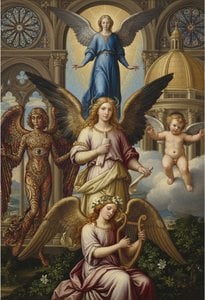
Explore the profound beauty of angelic figures in art history. From Renaissance masterpieces to celestial symbolism, our expert guide offers a sophisticated journey through the divine imagery of the Old Masters for discerning collectors and art enthusiasts.


 效果预览
效果预览
 购买印刷品
购买印刷品 分享
分享 分享
分享
 详情
详情

 下载
下载
 相似作品
相似作品 X射线
X射线 幻灯片播放
幻灯片播放 展开详情
展开详情









 玻璃选项仅适用于110厘米以下的尺寸。


