x


 Acrylic On CanvasWallArtNaive Art
 1966
1966 44.0 x 32.0 cm




























从与原作比例一致的预设尺寸中进行选择。

您可以输入自定义尺寸,以适配特定的画框或空间。如果您选择的尺寸与原图比例不符,我们将对作品进行裁剪,或通过镜像填充/纯色填充边缘的方式来扩展图像。在开始制作之前,我们会向您发送一份数字效果图供您确认。
请注意,屏幕上的预览并不能反映实际的裁剪或扩展效果。只有效果图才能准确展示最终的构图。
虽然我们提供定制尺寸,但为了保持原图比例,我们建议您从预设列表中选择尺寸。

Striking the Rock
复制品尺寸
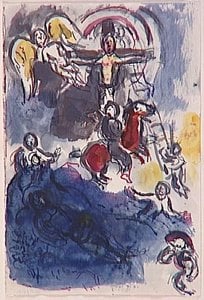
Marc Chagall's "Striking the Rock," painted in 1966, isn’t merely a depiction of a biblical narrative; it’s an immersion into a world steeped in memory, folklore, and profound spiritual yearning. This lithograph, rendered with his signature naive style, captures a pivotal moment from the Exodus story – Moses leading his people to the Promised Land, summoning water from a seemingly barren rock through a dramatic act of faith. Yet, within this familiar scene unfolds a tapestry of personal symbolism deeply rooted in Chagall’s own life and artistic journey.
The composition immediately draws the eye to the central figure of Moses, positioned slightly off-center on the left, his posture radiating both authority and vulnerability. He holds an object – often interpreted as a staff or pipe – poised to strike the rock, initiating the miraculous flow of water. Surrounding him is a vibrant throng of figures, rendered in bold, flattened forms characteristic of Chagall’s style. These aren't photographic representations; they are embodiments of emotion and experience, each face brimming with curiosity, anticipation, and perhaps even a touch of apprehension. The inclusion of two dogs – one on the left, another on the right – adds an unexpected layer of domesticity to this monumental event, hinting at the everyday life that underpins even the most extraordinary miracles.
“Striking the Rock” firmly places Chagall within the realm of Naïve Art (also known as Primitivism). This artistic movement, flourishing in Europe during the early 20th century, sought to emulate the directness and simplicity of folk art. Artists working in this style often eschewed academic training and traditional techniques, favoring bold colors, simplified forms, and a lack of perspective. Chagall’s use of flattened figures, exaggerated proportions, and vibrant hues aligns perfectly with these principles. This stylistic choice wasn't arbitrary; it allowed him to bypass the constraints of realism and tap directly into the emotional core of his subject matter.
Interestingly, Chagall’s artistic development was profoundly shaped by his childhood in Vitebsk, a border town between Poland and Belarus—a region brimming with both Jewish and Russian cultural influences. The town's unique blend of Orthodox churches and bustling marketplaces, its vibrant festivals and deeply ingrained folklore, provided the fertile ground for his imagination to flourish. This environment instilled within him a deep appreciation for storytelling, symbolism, and the power of visual imagery – elements that are abundantly evident in “Striking the Rock.”
Beyond the literal depiction of the biblical event, "Striking the Rock" is laden with symbolic meaning. The rock itself represents a challenge, an obstacle to overcome—a metaphor for the hardships faced by the Israelites during their journey through the desert. Moses’ act of striking it signifies faith, trust in God, and the willingness to take decisive action despite uncertainty. The water that emerges symbolizes salvation, sustenance, and the fulfillment of promises.
Furthermore, Chagall frequently incorporated elements from his own life into his work – a recurring motif is his wife, Bella Rosenfeld, often depicted as a radiant figure in the background. The presence of the dogs can be interpreted as reminders of his childhood, evoking feelings of warmth and companionship. The bowl at the center of the scene might represent abundance or communal sharing—a visual echo of the shared miracle.
"Striking the Rock" stands as a testament to Marc Chagall’s unique artistic vision – a world where myth, memory, and personal experience intertwine. Painted in 1966, this lithograph captures a moment of profound spiritual significance while simultaneously reflecting the artist's deeply rooted connection to his past. It is an invitation to contemplate themes of faith, perseverance, and the enduring power of dreams. A reproduction of this captivating artwork offers a window into Chagall’s extraordinary world, allowing viewers to experience firsthand the emotional intensity and symbolic richness that define his oeuvre.


1887 - 1985 , 白俄罗斯

Discover the enchanting world of Naive Art. Explore the profound beauty of self-taught masters like Henri Rousseau through an art-history lens, uncovering how simple forms and vibrant colors create timeless, soulful masterpieces for the discerning collector.

Discover the profound beauty of folk art through a cultural lens. Explore how naive masterpieces and vibrant global traditions preserve heritage, offering timeless inspiration for collectors and art enthusiasts seeking authenticity and soul in every brushstroke.


第一时间获取最新的艺术新闻、独家优惠及装饰灵感。
向我们介绍您的项目需求,我们的艺术专家将为您提供 3 个个性化的艺术品推荐。
由我们的专家为您精选 3 款心仪之作 —— 完全免费!


 效果预览
效果预览
 购买手绘画作
 分享
分享 分享
分享
 详情
详情

 下载
下载
 相似作品
相似作品 X射线
X射线 幻灯片播放
幻灯片播放 展开详情
展开详情









 玻璃选项仅适用于110厘米以下的尺寸。