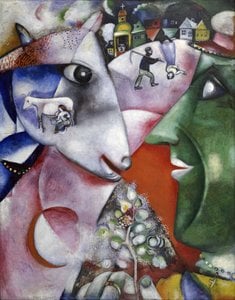
Paradise – A Fragment of Vitebsk’s Soul
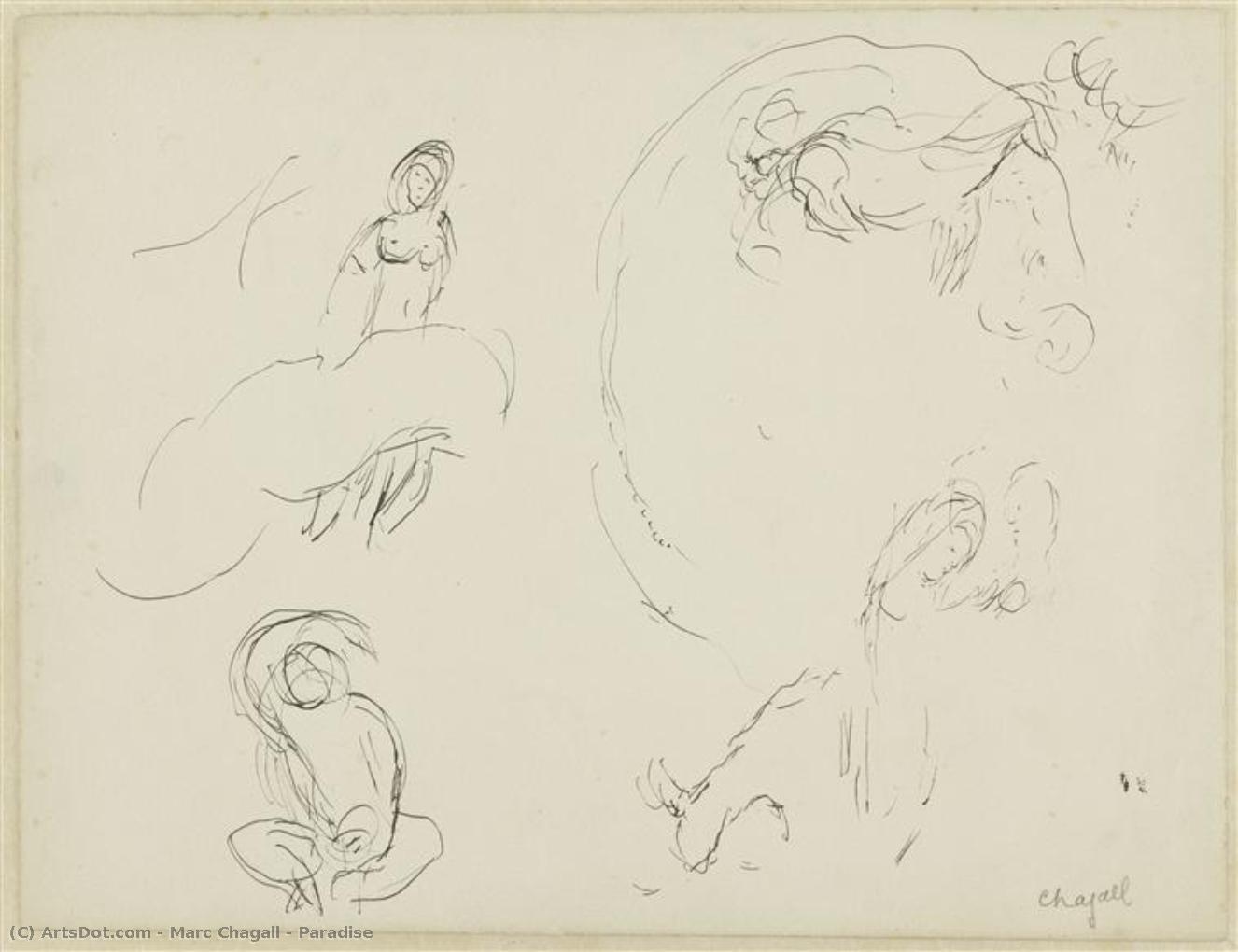
Marc Chagall's “Paradise,” created in 1961 during his Surrealist period, isn’t merely a depiction of Eden; it’s a distillation of Chagall’s lifelong preoccupation with memory and myth—specifically, the formative influence of his Belarusian homeland. This sketch-like drawing captures a moment frozen in time, reflecting the artist's profound connection to Vitebsk and its multifaceted cultural landscape. The composition centers around a woman kneeling, her hands clasped together in prayer or contemplation, surrounded by other drawings that hint at a larger artistic project—a visual echo of Chagall’s own creative process.
- Style: Surrealism – Chagall embraced the dreamlike logic and irrational juxtapositions characteristic of Surrealist art, rejecting representational accuracy in favor of symbolic imagery rooted in personal experience.
- Technique: Charcoal Sketch – Executed with charcoal on paper, “Paradise” demonstrates Chagall’s masterful control over tonal variation and expressive line work. The loose brushstrokes convey a sense of immediacy and vulnerability, mirroring the artist's own emotional state during this period.
The drawing’s backdrop is populated by figures reminiscent of Vitebsk—a man seated alongside the woman—suggesting Chagall’s desire to portray not just idealized beauty but also the complexities of human relationships within a specific geographical context. The inclusion of other sketches underscores his iterative approach to artmaking, highlighting the importance of experimentation and revision in achieving artistic vision.
Historical Context: Chagall's work emerged during a turbulent era marked by political upheaval and artistic innovation. Following the Second World War and amidst the burgeoning Surrealist movement championed by André Breton, Chagall sought to express profound spiritual themes through fantastical landscapes and figures—a deliberate defiance of rational thought and an embrace of subconscious impulses. Vitebsk’s cultural heritage – Orthodox churches alongside Jewish marketplaces – served as a constant source of inspiration for his artistic explorations.
- Symbolism: The woman kneeling embodies humility and devotion, while the surrounding drawings symbolize Chagall's ongoing engagement with artistic ideas and recollections.
- Emotional Impact: “Paradise” evokes feelings of serenity, contemplation, and nostalgia—a testament to Chagall’s ability to translate inner experience into visual form. It invites viewers to consider themes of faith, memory, and the enduring power of imagination.
“Paradise,” like many of Chagall's works, transcends mere representation; it aspires to capture a state of mind—a realm where reality blends seamlessly with dream—leaving an indelible impression on anyone who encounters its evocative beauty. Its understated charcoal sketch technique perfectly complements the profound emotional resonance of its symbolic imagery.



 效果预览
效果预览
 购买手绘画作
 分享
分享 分享
分享
 详情
详情

 下载
下载
 相似作品
相似作品 X射线
X射线 幻灯片播放
幻灯片播放


 展开详情
展开详情






































 玻璃选项仅适用于110厘米以下的尺寸。