Acrylic On CanvasWallArtSurrealism
 1961Modern
 33.0 x 45.0 cm
博物馆级艺术微喷或帆布版画,制作高效,并提供多种饰面选择。 ( 订购此收藏品的纯手工复刻画作 切换至数字图像销售渠道)





























您可以从与原作比例一致的预设尺寸中进行选择。

请输入您所需的宽度和高度,以适配您的画框或墙面。由于印刷品只能进行裁剪,无法超出原图尺寸,因此若比例不一致,画面的一部分将会被裁切。在正式印刷之前,我们会为您发送一份数字效果图供您确认。本页面显示的图片并非最终裁剪后的效果——只有效果图才能展示真实的裁剪情况。
Paradise (13)
复刻品尺寸说明
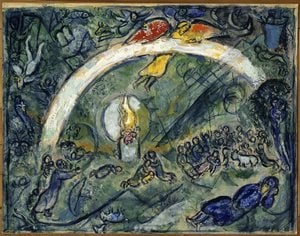
Marc Chagall's "Paradise (13)," painted in 1961, isn’t merely a depiction of an idyllic garden; it’s a vibrant, deeply personal tapestry woven from the threads of memory, faith, and the artist’s unique vision. This surrealistic masterpiece transcends simple representation, inviting us into a world where figures dance with animals, time seems to dissolve, and the familiar becomes imbued with profound symbolism. Born Moishe Shagal in Vitebsk, Belarus, Chagall carried within him the echoes of his Hasidic upbringing – a rich tradition of folklore, storytelling, and an unwavering belief in the power of dreams—and this is powerfully evident in every brushstroke.
The painting immediately captivates with its riotous color palette. Chagall eschews naturalistic hues, instead employing bold, luminous shades of blue, yellow, red, and green to create an atmosphere that’s both joyous and slightly unsettling. These aren't colors meant to simply describe; they are emotional conduits, conveying a sense of ecstatic wonder and spiritual yearning. The composition itself is deliberately dreamlike – figures float, animals mingle with humans, and the landscape bends according to Chagall’s imagination rather than strict perspective. This deliberate distortion reflects his intention: not to depict reality, but to capture the essence of a remembered paradise, filtered through the lens of memory and faith.
At the heart of “Paradise (13)” sits a woman seated in a chair, radiating an aura of serenity and maternal grace. This figure is often interpreted as representing Eve, though Chagall himself resisted definitive interpretations, preferring to let viewers find their own meaning within the work. Beside her stand two men, likely Adam and God, engaged in a gesture of blessing or perhaps even gentle rebuke. The presence of these figures anchors the painting within the biblical narrative of creation and expulsion from Eden, yet they are rendered with Chagall’s characteristic dreamlike quality – their forms elongated, their features softened, suggesting a realm beyond earthly constraints.
Scattered throughout the scene are a host of symbolic elements. A dog, often associated with loyalty and fidelity, sits close to the woman, while a horse—a symbol of strength and nobility—dominates the upper right corner. Birds flit across the canvas, representing freedom and spiritual aspiration. A prominent figure is a musician playing a violin, evoking themes of joy, celebration, and the divine presence in earthly life. Even seemingly simple objects – a table laden with fruit, a scattering of flowers – carry layers of meaning, hinting at abundance, fertility, and the promise of eternal life.
Painted in 1961, "Paradise (13)" represents a pivotal moment in Chagall's artistic journey. Following his emigration to France and the United States during World War II, he returned to a renewed sense of purpose and a deepening engagement with religious themes. This period saw him increasingly explore the rich tapestry of Jewish folklore and biblical narratives, often blending them with personal memories and emotional experiences. “Paradise (13)” is part of a larger series of works inspired by the Book of Genesis, reflecting his lifelong fascination with creation, redemption, and the human condition.
Interestingly, this painting shares thematic resonances with Chagall’s earlier work, particularly "Adam and Eve Expelled from Paradise" (1962). Both pieces depict a similar scene of expulsion, but “Paradise (13)” offers a more hopeful vision—a glimpse of an idealized Edenic realm where figures are bathed in light and surrounded by symbols of abundance. The Musée Marc Chagall in Nice houses a significant collection of his biblical works, providing invaluable context for understanding the evolution of his artistic vision.
WahooArt offers meticulously hand-painted reproductions of Marc Chagall’s "Paradise (13)" that capture the essence of this iconic artwork. Our skilled artisans replicate Chagall's vibrant colors, dreamlike composition, and evocative symbolism with exceptional detail and fidelity. Whether you choose a large-scale canvas for a statement wall or a smaller print to adorn your study, our reproductions provide an authentic and beautiful way to bring this masterpiece into your home or office. More than just a decorative piece, “Paradise (13)” is a portal to Chagall’s world—a world of faith, memory, and boundless imagination.
马尔克·夏加尔 的《Paradise (13)》 被归类为 WallArt。该类别描述了原作的艺术形式。
马尔克·夏加尔 的《Paradise (13)》 已进入 仍受版权保护。版权保护期自艺术家逝世之日起计算,该艺术家于 1985 年逝世。
马尔克·夏加尔 的《Paradise (13)》 的亮度为 Gentle Luminance。亮度描述了色彩呈现出的反射光量。


1887 - 1985 , 白俄罗斯

Embark on a journey through the subconscious with our expert guide to Surrealism. Discover the profound symbolism of masters like Dalí and Ernst, exploring how dreamlike imagery reshaped art history and continues to inspire collectors and enthusiasts worldwide.


 实景预览
实景预览
 发送
发送 分享
分享
 详情
详情 指南
指南

 下载图片
下载图片
 相似作品
相似作品 X射线
X射线 幻灯片播放
幻灯片播放 统计数据
统计数据 阅读全文
阅读全文









 玻璃选项仅适用于110厘米以下的尺寸。