Lilacs: A Dreamscape Embodied in Color
Marc Chagall’s “Lilacs,” created in 1980, isn't merely a depiction of flowers; it’s an invitation into a realm where reality bends to the whimsy of imagination—a hallmark of Chagall’s distinctive artistic vision. Executed as a lithograph, this artwork transcends simple representation, delving into layers of symbolism and capturing the essence of memory and longing. It stands as a testament to his enduring fascination with Jewish folklore and his unwavering belief in the transformative power of dreams.
Composition & Style: Surrealism Meets Expressionism
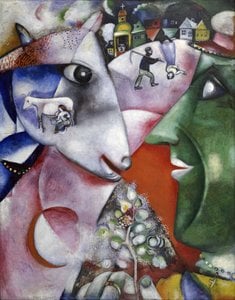
The painting’s asymmetrical arrangement immediately draws the eye upward towards a cluster of lilacs—a motif that recurs throughout Chagall's oeuvre, representing beauty, love, and remembrance. To the left, figures are positioned in varied postures, some seated serenely amidst the blossoms, others appearing to float or dance – an element characteristic of Surrealism’s exploration of subconscious thought. The bold use of color—primarily pinks, blues, yellows, and greens—amplifies this dreamlike atmosphere, mirroring the Impressionistic influences that blended seamlessly with Chagall's Expressionist sensibilities. Lines are deliberately loose and sketchy, contributing to the overall fluidity and spontaneity of the composition.
Lithographic Technique & Texture
The lithograph process itself lends a remarkable textural quality to “Lilacs.” Plates etched with intricate lines and shaded areas are inked and pressed onto paper, resulting in a surface that captures subtle variations in ink density—a technique favored by Chagall for its ability to convey emotion and depth. This meticulous craftsmanship ensures that any reproduction faithfully reproduces the original artwork's visual richness and tactile experience. The artist’s deliberate disregard for conventional perspective emphasizes the painting’s emotional impact rather than striving for photographic accuracy.
Symbolism & Emotional Resonance
Beyond its aesthetic beauty, “Lilacs” resonates with profound symbolic meaning. The lilacs themselves serve as potent emblems of love and remembrance—references to Chagall's personal life and heritage. The prominent yellow bear symbolizes primal instincts and spiritual forces – a recurring motif in Chagall’s work reflecting his deep connection to Jewish tradition. Viewing this artwork evokes feelings of tranquility, nostalgia, and wonder—a reflection of Chagall’s ability to translate inner experience into visual form. It's a piece that invites contemplation and rewards repeated viewing with new discoveries of its subtle nuances.
A Legacy of Imagination
“Lilacs” exemplifies Chagall’s enduring legacy as one of the most influential artists of the 20th century. Its vibrant colors, dreamlike imagery, and masterful technique continue to inspire collectors and interior designers alike—a testament to his unwavering commitment to artistic innovation and his profound understanding of the human spirit.
问答详情
马尔克·夏加尔 的《Lilacs》 属于哪种艺术流派,又处于哪个时代?
马尔克·夏加尔 的《Lilacs》 属于 Surrealist Expressionism 流派,创作于其作者的 现代主义 时期。
马尔克·夏加尔 的《Lilacs》 的复制品推荐用于哪些场景?
马尔克·夏加尔 的《Lilacs》 的复制品非常适合用于 Accent。这一建议源于作品的主题、意境与色彩。
"Lilacs" 的创作者是谁?
"Lilacs" 的创作者是 马尔克·夏加尔。该作品以 马尔克·夏加尔 的名义编入目录。
马尔克·夏加尔 在创作《Lilacs》时多大年纪?
当"Lilacs"于1980创作时,出生于1887的马尔克·夏加尔正值93岁。
在“Lilacs”中,对比与和谐是如何结合的?
马尔克·夏加尔 的《Lilacs》 的色彩构成将 Serene 的对比与 Strong Color Unity 的和谐融为一体。
马尔克·夏加尔 的《Lilacs》 中占据主导地位的是哪些颜色?
马尔克·夏加尔 的《Lilacs》 采用了 Pastels 色调,并以 Gray (#7b7e74) 作为主导色。
"Lilacs" 是在哪一年创作的?
马尔克·夏加尔 的《Lilacs》 的创作年份为 1980。