
 AcrylicWallArtNaïve Art (Primitivism)
 1960
1960 47.0 x 32.0 cm
博物馆级艺术微喷或帆布版画,制作高效,并提供多种饰面选择。 ( 订购此收藏品的纯手工复刻画作 切换至数字图像销售渠道)
您可以从与原作比例一致的预设尺寸中进行选择。

请输入您所需的宽度和高度,以适配您的画框或墙面。由于印刷品只能进行裁剪,无法超出原图尺寸,因此若比例不一致,画面的一部分将会被裁切。在正式印刷之前,我们会为您发送一份数字效果图供您确认。本页面显示的图片并非最终裁剪后的效果——只有效果图才能展示真实的裁剪情况。
An angel
复刻品尺寸说明
Marc Chagall’s “The Angel,” created in 1960, stands as a quintessential example of Naïve Art (Primitivism), encapsulating the artist's lifelong fascination with folklore, biblical narratives, and the dreamlike landscapes of his childhood in Vitebsk. Printed as part of Fernand Mourlot’s seminal lithograph catalogue raisonné – Volume I – this artwork transcends mere visual representation; it embodies Chagall’s profound engagement with universal themes of spirituality, hope, and transcendence.
The composition itself is strikingly simple yet powerfully evocative. Dominating the canvas is a bird—a recurring motif throughout Chagall's oeuvre—wings outstretched in an upward trajectory against a backdrop of luminous moonlight. Beneath this celestial figure hover two horses, their forms rendered with characteristic fluidity and expressive distortion – mirroring the turbulent emotions inherent in Chagall’s artistic vision.
A solitary human form occupies the lower left corner, seemingly grounded amidst the soaring imagery above. This figure is positioned deliberately to create a visual dialogue between earthly existence and divine aspiration—a central preoccupation of Chagall's artistic explorations. The artist skillfully employs hatching and cross-hatching techniques to build up tonal values, capturing the ethereal quality of moonlight and conveying a palpable sense of movement.
“The Angel” is deeply embedded within Vitebsk’s cultural heritage. The bird symbolizes freedom and aspiration—a characteristic emblem of Hasidic Jewish tradition—while the horses represent strength, resilience, and the cyclical nature of life. Chagall frequently incorporated elements from Belarusian folklore into his paintings, drawing inspiration from myths and legends that resonate with primal emotions.
The moon serves as a beacon of illumination, guiding the viewer’s gaze upwards toward the heavens—a deliberate reference to biblical imagery and symbolizing divine grace. The horse on the right side is particularly notable for its expressive gesture, conveying both vulnerability and determination – mirroring Chagall's own artistic journey.
Chagall’s stylistic approach defies categorization, blending influences from Cubism, Fauvism, and Symbolism into a uniquely personal idiom. However, at its core lies an unwavering commitment to representation—albeit imbued with dreamlike color palettes and fantastical imagery. As he himself stated, “I wish my mythological floating figures and symbolism to be interpreted freely.”
"The Angel" exemplifies Chagall’s ability to transform observation into profound artistic expression – capturing not just what is seen but also what is felt—a testament to his enduring legacy as one of the most influential artists of the 20th century.
您可以在作品的 幻灯片播放 页面上以幻灯片形式浏览 马尔克·夏加尔 的《An angel》。
"An angel" 的描绘主题为 flying figures, whimsical animals, vibrant hues, biblical inspirations, mythological symbolism, jewish folklore, dreamlike color。
关于 马尔克·夏加尔 的《An angel》 的统计数据可在该作品的 统计数据 页面查看:包括作品的每月访问量、艺术家作品的访问量,以及近期访客的国家和语言分布情况。


1887 - 1985 , 白俄罗斯

Embark on a scholarly journey through the alchemy of lithography. This definitive guide offers collectors profound insights into the chemical mastery of stone and ink, the medium's historical legacy, and essential expertise for acquiring rare, museum-quality prints with absolute confidence.

Master the nuances of Giclée printing with our expert guide. Discover how pigment-based inks and museum-grade substrates create fade-resistant, high-fidelity art reproductions designed for discerning collectors seeking unparalleled quality and longevity.

WahooArt 为追求卓越生活的您提供全球顶尖的艺术收藏方案。我们专注于博物馆级手绘油画复刻与私人肖像定制,由资深艺术家匠心重塑经典,将像素转化为触手可及的传世珍品。凭借专业的艺术咨询、严苛的品质管控及全球无忧配送,我们助力您在居所中构建永恒的审美传承与家族精神遗产。
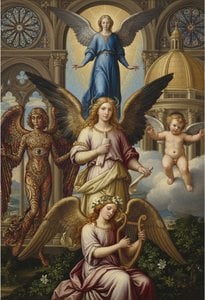
Explore the profound beauty of angelic figures in art history. From Renaissance masterpieces to celestial symbolism, our expert guide offers a sophisticated journey through the divine imagery of the Old Masters for discerning collectors and art enthusiasts.


 实景预览
实景预览
 发送
发送 分享
分享
 详情
详情 指南
指南

 下载图片
下载图片
 相似作品
相似作品 X射线
X射线 幻灯片播放
幻灯片播放 统计数据
统计数据 阅读全文
阅读全文






































 玻璃选项仅适用于110厘米以下的尺寸。


