A Window Into Faith: Maerten van Heemskerck’s Crucifixion Triptych
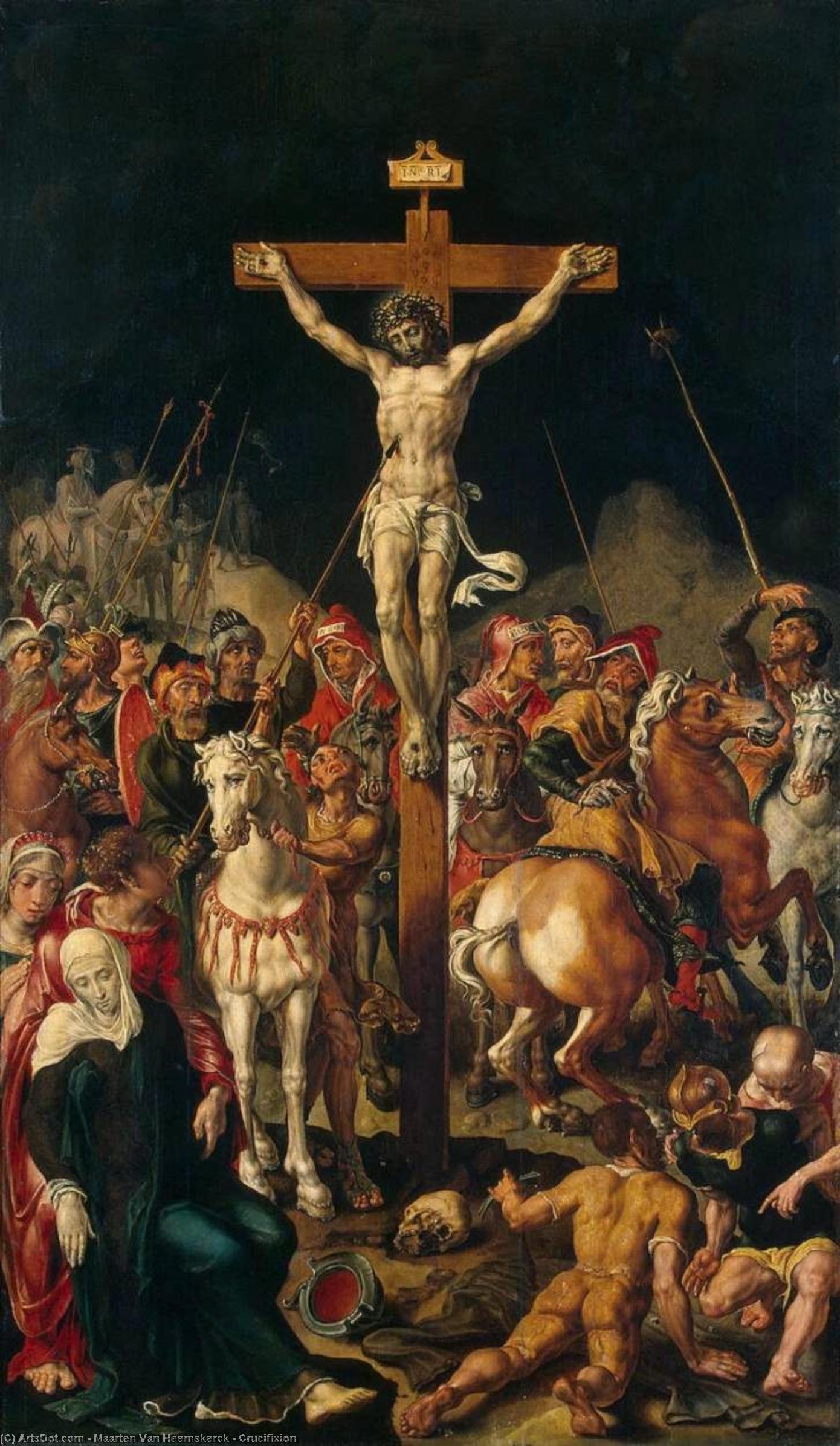
The Crucifixion by Maerten van Heemskerck, completed in 1545, stands as a monumental achievement of the Dutch Renaissance and a testament to the enduring power of religious iconography. More than just a depiction of Christ's suffering – though undeniably poignant – this triptych transcends mere representation, immersing viewers in a meticulously crafted tableau that speaks volumes about humanist ideals and artistic innovation. Painted during a period marked by fervent piety and intellectual curiosity, it embodies the spirit of its time while simultaneously securing its place as one of the most influential artworks of the era.
Style and Technique: Bridging Italian Renaissance Grandeur with Dutch Realism
Van Heemskerck skillfully blended elements of Italian Renaissance grandeur with the burgeoning realism characteristic of Dutch art. Influenced by artists like Michelangelo and Raphael, he adopted a pyramidal composition – a technique favored in monumental religious paintings – to convey stability and solemnity. However, unlike many Italian counterparts that prioritized idealized beauty, Van Heemskerck’s approach embraced meticulous detail and naturalistic observation. The artist painstakingly rendered textures—the rough linen of Christ's robe, the weathered stone of the cross—creating a palpable sense of physicality that distinguishes it from more stylized depictions. This careful attention to realism was further enhanced by his masterful use of chiaroscuro – dramatic contrasts between light and shadow – which sculptured form and imbued the scene with emotional depth.
Historical Context: Rome Under Charles V and the Reformation’s Influence
The Crucifixion's creation coincided with a pivotal moment in European history: the reign of Charles V, Holy Roman Emperor, and the escalating tensions surrounding the Protestant Reformation. The Habsburg monarch championed Catholicism fiercely, commissioning artworks like this to reaffirm papal authority and bolster religious faith. Yet, Van Heemskerck’s work wasn’t solely driven by political considerations; it reflected a broader humanist preoccupation with human suffering and mortality – themes explored extensively in classical literature and philosophy. The triptych served as part of a larger project to decorate the Porta San Sebastiano in Rome, commemorating Charles V's victory over Protestant forces—a visual declaration of imperial piety amidst religious upheaval.
Symbolism: Layers of Meaning Beyond Visual Representation
The Crucifixion’s symbolism is rich and multifaceted. The central panel depicts Jesus Christ crucified on the cross, a universally recognized emblem of sacrifice and redemption. His outstretched arms symbolize humility and acceptance of divine judgment, while his gaze directs upward towards God—a gesture signifying hope and spiritual aspiration. Surrounding him are figures representing Mary Magdalene, Nicodemus, Joseph of Arimathea, and others who witnessed Christ’s death – each embodying compassion and devotion. The inclusion of a horse on the right panel reinforces the imagery of royalty and divine majesty, mirroring the emperor's patronage. Furthermore, the cup positioned at the bottom left corner symbolizes the Eucharist—the sacrament commemorating Jesus’s sacrifice—underscoring the theological significance of the artwork.
Emotional Impact: A Profound Reflection on Suffering and Faith
Ultimately, Maerten van Heemskerck’s Crucifixion transcends mere visual spectacle; it evokes a profound emotional response in viewers. The subdued palette – dominated by earthy tones – contributes to an atmosphere of solemn contemplation. Yet, the artist's masterful manipulation of light and shadow intensifies the drama of the scene, conveying the agony of Christ’s torment and eliciting empathy for his suffering. It compels us to confront questions about faith, mortality, and divine compassion—themes that continue to resonate across centuries. The Crucifixion remains a powerful reminder of humanity's capacity for sorrow and its unwavering belief in redemption – an enduring masterpiece that secures its place as one of the most poignant expressions of Renaissance spirituality.

 Oil On Canvas
 1545
1545 101.0 x 58.0 cm
 冬宫博物馆 (Hermitage Museum)



 效果预览
效果预览
 切换至版画销售渠道
 分享
分享 分享
分享
 详情
详情

 下载
下载
 相似作品
相似作品 X射线
X射线 幻灯片播放
幻灯片播放 统计数据
统计数据 展开详情
展开详情


