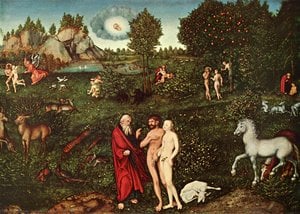
Oil On PanelNorthern Renaissance
 1503Renaissance
 138.0 x 99.0 cm
 老皮那科特美術館
由我们的艺术家按需定制,为您提供您所选尺寸及画框的布面手工油画。 ( 切换至版画销售渠道 切换至数字图像销售渠道)
从与原作比例一致的预设尺寸中进行选择。

您可以输入自定义尺寸,以适配特定的画框或空间。如果所选尺寸与原图比例不符,我们将通过裁剪作品或添加手绘元素来扩展画面。数字样稿将在制作开始前发送给您确认。
请注意,屏幕预览无法准确反映实际的裁剪或扩展效果,只有样稿才能真实呈现最终的构图。
虽然我们提供定制尺寸服务,但为了保留原作比例,建议您从预设列表中选择尺寸。

Crucifixion
复制品尺寸
This striking painting, "Crucifixion," created by Lucas Cranach the Elder in 1503, depicts a pivotal moment in Christian theology – the crucifixion of Jesus Christ. The composition is vertically oriented, immediately drawing the viewer's eye to the central figure suspended on the cross. Cranach masterfully balances the scene with carefully positioned figures: Mary Magdalene and another individual (often interpreted as John the Apostle) are shown below, their expressions conveying profound grief and sorrow. A group of onlookers in the background adds depth and a sense of scale to the event. The arrangement isn't merely representational; it’s designed to evoke empathy and contemplation.
“Crucifixion” exemplifies the hallmarks of the Northern Renaissance style, particularly that of Cranach himself. The painting showcases a meticulous attention to detail and a commitment to realism. Observe the rendering of Christ’s musculature, achieved through skillful use of lines and shading. The folds in the drapery are rendered with remarkable accuracy, demonstrating Cranach's technical prowess. He employed oil paints on panel, utilizing glazing techniques – layering thin, translucent layers of paint – to build up color depth and luminosity. This technique contributes significantly to the painting’s overall richness and vibrancy.
Beyond its literal depiction, "Crucifixion" is rich in symbolic meaning. The figures holding hands below the cross symbolize comfort and solidarity amidst suffering. A bird perched near the top left corner has been interpreted as representing the soul or the Holy Spirit, adding a layer of spiritual significance to the scene. The overall atmosphere isn't one of despair but rather of serene devotion, reflecting the Renaissance emphasis on human emotion within a religious context. The painting’s emotional impact lies in its ability to convey both the tragedy of Christ’s death and the hope offered through his sacrifice.
Lucas Cranach the Elder was a prominent figure during the Reformation era, serving as court painter to the Electors of Saxony. His work often reflected the religious and political currents of the time. This "Crucifixion" is particularly significant given its creation shortly after Cranach’s Vienna period and his association with Martin Luther. The painting's emphasis on faith and individual responsibility aligns with emerging Protestant theology, distinguishing it from more traditional Catholic depictions of the Crucifixion. Cranach’s legacy as a skilled portraitist and religious painter continues to inspire art lovers and collectors today.


1472 - 1553 , 德國

Explore the profound power of religious symbolism in art history. From Renaissance masterpieces to sacred iconography, uncover the hidden meanings behind divine details in a deep dive into classical art excellence.


 效果预览
效果预览
 分享
分享 分享
分享
 详情
详情

 下载
下载
 相似作品
相似作品 X射线
X射线 幻灯片播放
幻灯片播放 统计数据
统计数据 展开详情
展开详情






































 玻璃选项仅适用于110厘米以下的尺寸。