Lorna Simpson: Unraveling Identity Through Image and Word
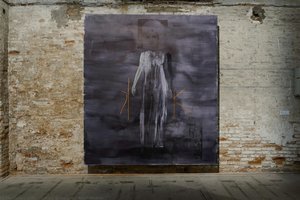
Born in Brooklyn, New York, in 1960, Lorna Simpson stands as a towering figure in contemporary American art—a photographer and multimedia artist whose work has profoundly interrogated the complexities of identity, gender, race, and history. Her career, blossoming in the late 1980s and early 1990s, quickly established her as a vital voice challenging conventional representations within photography and broader cultural discourse. Simpson’s journey is one of persistent questioning, innovative techniques, and a commitment to revealing the often-hidden narratives embedded within seemingly straightforward images.
Simpson's formative years were steeped in artistic exposure. Her parents, a Jamaican-Cuban father and an African-American mother, fostered a deep appreciation for the arts from a young age, taking her regularly to plays, museums, concerts, and dance performances. This early immersion profoundly shaped her perspective and fueled a desire to explore themes of representation and social commentary through her own creative lens. She honed her skills at the High School of Art and Design before pursuing formal education at the School of Visual Arts in New York City and later earning an MFA from the University of California, San Diego. It was during this period that she began experimenting with combining photography with text—a signature technique that would become central to her artistic practice. Early influences included conceptual art pioneers like Allan Kaprow and the work of filmmakers Jean-Pierre Gorin, whose strategies for manipulating image and narrative resonated deeply with Simpson’s own ambitions.
The Power of the Photo-Text Installation
Simpson's breakthrough came with photo-text installations such as Guarded Conditions (1987) and Square Deal (1988). These works, often featuring photographs of unidentified Black figures accompanied by carefully chosen words, directly confronted stereotypes surrounding African American women in American culture. By decoupling the image from a singular, fixed meaning through the addition of text, she forced viewers to confront their own biases and the ways in which language can both construct and deconstruct identity. This method of interrogating the gaze became her hallmark, turning the act of looking into an analytical process.
Her practice expanded far beyond the confines of traditional photography, embracing film, sculpture, and installation to create immersive environments. In these works, the interplay between what is seen and what is read creates a tension that mirrors the fragmented nature of memory and history. Through her use of silence and absence, she invites the audience to fill in the gaps, making the viewer an active participant in the construction of meaning.
Legacy and Historical Significance
The historical significance of Lorna Simpson's contribution to the art world cannot be overstated. She broke significant barriers, notably becoming the first African-American woman to represent the United States at the Venice Biennale in 1990. This milestone marked a pivotal moment in the recognition of Black female perspectives within the global contemporary art canon.
Her enduring impact can be seen through several key achievements:
- Redefining Photography: Moving the medium away from mere documentation toward a conceptual tool for social critique.
- Intersectionality in Art: Pioneering an approach that simultaneously addresses race, gender, and class, providing a blueprint for subsequent generations of multimedia artists.
- Cultural Discourse: Forcing a confrontation with the historical erasure of Black identities within American visual culture.
Today, Simpson's work continues to resonate as a profound meditation on the human condition. Her ability to weave together the visceral impact of the image with the intellectual weight of the word ensures that her art remains not just a reflection of history, but an active force in shaping our understanding of it.



 效果预览
效果预览
 购买手绘画作
 分享
分享 分享
分享
 详情
详情

 下载
下载
 相似作品
相似作品 X射线
X射线 幻灯片播放
幻灯片播放


 展开详情
展开详情






































 玻璃选项仅适用于110厘米以下的尺寸。