
 Other
Other 1600
1600 1.0 x 2.0 cm
 Nicolaus Copernicus Museum
博物馆级艺术微喷或帆布版画,制作高效,并提供多种饰面选择。 ( 订购此收藏品的纯手工复刻画作 切换至数字图像销售渠道)





























您可以从与原作比例一致的预设尺寸中进行选择。

请输入您所需的宽度和高度,以适配您的画框或墙面。由于印刷品只能进行裁剪,无法超出原图尺寸,因此若比例不一致,画面的一部分将会被裁切。在正式印刷之前,我们会为您发送一份数字效果图供您确认。本页面显示的图片并非最终裁剪后的效果——只有效果图才能展示真实的裁剪情况。
Seal matrix
复刻品尺寸说明

To wander through the annals of fourteenth-century artistry is to encounter the silent, enduring echoes of the Local Workshop, Prussia. This era of craftsmanship, rooted in the fertile cultural landscapes of Brandenburg and Silesia, represents a profound moment in the history of medieval ceramic art. While the biographical identity of the individual artisan remains shrouded in the mists of time—documented only through the tactile reality of surviving vessels—their presence is felt in every meticulously fired edge and glazed surface. This workshop was not merely a site of production but a crucible of cultural heritage, where the emerging traditions of Warmian pottery began to coalesce into a distinct visual language that would define the region for generations.
The origins of this artistic lineage are deeply intertwined with the socio-political shifts of the 1360s. Born likely within the artisanal heartlands of Brandenburg under the burgeoning influence of the Hohenzollern rule, the creator of these works was a product of an era defined by both movement and stability. It is easy to imagine a formative life spent amidst the rhythmic sounds of the potter's wheel and the intense heat of the kiln, learning the delicate alchemy of glaze formulation through generations of inherited wisdom. The aesthetic vision of this period was heavily informed by the soaring lines of Gothic architecture and the intricate, symbolic narratives found in illuminated manuscripts, all of which infused the ceramic medium with a sense of sacred geometry and structural grandeur.
The true brilliance of the Prussian workshop lies in its ability to transform utilitarian objects into powerful instruments of social communication. The artist’s technique was characterized by an unwavering commitment to geometric precision, a skill that allowed for the seamless integration of complex heraldic emblems onto the curved surfaces of jugs and bowls. These were not merely decorative flourishes; they were the visual shorthand of a hierarchical society. Through the masterful application of coats of arms, rosettes, and concentric circles, the ceramicist captured the very essence of noble lineage and territorial allegiance.
Every vessel served as a canvas for identity, where:
The impact of this local workshop extends far beyond the boundaries of the fourteenth century. By mastering the technical challenges of kiln firing and the chemical complexities of glazes, these artisans laid the groundwork for a tradition of German ceramic excellence that would persist through the centuries. The works produced—ranging from foundation offering clay pots to intricately decorated vessel tiles—stand as archaeological witnesses to a time when art was inseparable from daily life and political structure. Even as the borders of Prussia shifted and the medieval world transitioned into the Renaissance, the fundamental motifs established by this workshop remained embedded in the cultural DNA of the region.
Today, we look upon these fragments of the past not just as relics, but as a testament to the human desire to leave a permanent mark upon the earth. The Local Workshop, Prussia reminds us that true artistry lies in the ability to marry technical mastery with profound symbolic meaning, creating objects that are at once functional and eternal. Through the preservation of these ceramic treasures, the spirit of the medieval artisan continues to speak, offering a window into a world where every curve of a bowl and every stroke of a glaze told a story of belonging, power, and enduring beauty.

Germany

Embark on a journey through time with our deep dive into the exquisite beauty of illuminated manuscripts. Discover the sacred artistry, precious materials, and enduring legacy of medieval illumination in this cultural exploration for history lovers.

Embark on a visual journey through Early Medieval art. Explore the profound beauty of illuminated manuscripts, sacred symbols, and golden light through an expert historical lens, celebrating the enduring legacy of medieval craftsmanship and divine artistry.

Embark on a scholarly journey through the spiritual grandeur of Late Medieval art. Discover the intricate symbolism, technical mastery, and profound religious narratives that define the Gothic era in this expert-led guide for art enthusiasts and collectors.
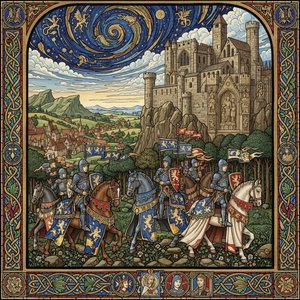
Explore the profound beauty of medieval art through the lens of history. Discover the symbolism of knights, the divine frescoes of Giotto, and how legendary masterpieces continue to inspire modern collectors and lovers of chivalric heritage.

Embark on a scholarly journey through the sacred beauty of High Medieval art. Discover the profound symbolism, luminous iconography, and spiritual depth of Gothic masterpieces in this expert guide for classical art enthusiasts.


 实景预览
实景预览
 发送
发送 分享
分享
 详情
详情 指南
指南

 下载图片
下载图片
 相似作品
相似作品 X射线
X射线 幻灯片播放
幻灯片播放 统计数据
统计数据 阅读全文
阅读全文









 玻璃选项仅适用于110厘米以下的尺寸。


