
x


 AcrylicWallArtDocumentary Street Photography
 1941
1941 34.0 x 26.0 cm
 波士顿美术馆




























从与原作比例一致的预设尺寸中进行选择。

您可以输入自定义尺寸,以适配特定的画框或空间。如果所选尺寸与原图比例不符,我们将通过裁剪作品或添加手绘元素来扩展画面。数字样稿将在制作开始前发送给您确认。
请注意,屏幕预览无法准确反映实际的裁剪或扩展效果,只有样稿才能真实呈现最终的构图。
虽然我们提供定制尺寸服务,但为了保留原作比例,建议您从预设列表中选择尺寸。

Running Legs, New York
复制品尺寸
Lisette Model's "Running Legs, New York," captured in 1941, isn’t merely a photograph; it’s a fleeting distillation of the city’s relentless energy. This black and white image, a testament to her keen eye for candid moments, freezes a woman mid-stride on a bustling New York street corner – a scene brimming with anonymity and the quiet drama of everyday life. The composition immediately draws the viewer in, anchored by the powerful diagonal lines created by the woman’s legs as they propel her forward, contrasted against the solid form of a parked automobile. It's a dynamic interplay of movement and stillness, capturing the essence of urban velocity – a feeling that Model expertly translates through her photographic lens.
Model’s approach to photography was remarkably intuitive; she famously stated, “Shoot from the gut,” prioritizing emotional resonance over technical perfection. This is evident in "Running Legs," where the focus isn't on meticulous detail or formal composition, but rather on conveying a sense of immediacy and raw experience. The slightly grainy texture of the print—a characteristic of her preferred darkroom techniques—adds to this feeling of authenticity, as if we’ve stumbled upon a genuine moment captured in real-time. The image speaks volumes about the photographer's ability to capture the essence of a subject without resorting to elaborate staging or artificiality.
“Running Legs, New York” was created during a pivotal period in American history – the early years of World War II. The photograph’s stark monochrome palette and documentary style reflect the anxieties and uncertainties of the time. While the woman's face is obscured, her purposeful stride suggests resilience and determination, mirroring the spirit of a nation preparing for conflict. The presence of the parked car, a symbol of stability in an increasingly volatile world, further emphasizes this sense of quiet strength amidst chaos. The image serves as a poignant reminder of life continuing—albeit with a heightened awareness of potential disruption—within the heart of New York City.
Model’s masterful use of negative space is crucial to the photograph's impact. The blurred background, rendered in shades of gray, recedes into an indistinct haze, effectively directing our attention entirely onto the woman’s legs and torso. This deliberate cropping amplifies the sense of movement and creates a powerful focal point. The low-angle perspective—looking upwards at the subject—adds to this feeling of dynamism, making her appear larger than life and emphasizing her forward momentum. The sharp edges of the car provide a grounding element, anchoring the composition while simultaneously highlighting the fluidity of the woman’s form.
Furthermore, Model's choice of gelatin silver print as the medium contributes significantly to the image's aesthetic quality. This process allows for subtle tonal variations and a rich range of grays, creating depth and texture within the photograph. The resulting image possesses a timeless quality, capturing not just a moment in time but also an enduring sense of urban life.
Beyond its technical merits, “Running Legs, New York” resonates with profound symbolic meaning. The woman’s hurried pace can be interpreted as a metaphor for the relentless pursuit of dreams and aspirations within the city's competitive landscape. Her anonymity speaks to the countless individuals who contribute to the vibrant tapestry of urban life, yet often remain unseen and unacknowledged. The photograph evokes feelings of both urgency and quiet contemplation—a recognition of the constant flux of the city while simultaneously appreciating the beauty of fleeting moments.
Ultimately, Lisette Model’s “Running Legs, New York” is a remarkable achievement in documentary photography – a powerful testament to her ability to capture not just an image but also the spirit and soul of a city. It remains a captivating study of human movement, urban life, and the enduring allure of New York City.

Lisette Model remains an enigmatic and profoundly influential figure in the pantheon of 20th-century photography, a master of capturing the raw, unvarnished essence of the human condition. Born Elise Amelie Felicie Stern in 1901 within the vibrant, musical atmosphere of Vienna, her early years were a complex tapestry of intellectual richness and deep personal shadow. Raised in a city shaped by the avant-garde movements of figures like Arnold Schönberg, Model’s formative consciousness was steeped in a culture of profound emotional depth. Yet, this period was also marked by the trauma of childhood abuse at the hands of her father, a harrowing reality that many scholars believe infused her later work with an unflinching, empathetic gaze toward the vulnerabilities and complexities of others.
Her journey from a musically inclined student, fluent in Italian, German, and French, to a pioneer of street photography is a testament to her transformative spirit. In 1933, Model abandoned the structured world of music to pursue the visual language of the camera, a transition that would eventually lead her to the bustling streets of New York City. This migration was not merely geographical but artistic; she moved from the melodic compositions of her youth to a visual composition defined by what she famously called "shooting from the gut." Her approach eschewed technical perfection in favor of emotional resonance, seeking instead the spontaneous, the gritty, and the authentic moments that define urban existence.
Model’s photographic style became synonymous with a particular brand of humanist street photography. During her prolific years in the 1940s, as a member of the influential New York cooperative Photo League, she developed an eye for the drama inherent in the mundane. Her work does not merely document; it interprets the pulse of the city. In masterpieces such as Running Legs, New York (1941), she captures the very velocity of urban life, using powerful diagonal lines and a grainy, tactile texture to freeze a moment of anonymous, purposeful movement amidst the chaos of a wartime metropolis.
Her lens possessed a unique ability to navigate the intersections of vanity, insecurity, and resilience. Whether capturing the poignant connection in World War II Rally, Lower East Side or the quiet dignity found in the faces of strangers, Model sought the truth beneath the surface. Her technique often embraced the imperfections of the medium—the heavy shadows, the stark monochrome contrasts, and the spontaneous grain—to mirror the raw reality of her subjects. This commitment to an unvarnished truth allowed her to document the marginalized and the overlooked with a sense of profound respect and psychological depth.
Beyond her own photographic output, Lisette Model’s historical significance is cemented by her role as a formidable educator. From 1951 until her death in 1983, she taught at the New School for Social Research in New York, where she became a guiding light for a new generation of visual storytellers. Her most famous pupil, Diane Arbus, inherited Model’s penchant for unflinching portraiture and her ability to find extraordinary narratives within the seemingly ordinary. Through this lineage, Model’s influence rippled through the decades, shaping the trajectory of documentary photography.
Today, the enduring power of her work is reflected in its presence within the world's most prestigious institutions. Her photographs serve as vital historical documents and timeless works of art, residing in collections such as:
Lisette Model’s life was a pursuit of the authentic. Through her lens, the fleeting shadows of New York streets were transformed into permanent meditations on what it means to be human, ensuring that her quiet observations continue to resonate with every generation that encounters them.

1901 - 1983

Explore the profound artistry of black and white photography. From historical mastery to the interplay of light and shadow, discover how monochrome captures timeless emotion and form through a sophisticated lens of art history.
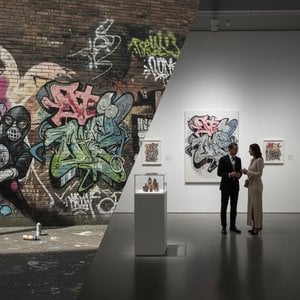
Explore the captivating journey of street art from urban walls to prestigious galleries. Discover how contemporary graffiti has evolved into a high-end collectible movement, redefining modern interior design and global art culture.

Explore the profound evolution of contemporary photography through a connoisseur's lens. From monochrome mastery to digital innovation, discover how modern photographic works shape fine art collections and define our cultural legacy.

Explore the profound evolution of documentary photography through a cultural lens. From early social realism to modern visual narratives, discover how photographers have captured history, labor, and the human condition to redefine fine art.

Explore the profound emotional depth of documentary photography art. Discover how collectors curate powerful historical narratives through museum-quality black and white prints and fine art reproductions that preserve humanity's most resilient moments.


第一时间获取最新的艺术新闻、独家优惠及装饰灵感。
向我们介绍您的项目需求,我们的艺术专家将为您提供 3 个个性化的艺术品推荐。
由我们的专家为您精选 3 款心仪之作 —— 完全免费!


 效果预览
效果预览
 购买印刷品
购买印刷品 分享
分享 分享
分享
 详情
详情

 下载
下载
 相似作品
相似作品 X射线
X射线 幻灯片播放
幻灯片播放 展开详情
展开详情









 玻璃选项仅适用于110厘米以下的尺寸。


