
博物馆级艺术微喷或帆布版画,制作高效,并提供多种饰面选择。 ( 购买手绘画作 切换至数字图像销售渠道)





























从与原作比例一致的预设尺寸中进行选择。

您可以输入自定义尺寸,以适配特定的画框或空间。如果您选择的尺寸与原图比例不符,我们将对作品进行裁剪,或通过镜像填充/纯色填充边缘的方式来扩展图像。在开始制作之前,我们会向您发送一份数字效果图供您确认。
请注意,屏幕上的预览并不能反映实际的裁剪或扩展效果。只有效果图才能准确展示最终的构图。
虽然我们提供定制尺寸,但为了保持原图比例,我们建议您从预设列表中选择尺寸。

Paul Hartland Carnival. Composition with two masks .
复制品尺寸
László Moholy-Nagy’s “Paul Hartland Carnival. Composition with two masks.”, created in 1934, isn't merely a painting; it’s an immersive journey into the subconscious, a vibrant collision of memory and illusion rendered in bold colors and fragmented forms. This artwork, now available as a high-quality reproduction through WahooArt.com, stands as a testament to Moholy-Nagy’s pioneering spirit – his relentless experimentation with photography, collage, and the very nature of perception. It's a piece that immediately demands attention, pulling the viewer into its dreamlike atmosphere and prompting questions about identity, representation, and the power of visual language.
At first glance, the composition appears chaotic—two figures, their faces obscured by layers of textured material, dominate the central space. However, a closer look reveals a carefully orchestrated balance. Sharp angular lines intersect with softer curves, creating a dynamic tension that mirrors the complexities of human experience. The use of reflective surfaces – cellophane, perhaps, or other translucent materials – adds an ethereal quality, blurring the boundaries between reality and illusion. Fragments of what seem to be photographs, printed matter, and even architectural elements are interwoven, suggesting a world constructed from disparate memories and experiences.
To fully appreciate “Paul Hartland Carnival,” it's crucial to understand the context of Moholy-Nagy’s artistic philosophy, which he termed "New Vision." Rejecting traditional notions of representation, he believed that photography could reveal hidden aspects of reality – a world beyond what the eye perceives. This concept profoundly influenced his work, leading him to experiment with photograms (images created by placing objects directly on light-sensitive paper) and other techniques designed to manipulate perception. He sought to capture not just appearances but also the *feeling* of a subject, translating it into visual form.
The artwork’s vibrant color palette – dominated by reds, yellows, and blues – further reinforces this sense of heightened emotion and subjective experience. These aren't naturalistic colors; they are deliberately chosen to evoke specific moods and sensations. The use of contrasting hues creates a dynamic visual rhythm, drawing the eye across the composition and adding to its overall intensity.
“Paul Hartland Carnival” was created during a period of profound social and artistic upheaval. The early 1930s witnessed the rise of Dadaism in Europe, a movement that challenged traditional notions of art and embraced absurdity and anti-establishment sentiment. Simultaneously, Constructivism – a Russian avant-garde movement focused on geometric abstraction and industrial materials – was gaining momentum. Moholy-Nagy’s work reflects these influences, blending elements of both styles while forging his own unique visual language.
His time at the Bauhaus school in Weimar further shaped his artistic approach, emphasizing design principles and exploring new technologies. The artwork's fragmented composition and use of unconventional materials can be seen as a direct response to the rapidly changing world around him – a world grappling with industrialization, urbanization, and the anxieties of modernity. It’s a visual echo of the era’s dynamism and uncertainty.
While the specific meaning of “Paul Hartland Carnival” remains open to interpretation, it's clear that the two masked figures represent something deeper than mere portraits. They could symbolize duality, hidden identities, or perhaps the fragmented nature of selfhood. The masks themselves suggest a deliberate concealment, inviting us to question what lies beneath the surface.
Ultimately, this artwork is an invitation to engage with our own subconscious – to explore the layers of memory, emotion, and experience that shape our perceptions. It’s a powerful reminder of the transformative potential of art, capable of transporting us beyond the realm of the literal and into the depths of the human psyche. A reproduction of “Paul Hartland Carnival” offers a captivating glimpse into Moholy-Nagy's visionary world, bringing this extraordinary piece to your home or office.

拉斯洛·莫霍利-纳吉(László Moholy-Nagy)是一位具有深远影响力的匈牙利画家、摄影师、雕塑家及设计师。他最为人所熟知的是对包豪斯学校的卓越贡献,以及他在构成主义、字体设计、摄影和动力艺术领域的开创性探索。他的艺术哲学核心在于将技术与工业融入艺术之中,倡导一种拥抱现代世界的全新创造力视野。

1895 - 1946 , 匈牙利

Explore the profound impact of the Pop Art Revolution on modern aesthetics. From Lichtenstein’s dots to Warhol’s icons, gain expert insights into how this vibrant movement redefined culture through consumerism and mass media. A definitive guide for art lovers and collectors.
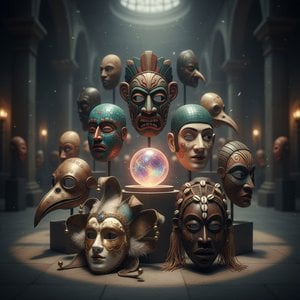
Embark on a profound journey through the world's most iconic mask artworks. Explore the spiritual depth, intricate craftsmanship, and rich cultural heritage of global traditions, from Chhau to Gomira, in this expert-led exploration of ancestral artistry and symbolic beauty.
Embark on a curated journey through Pop Surrealism, where vibrant cultural icons collide with the profound depths of the subconscious. An authoritative exploration for discerning collectors seeking to masterfully integrate dreamlike landscapes and bold aesthetics into modern interiors.

Dive into the vibrant world of Pop Art. Explore iconic masterpieces from Warhol to Haring, discover how bold colors and mass media redefined art history, and learn to curate high-impact, colorful pieces for your modern home collection.

Explore the visceral power of Aggressive Confrontational Pop. From the rebellion of NO!art to Neo-Pop icons, discover how bold aesthetics and social critique redefined modern art for today's discerning collectors.


 效果预览
效果预览
 分享
分享 分享
分享
 详情
详情

 下载
下载
 相似作品
相似作品 X射线
X射线 幻灯片播放
幻灯片播放 统计数据
统计数据


 展开详情
展开详情









 玻璃选项仅适用于110厘米以下的尺寸。


