
 WatercolorWallArtGenre Painting
 180019th Century
 5.0 x 56.0 cm
 Museu do Oriente
博物馆级艺术微喷或帆布版画,制作高效,并提供多种饰面选择。 ( 购买手绘画作 切换至数字图像销售渠道)





























从与原作比例一致的预设尺寸中进行选择。

您可以输入自定义尺寸,以适配特定的画框或空间。如果您选择的尺寸与原图比例不符,我们将对作品进行裁剪,或通过镜像填充/纯色填充边缘的方式来扩展图像。在开始制作之前,我们会向您发送一份数字效果图供您确认。
请注意,屏幕上的预览并不能反映实际的裁剪或扩展效果。只有效果图才能准确展示最终的构图。
虽然我们提供定制尺寸,但为了保持原图比例,我们建议您从预设列表中选择尺寸。

Classroom
复制品尺寸
In the delicate brushstrokes of Kim Jun-geun’s "Classroom," we are invited to step through a portal into the late 19th-century Korean countryside. This exquisite watercolor does not merely depict a room; it captures the very essence of hun-hak-ha-go—the sacred act of teaching and learning. The scene unfolds within a humble village school, where the air seems thick with the quiet concentration of children engaged in their studies. Through the masterful hand of the artist, known by his pen name Kisan, we witness a rare moment of social harmony, observing a space where both genders and various ages converge under the shared pursuit of knowledge. The composition breathes with a gentle vitality, as students sit upon the floor or perched on simple wooden chairs, their focus anchored by the presence of notebooks and textbooks that serve as the physical vessels of tradition.
The technical brilliance of this piece lies in its ability to find profound beauty within the mundane. Kisan, a painter deeply rooted in the documentation of local folklore, utilizes a delicate watercolor technique that lends a soft, ethereal light to the classroom setting. The subtle interplay of shadows and the careful rendering of textures—from the grain of the wooden furniture to the humble bowl resting on the ground—create a sense of tangible reality. There is an intentionality in his use of space; the arrangement of figures creates a rhythmic flow that guides the viewer's eye through the room, mirroring the organized yet organic nature of a communal learning environment. For the collector, this work offers a masterclass in how fine detail can elevate a genre scene into a poignant historical document.
Beyond its aesthetic charm, "Classroom" carries a deep symbolic weight that resonates with the modern soul. In an era of rapid globalization and digital distraction, this painting serves as a meditative reminder of the foundational importance of education and community. The presence of books amidst such a modest setting symbolizes the enduring power of intellect to transcend material poverty. It is a celebration of the transmission of culture across generations. For interior designers and art enthusiasts alike, this piece provides a sophisticated focal point that brings a sense of tranquility, heritage, and intellectual depth to any space. Owning a reproduction of this masterpiece is not merely about decorating a wall; it is about preserving a quiet revolution of the spirit, honoring a vanishing world where the simple act of learning was a communal triumph.

The world of late 19th and early 20th century Korean art is often viewed through the lens of grand imperial narratives or political upheaval. Yet, within this context, a quiet revolution was unfolding – one captured with remarkable sensitivity and detail by Kim Jun-geun, more commonly known as Kisan. Born in a time of increasing Western influence and social change, Kisan’s work offers an intimate glimpse into the daily lives and traditions of rural Korea, revealing a profound connection to the land and its people. His paintings aren't merely depictions; they are windows into a vanishing world, imbued with a poignant beauty that continues to resonate today.
Kisan’s life remains somewhat shrouded in mystery, adding to the allure surrounding his art. He emerged as an artist during a period of significant transformation for Korea, navigating the complexities of modernization and the pressures of foreign intervention. While precise details about his early years are scarce, it's understood that he was a self-taught painter, developing his distinctive style largely independently. He adopted the name Kisan – literally “farmer” – reflecting his subject matter and likely symbolizing a commitment to representing the lives of ordinary Koreans. This deliberate choice underscores the importance of portraying the working class and rural communities, often overlooked in official artistic representations.
Kisan’s primary focus was on genre painting – a style that meticulously documented everyday scenes from common life. Unlike grand historical or religious paintings, his works centered on the routines, customs, and occupations of rural Koreans. His subjects ranged from humble farmers tending their fields to skilled artisans engaged in traditional crafts, from families sharing meals to children playing games. These weren’t idealized portrayals; Kisan presented a realistic, unvarnished view of Korean life, capturing both its hardships and its joys.
His technique was characterized by a remarkable attention to detail. Employing watercolor on paper – a medium particularly well-suited for capturing the nuances of light and texture – he meticulously rendered every element of his scenes. The brushstrokes are often loose and expressive, conveying a sense of immediacy and spontaneity. He skillfully used color to evoke atmosphere and mood, employing earthy tones to depict the landscapes and clothing worn by his subjects. The compositions are typically balanced and carefully arranged, drawing the viewer’s eye through each scene.
Among Kisan's most celebrated works is “Blacksmith,” a captivating watercolor depicting a Korean metalworker at his forge. The painting vividly portrays the physicality of labor, capturing the intensity of the blacksmith’s movements and the heat radiating from the flames. Similarly, "Game of Dominoes" offers a charming snapshot of domestic life, showcasing a family gathered around a table playing this traditional game. These scenes, alongside depictions of traditional Korean wrestling, noodle making, and other everyday activities, provide a rich tapestry of rural Korean culture.
Recurring themes in Kisan’s work include the importance of family, the connection to the land, and the value of tradition. He consistently portrays Koreans as hardworking, resilient individuals deeply rooted in their community and customs. His paintings also subtly highlight the challenges faced by rural communities – poverty, hardship, and the encroachment of modernization – without resorting to sentimentality or melodrama.
Kisan’s work holds significant historical value as a visual record of late 19th-century Korea. His paintings offer invaluable insights into the lives of ordinary Koreans during a period of profound change, documenting customs and traditions that were rapidly disappearing. They stand as a testament to his commitment to representing the experiences of those often marginalized in official narratives.
While Kisan’s work was largely appreciated by Western travelers and collectors during his lifetime, it wasn't until relatively recently that his art gained wider recognition within Korea. Today, his paintings are celebrated for their artistic merit and historical significance, serving as a powerful reminder of the rich cultural heritage of rural Korea. His legacy continues to inspire artists and scholars alike, ensuring that the stories of ordinary Koreans are preserved and shared through the enduring beauty of his work.

South Korea

Discover the ethereal beauty of watercolor through an art-historical lens. Master the delicate balance of light, fluidity, and pigment to capture the luminous essence of nature, inspired by the legendary techniques of the Old Masters and Impressionist greats.
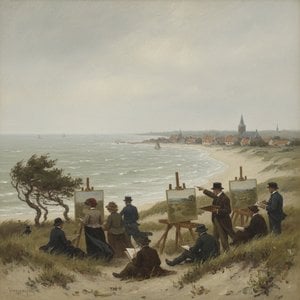
Explore the ethereal beauty of the Hague School art movement. Discover how masters like Jan Weissenbruch captured the atmospheric grey light of the Dutch landscape through unparalleled technique and emotive, misty compositions.


 效果预览
效果预览
 分享
分享 分享
分享
 详情
详情 指南
指南

 下载
下载
 相似作品
相似作品 X射线
X射线 幻灯片播放
幻灯片播放 统计数据
统计数据 展开详情
展开详情









 玻璃选项仅适用于110厘米以下的尺寸。


