
由我们的艺术家按需定制,为您提供您所选尺寸及画框的布面手工油画。 ( 切换至版画销售渠道 切换至数字图像销售渠道)





























从与原作比例一致的预设尺寸中进行选择。

您可以输入自定义尺寸,以适配特定的画框或空间。如果所选尺寸与原图比例不符,我们将通过裁剪作品或添加手绘元素来扩展画面。数字样稿将在制作开始前发送给您确认。
请注意,屏幕预览无法准确反映实际的裁剪或扩展效果,只有样稿才能真实呈现最终的构图。
虽然我们提供定制尺寸服务,但为了保留原作比例,建议您从预设列表中选择尺寸。

Demon
复制品尺寸
Kazimir Malevich’s 1914 painting, “Demon,” is not merely a depiction of a monstrous figure; it’s a visceral exploration of primal fear and the unsettling power of suggestion. Rendered in a deceptively simple style—bold black outlines against a bleached-white backdrop—the artwork immediately commands attention with its raw intensity. This isn't the polished, idealized representation of art history; instead, we encounter a world stripped bare to its essential elements, echoing the nascent principles of Suprematism and hinting at the anxieties simmering beneath the surface of early 20th-century Europe.
The composition is dominated by the central demon itself. Its elongated form, with disproportionately large head, pointed ears, and a gaping mouth, evokes a sense of grotesque power. Malevich’s deliberate use of thick black lines doesn't simply define the figure; they pulsate with energy, creating an immediate and unsettling visual impact. The simplification of features—the vacant eyes, the sharp angles—heightens the feeling of otherworldliness, as if we are glimpsing a being from beyond our comprehension. Crucially, the painting’s stark palette – primarily black and off-white – amplifies this effect, creating an atmosphere of profound isolation and dread.
What initially appears as a minimalist composition is profoundly enriched by the dense field of Cyrillic text that dominates the right side of the canvas. This isn’t mere decoration; it's integral to understanding the artwork’s meaning. While the exact translation remains debated, scholars believe this incantation or narrative likely served as a key to unlocking the demon’s nature and purpose within Malevich’s artistic vision. The inclusion of text adds layers of mystery, suggesting a connection between the visual image and a deeper spiritual or occult context – reflecting the prevalent interest in mysticism and the supernatural during that period.
The choice of Cyrillic script is particularly significant given Malevich's Ukrainian heritage and the painting’s creation during a time of shifting national identities. It subtly connects the artwork to Eastern European folklore and traditions, hinting at ancient beliefs surrounding demons and spirits. The text acts as a conduit, inviting the viewer to actively participate in deciphering the demon’s story – transforming the image from a static representation into an interactive experience.
“Demon” sits at a fascinating crossroads within art history. While undeniably influenced by the raw emotionality of Expressionism—evident in its distorted forms and unsettling subject matter—it also anticipates the revolutionary principles of Suprematism, which Malevich would later fully develop. The painting’s emphasis on pure form, reduced to its essential elements, foreshadows his later explorations of geometric abstraction. Malevich's early exposure to folk art, combined with a desire for modern expression, formed the foundation of his unique style. This piece demonstrates that journey—a deliberate move away from representational forms towards a purely abstract and spiritual realm.
Considering Malevich’s biography – born in Kyiv Oblast, Ukraine – adds another layer of complexity to the work. The painting can be viewed as a reflection on the anxieties and uncertainties of a nation undergoing rapid change and grappling with its identity. The demon, therefore, becomes not just a supernatural entity but also a symbol of internal conflict and the darker aspects of human nature.
“Demon” is more than simply a depiction of a frightening figure; it’s a profound meditation on fear, spirituality, and the power of visual language. Reproductions of this artwork offer a unique opportunity to experience Malevich's groundbreaking vision – a stark reminder that art can be both unsettling and deeply evocative. Its enduring appeal lies in its ability to tap into our primal anxieties while simultaneously pushing the boundaries of artistic expression.

1878 - 1935 , 乌克兰

Journey through Wassily Kandinsky's 25 most iconic abstract paintings. Explore his revolutionary use of color, form & spiritual expressionism. Find museum-quality Kandinsky reproductions and elevate your home decor with WahooArt.com. Discover all masterpieces on WahooArt.com!

探索抽象表现主义的十幅经典杰作!波洛克、罗斯科等大师作品,揭秘艺术史上的重要瞬间。WahooArt.com为您呈现高品质艺术品复制和精选家居装饰方案,感受现代艺术的力量与魅力。立即浏览全系列!

探索卡济米尔·马列维奇25幅至上主义杰作!深入了解抽象艺术的起源、黑色正方形背后的故事,以及如何用现代艺术提升您的家居装饰。WahooArt.com提供博物馆级艺术复制品,点亮您的空间。立即在线探索完整系列!

探索几何抽象艺术的十大杰作!康定斯基、蒙德里安等大师作品,色彩构成与非具象之美。WahooArt.com提供博物馆级艺术复制品,为您的家居带来现代艺术灵感。立即在线探索完整系列!
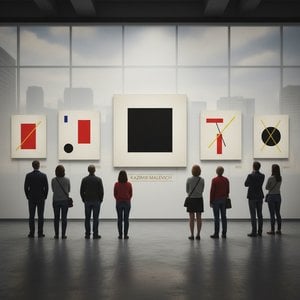
Explore the revolutionary art of Kazimir Malevich & his groundbreaking Suprematism movement. Discover the origins, core principles, and lasting impact of this pivotal force in modern abstract painting.


 效果预览
效果预览
 分享
分享 分享
分享
 详情
详情

 下载
下载
 相似作品
相似作品 X射线
X射线 幻灯片播放
幻灯片播放 统计数据
统计数据

 展开详情
展开详情









 玻璃选项仅适用于110厘米以下的尺寸。


