
 PastelWallArtSymbolism
 189519th Century
 47.0 x 63.0 cm
 Lithuanian Art Fund
由我们的艺术家按需定制,为您提供您所选尺寸及画框的布面手工油画。 ( 切换至版画销售渠道 切换至数字图像销售渠道)





























您可以从与原作比例一致的预设尺寸中进行选择。

请输入您需要的宽度和高度,以适配您的画框或墙面。由于作品为手工绘制,若您选择不同的尺寸比例,艺术家可能会在画面边缘多画一些或稍作裁剪 —— 由您决定。在开始绘画之前,我们会为您发送一份数字效果图供您确认。本页面上展示的图片并非最终实物 —— 只有效果图才能反映真实结果。
Trees
复刻品尺寸说明
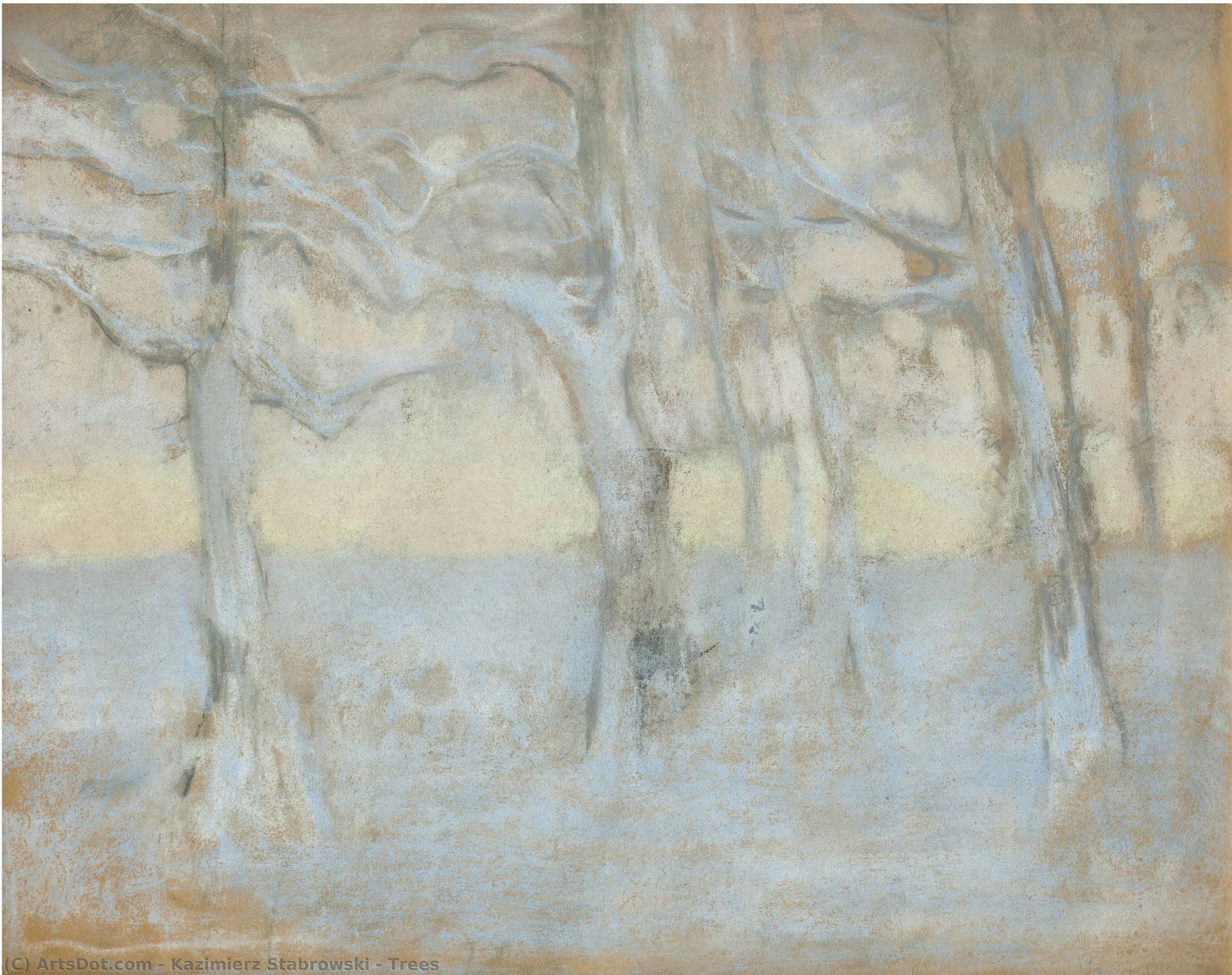
Kazimierz Stabrowski's "Trees" is a captivating pastel drawing that transcends simple representation, offering instead a glimpse into the artist’s exploration of symbolism and romanticism within the natural world. This work, created in 1895, showcases a pivotal moment in Stabrowski's artistic development as he moves away from strict realism towards abstraction, while retaining a profound emotional depth.
"Trees" depicts a cluster of trees set against what appears to be a beach or shoreline. The composition is dominated by the verticality of the tree trunks and branches, rendered with loose, flowing lines and blended colors. Unlike traditional landscape paintings that prioritize accurate depiction, Stabrowski prioritizes conveying an atmosphere and feeling. There's no clear focal point; instead, the eye wanders across the dense visual field created by the clustered trees, eventually settling on the hazy background suggesting a distant shoreline. The horizontal format emphasizes the breadth of the scene while maintaining a sense of intimacy through the close proximity of the trees in the foreground.
The artwork exemplifies a transition towards abstraction. Stabrowski’s technique is characterized by loose, gestural strokes that capture the essence of the trees rather than their precise form. The blending of colors—primarily muted tones of beige, grey, blue, and brown with subtle hints of yellow and green—creates a hazy, dreamlike effect. This soft palette contributes to the overall melancholic and contemplative mood. The use of pastels lends itself beautifully to this style, creating a velvety texture that enhances the sense of depth and dimension. The lines themselves are not sharp or defined but rather flow into one another, suggesting movement and growth within the trees. It's worth noting the similarities in tree depiction with those found in Mikalojus Konstantinas Čiurlionis’ “Winter” collection (1907), highlighting a shared artistic sensibility of the time.
Beyond its aesthetic qualities, "Trees" carries significant symbolic weight. The transforming trees represent change, growth, and potentially even spiritual evolution—themes central to Stabrowski’s interest in symbolism and romanticism. The artist's intention was not merely to depict a scene but to express ideas, feelings, and experiences through the landscape. The hazy atmosphere and muted colors evoke a sense of longing or introspection, inviting viewers to contemplate their own connection to nature and the passage of time. This work is more than just a depiction of trees; it’s an exploration of the human condition within the context of the natural world.
Created during a period of artistic experimentation, "Trees" reflects the broader shift away from realism and towards symbolism and abstraction in late 19th-century art. Stabrowski’s work stands as an important example of Polish Symbolism, demonstrating a desire to move beyond mere representation and explore deeper emotional and spiritual truths. His exploration of these themes, combined with his later involvement in the Theosophical Society, further enriches the interpretation of this evocative pastel drawing.
在卡齐米日·斯塔布罗夫斯基 的《Trees》中,Symbolism运动与19世纪时代交相辉映。
卡齐米日·斯塔布罗夫斯基 的《Trees》 创作于 19th Century 时期。这一时期为作品提供了历史背景。
卡齐米日·斯塔布罗夫斯基 的《Trees》 的色彩呈现出 Muted 的饱和度。饱和度描述了色彩的鲜艳或柔和程度。


1869 - 1929 , 白俄罗斯

Explore the ethereal beauty of pastel art. Discover how Impressionist masters used soft hues and velvety textures to capture light. A professional guide for art enthusiasts seeking to understand, collect, and appreciate the delicate magic of this timeless medium.

Elevate your artistic practice with this expert guide to mastering the line. Discover advanced techniques in graphite, charcoal, and contour drawing designed for art students seeking technical precision and expressive depth in their fine art studies.

Explore the profound artistry of graphite drawing. Discover professional techniques for mastering depth, texture, and detail through a lens of art history, from classical sketches to modern masterpieces. Elevate your understanding of the pencil medium with our expert guide.

 实景预览
实景预览
 发送
发送 分享
分享
 详情
详情 指南
指南

 下载图片
下载图片
 相似作品
相似作品 X射线
X射线 幻灯片播放
幻灯片播放 统计数据
统计数据 阅读全文
阅读全文









 玻璃选项仅适用于110厘米以下的尺寸。


