
 SilkTextileKano School
 1685Early Modern
 54.0 x 31.0 cm
 Aichi Prefectural Museum of Art
博物馆级艺术微喷或帆布版画,制作高效,并提供多种饰面选择。 ( 购买手绘画作 切换至数字图像销售渠道)
从与原作比例一致的预设尺寸中进行选择。

您可以输入自定义尺寸,以适配特定的画框或空间。如果您选择的尺寸与原图比例不符,我们将对作品进行裁剪,或通过镜像填充/纯色填充边缘的方式来扩展图像。在开始制作之前,我们会向您发送一份数字效果图供您确认。
请注意,屏幕上的预览并不能反映实际的裁剪或扩展效果。只有效果图才能准确展示最终的构图。
虽然我们提供定制尺寸,但为了保持原图比例,我们建议您从预设列表中选择尺寸。

Dancing Youth
复制品尺寸
In the delicate interplay of light and shadow upon silk, Kano Yasunobu captures a fleeting moment of pure, rhythmic vitality. Dancing Youth is not merely a depiction of movement; it is an invitation into the vibrant atmosphere of the Edo period. The painting centers on a solitary figure, a young woman whose presence commands the composition with an effortless elegance. Dressed in traditional Asian attire that flows with her motion, she balances a basket upon her head—a detail that grounds her ethereal dance in the humble, beautiful realities of daily life. Every brushstroke serves to emphasize the fluidity of her form, creating a sense of weightlessness that makes the viewer feel as though they are witnessing a private, sacred ritual of joy.
The mastery of Yasunontobu is evident in his command over the medium of silk, which lends a luminous, translucent quality to the skin tones and the intricate patterns of the garments. As a prominent figure of the Kanō school, Yasunobu utilized a technique characterized by meticulous precision and refined line work. The artist’s ability to balance the structural rigidity required by traditional Japanese aesthetics with the organic, sweeping curves of a dancing body creates a profound visual tension. This technical prowess ensures that the piece remains dynamic; even in its stillness, the painting breathes with the energy of the dancer's momentum.
Created in 1685, this work emerges from a transformative era in Japanese art history. Kano Yasunobu, a master of detail and a guardian of tradition, was deeply embedded in the lineage of the Kanō dynasty. While his contemporaries often sought grandiosity, Yasunobu found profound beauty in the nuanced and the intimate. Dancing Youth reflects this dedication to the subtle nuances of life. The painting serves as a window into the cultural landscape of the late 17th century, where the celebration of seasonal rhythms and folk traditions was woven into the very fabric of society.
For the discerning collector or interior designer, this piece offers more than just aesthetic pleasure; it provides a sense of historical continuity. The composition’s focus on a single, expressive subject makes it an ideal centerpiece for spaces that value tranquility and sophisticated storytelling. Whether placed in a contemporary gallery setting or a classic study, the artwork acts as a focal point of calm sophistication. A high-quality reproduction of this masterpiece allows one to bring the quiet, rhythmic soul of the Edo period into a modern environment, offering a timeless connection to the heritage of Japanese silk painting.

Kano Yasunobu (狩野 安信, 1614 – 1685) stands as a pivotal figure within the illustrious Kanō school of painting, a dynasty renowned for its exquisite detail, refined techniques, and profound influence on Japanese art. Born in Kyoto during the Edo period, Yasunobu’s life was inextricably linked to the legacy of his father, Kano Takanobu, and subsequently shaped by the artistic tutelage of his brothers, particularly the celebrated Tan'yū. While often overshadowed by these more flamboyant talents, Yasunobu’s contribution lies primarily in his meticulous approach to painting, his dedication to preserving and expanding upon Kanō traditions, and most notably, his creation of the seminal training manual, the Gadō Yōketsu – a cornerstone document for generations of Kanō artists.
Yasunobu’s early life was marked by tragedy. His father, Kano Takanobu, died when he was only six years old, thrusting him into a world dominated by his elder brothers. He received his initial artistic training under the guidance of Kano Koi and later benefited from the instruction of Tan'yū and Naonobu. This lineage instilled within him a deep respect for established methods while simultaneously fostering an independent spirit. Unlike his brothers who often embraced innovation, Yasunobu remained steadfastly committed to upholding the rigorous standards of the Kanō school, prioritizing accuracy, precision, and adherence to traditional techniques.
Yasunobu’s most enduring legacy resides in his creation of the Gadō Yōketsu (画道要訣, “The Secret Way of Painting”), completed in 1680. This meticulously illustrated manual served as a comprehensive guide to Kanō painting techniques, encompassing everything from brushwork and pigment mixing to composition and subject matter. Prior to its publication, the school’s knowledge was largely transmitted orally, leading to inconsistencies and fragmentation. Yasunobu's work provided a standardized framework, ensuring the continuity of the school’s artistic principles for future generations.
The Gadō Yōketsu is not merely a technical manual; it also functions as a historical record, documenting the evolution of Kanō painting and offering insights into the lives and practices of its masters. It includes detailed depictions of various subjects – birds, flowers, landscapes, Buddhist figures, and mythological scenes – alongside step-by-step instructions for rendering them with unparalleled realism and elegance. The book’s influence extends far beyond the confines of the Kanō school, shaping the development of painting throughout Japan.
While Yasunobu's style is often described as more restrained than that of his brothers, particularly Tan'yū, it possesses a remarkable clarity and precision. His paintings are characterized by their meticulous attention to detail, subtle gradations of color, and masterful rendering of textures – from the delicate plumage of birds to the shimmering surface of water. He excelled in depicting natural subjects, often choosing scenes of serene beauty featuring fish, lotus flowers, and graceful insects.
Yasunobu’s repertoire included a wide range of subjects, reflecting the diverse interests of the Kanō court. He produced numerous depictions of birds – particularly cranes and sparrows – which became hallmarks of his style. His works also frequently featured scenes from Buddhist mythology, showcasing his understanding of religious symbolism and iconography. His landscapes are notable for their atmospheric perspective and subtle use of color to convey mood and atmosphere.
Kano Yasunobu’s contribution to Japanese art is profound, though often understated. He was a key figure in preserving and transmitting the traditions of the Kanō school during a period of significant change. His dedication to meticulous technique and his creation of the Gadō Yōketsu ensured the continuity of the school's artistic principles for centuries to come.
Despite not achieving the same level of fame as some of his brothers, Yasunobu’s work continues to be admired for its exquisite detail, refined elegance, and enduring legacy. His paintings offer a valuable window into the world of Edo-period Japan, revealing the sophisticated artistic sensibilities of the Kanō school and the profound influence it exerted on Japanese art history. His legacy endures not only through his individual works but also through the countless artists who have studied and learned from the Gadō Yōketsu – a testament to his enduring contribution to the world of painting.

1614 - 1685 , Japan
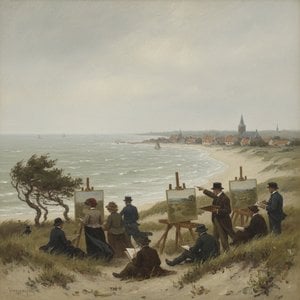
Explore the ethereal beauty of the Hague School art movement. Discover how masters like Jan Weissenbruch captured the atmospheric grey light of the Dutch landscape through unparalleled technique and emotive, misty compositions.

Explore the industrial artistry of Pop Art. Delve into the sophisticated history of Ben-Day dots and silk screen techniques that transformed mass media into high art, perfect for discerning collectors seeking deep historical insight and aesthetic excellence.

Explore the profound beauty of American Romanticism. Discover how the Hudson River School captured the wild frontier through masterful landscapes, exploring the legacy of legends like Thomas Cole and Asher Durand in this deep dive into art history.

Delve into the breathtaking world of the Hudson River School. Our expert guide explores how 19th-century masters captured the sublime majesty of the American wilderness through Romanticism and unparalleled landscape artistry. A must-read for fine art enthusiasts.


 分享
分享 分享
分享
 详情
详情

 下载
下载
 相似作品
相似作品 幻灯片播放
幻灯片播放 统计数据
统计数据 展开详情
展开详情






































 玻璃选项仅适用于110厘米以下的尺寸。


![Untitled [uwaki No Sō (the Fickle Onethe Fickle One)] — 喜多川歌麿, Impressionistic Style](/media/artworks/images-thumb/46/8e/468eafb3b6da18ad90b6e962513246d1.jpg)


