
博物馆级艺术微喷或帆布版画,制作高效,并提供多种饰面选择。 ( 购买手绘画作 切换至数字图像销售渠道)
从与原作比例一致的预设尺寸中进行选择。

您可以输入自定义尺寸,以适配特定的画框或空间。如果您选择的尺寸与原图比例不符,我们将对作品进行裁剪,或通过镜像填充/纯色填充边缘的方式来扩展图像。在开始制作之前,我们会向您发送一份数字效果图供您确认。
请注意,屏幕上的预览并不能反映实际的裁剪或扩展效果。只有效果图才能准确展示最终的构图。
虽然我们提供定制尺寸,但为了保持原图比例,我们建议您从预设列表中选择尺寸。

Namban folding screens
复制品尺寸
In the dawn of the seventeenth century, as Japan stood at a pivotal crossroads of isolation and global encounter, Kanō Naizen captured a fleeting moment of profound cultural collision. His Namban folding screens serve as more than mere decorative objects; they are vibrant, cinematic windows into an era defined by the arrival of the "Southern Barbarians." Through a masterful application of gold leaf and meticulous brushwork, Naizen invites the viewer to witness the bustling maritime activity near Nagasaki, where Portuguese vessels first breached the horizon of the Japanese archipelago. The composition breathes with a rhythmic vitality, guiding the eye across a landscape populated by intrepid sailors, majestic boats, and the delicate presence of birds that punctuate the golden expanse.
The artistry of the Kanō school is on full display within this monumental work. Naizen utilizes the traditional byōbu format to create a sense of panoramic depth, where figures in the foreground appear strikingly immediate, while distant boats drift into a shimmering, atmospheric haze. The technique relies heavily on the interplay between rich pigments and the reflective brilliance of gold, a hallmark of the Kanō style that was designed to illuminate the dim interiors of temples and palaces. Every stroke is deliberate, capturing the texture of the waves, the intricate details of the foreign attire, and the lively movement of people navigating the docks, creating a sense of motion that feels almost alive.
To behold these screens is to touch the pulse of history. The term "Namban" itself evokes a period of intense curiosity and complex diplomacy. Naizen, a scion of one of Japan's most prestigious artistic lineages, was uniquely positioned to document this transition. His work does not merely record a landing; it symbolizes the meeting of two vastly different worlds—the structured, traditional aesthetics of Edo-period Japan and the exotic, unexpected presence of European explorers. The boats, positioned strategically across the canvas, act as vessels of change, carrying not just goods, but new ideas, religions, and technologies that would forever alter the Japanese social fabric.
For the discerning collector or interior designer, these screens offer an unparalleled opportunity to introduce a sense of narrative prestige into a space. The emotional impact of the piece lies in its balance of grandeur and intimacy. While the scale of 178 x 366 cm commands attention, the fine details—the subtle tilt of a head, the way light hits a sail, or the quiet grace of a bird in flight—provide moments of quiet contemplation. A high-quality reproduction of this masterpiece brings with it an aura of timelessness, making it a profound centerpiece for any collection that values the intersection of historical storytelling and exquisite Japanese craftsmanship.


1570 - 1616 , Japan

Explore the profound beauty of Japanese landscape painting. From Hokusai's iconic vistas to Zen-inspired compositions, discover the spiritual depth and historical mastery of Ukiyo-e art in this expert cultural retrospective.

Explore the profound beauty of Japanese Ukiyo-e art. Discover the legacy of Hokusai and the Utagawa school through an expert exploration of Edo-period aesthetics, seasonal motifs, and the enduring global influence of Japan's 'Floating World' on fine art history.

Embark on a cultural journey through Japan's Edo Period. Discover the profound beauty of Ukiyo-e masters like Kuniyoshi and Toshinobu, exploring the vibrant legacy of Kabuki and Sumo through an art-history lens for the true classic art enthusiast.
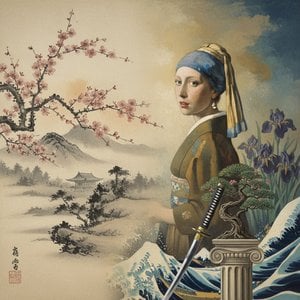
Explore the profound influence of Japanese artistry on global masterpieces. From Ukiyo-e prints to Zen aesthetics, discover how Eastern elegance transformed Western art history in this deep cultural reflection for fine art enthusiasts and collectors.

Explore the ephemeral beauty of Japanese Ukiyo-e art. From the dynamic warriors of Kuniyoshi to serene landscapes, discover the profound history, masterful techniques, and global influence of these iconic woodblock prints in our deep cultural retrospective.


 分享
分享 分享
分享
 详情
详情 指南
指南

 下载
下载
 相似作品
相似作品 幻灯片播放
幻灯片播放 统计数据
统计数据


 展开详情
展开详情






































 玻璃选项仅适用于110厘米以下的尺寸。


