
博物馆级艺术微喷或帆布版画,制作高效,并提供多种饰面选择。 ( 购买手绘画作 切换至数字图像销售渠道)
从与原作比例一致的预设尺寸中进行选择。

您可以输入自定义尺寸,以适配特定的画框或空间。如果您选择的尺寸与原图比例不符,我们将对作品进行裁剪,或通过镜像填充/纯色填充边缘的方式来扩展图像。在开始制作之前,我们会向您发送一份数字效果图供您确认。
请注意,屏幕上的预览并不能反映实际的裁剪或扩展效果。只有效果图才能准确展示最终的构图。
虽然我们提供定制尺寸,但为了保持原图比例,我们建议您从预设列表中选择尺寸。

Buckle [Center-right]\nCompact Cases [Upper]\nCompact Cases [Lower]\nCompact Cases [Center-left]
复制品尺寸

In the shimmering, opulent landscape of the early twentieth century, few names evoke the sophisticated grandeur of the Art Deco era quite like Jean Dunand. A true Renaissance man of the decorative arts, Dunand possessed a rare ability to bridge the gap between ancient Eastern traditions and the burgeoning modernism of the West. Born Jules John Dunand in 1877 in Lancy, Switzerland, his journey was one of constant metamorphosis. The son of a goldsmith, he inherited an early intimacy with precious metals, a foundation that would later allow him to master the complex art of dinanderie—the exquisite process of hand-hammered metalwork. His move to Paris in 1909 was more than a mere change of scenery; it was a spiritual homecoming that saw him adopt his more famous French name and begin a lifelong dialogue with the most avant-garde movements of his time.
Dunand’s artistic evolution was deeply rooted in his rigorous training at the École des Arts Industriels de Genève, where he earned a diploma in sculpture. This sculptural sensibility remained the heartbeat of his work, even when he transitioned into more decorative mediums. His early years in Paris were marked by significant mentorships, most notably under the sculptor Jean Dampt, whose influence helped refine Dunand’s ability to manipulate form and texture. As he navigated the Parisian art scene, participating in prestigious exhibitions like the Salon of the National Society of Fine Arts, his work began to reflect a fascinating tension between the organic fluidity of Art Nouveau and the structured, geometric elegance that would define Art Deco.
While Dunand’s mastery of metal—working with copper, steel, silver, and pewter—was nothing short of virtuosic, it was his encounter with the ancient art of Japanese lacquer that would secure his immortality in art history. Around 1912, Dunand began a transformative collaboration with Seizo Sugawara, a Japanese master who had brought the secrets of lacquer painting to France. This encounter ignited a passion for a medium that required immense patience, precision, and a near-supernatural understanding of layering and drying. Through this study, Dunand became one of the very few Western artists capable of executing the traditional Japanese style, creating large-scale decorative panels that seemed to glow from within.
His technique was a breathtaking fusion of disparate worlds. In his metalwork, he utilized hammers and glides to create intricate patterns, often encrusting his pieces with mother-of-pearl or gilding them with gold to catch the light in ways that felt both ancient and modern. His lacquer panels, meanwhile, were masterpieces of depth and texture, often featuring:
The significance of Jean Dunand lies in his refusal to be confined by a single medium or style. He was an architect of atmosphere, designing entire interiors where his lacquered screens, metal vases, and sculptural objects worked in concert to create a cohesive sensory experience. His work stood alongside the giants of his era, such as Rodin and Renoir, yet he carved out a unique niche that celebrated the beauty of the functional object. By elevating decorative arts to the level of fine art, he helped define the luxury aesthetic of the 1920s and 30s.
Today, Dunand’s legacy is preserved in the world's most prestigious museums and private collections, serving as a testament to a period when craftsmanship and modern design reached a perfect, luminous equilibrium. His ability to breathe new life into forgotten techniques like lacquer and dinanderie ensures that his work remains not just a relic of the past, but a living inspiration for artists seeking to find the soul within the material.

1877 - 1942 , Switzerland

Discover the allure of Art Deco through a curated guide to its most iconic masterpieces. Explore the elegance of Erté and the innovation of Jean Dunand, perfect for collectors seeking timeless glamour and sophisticated design inspiration.

Discover the breathtaking allure of Art Deco. Explore the era's iconic geometry, legendary designers like Erté, and timeless glamour. Perfect for discerning collectors seeking to infuse their spaces with sophisticated modernist elegance and historical prestige.
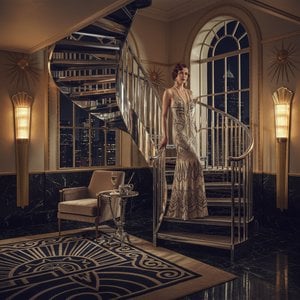
Discover the allure of Art Deco style with our expert guide to luxury interiors. Explore iconic influences from Erté to Jean Dunand and learn to curate a sophisticated space filled with timeless glamour and geometric elegance.
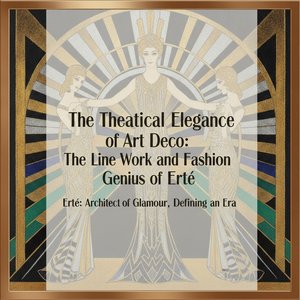
Discover the unparalleled elegance of Art Deco through the lens of Erté. Explore a masterclass in linear precision, theatrical costume design, and high-fashion illustration that continues to define modern luxury and sophisticated interior aesthetics.

![Buckle [center-right]\ncompact Cases [upper]\ncompact Cases [lower]\ncompact Cases [center-left] — Jules John Dunand](/media/artworks/images-full/72/9a/729a8901439122e1508a07ad203ece49.jpg)
 效果预览
效果预览
 分享
分享 分享
分享
 详情
详情

 下载
下载
 相似作品
相似作品 X射线
X射线 幻灯片播放
幻灯片播放 统计数据
统计数据


 展开详情
展开详情






































 玻璃选项仅适用于110厘米以下的尺寸。


