购买高分辨率增强版数字图像,其品质远超在线预览。
每一份文件都由我们的内部专家使用先进工具与专业的后期润色技术精心打造。我们确保每一张图像都具备卓越的清晰度、精准的色彩还原度以及细腻的细节表现。
最终文件将在 72 小时内通过电子邮件交付,并针对专业、编辑及印刷用途进行了优化。其品质与顶级设计工作室、出版社和画廊所信赖的标准完全一致。
选择 WahooArt.com,您获得的不仅仅是一张图像——您收到的是经过专业级增强、精雕细琢的数字艺术作品,并享有满意保证。以下是您的订单中自动包含的所有内容:

您的高分辨率数字图像文件将在下单后 72 小时内通过电子邮件发送给您 —— 即可立即使用。

您的艺术品经过专业优化,结合先进的 AI 技术与人工修饰,确保呈现极致的细节、清晰度与色彩准确度。

不小心删除了文件或找不到了?没关系——我们将随时为您免费重发。

即刻拥有您的艺术作品,无需支付任何关税、税费或运费——数字下载始终免税。

我们通过专业工具与色彩管理技术,确保您的数字图像尽可能真实地还原原作色彩。

如果您对所购数字图像不满意,我们将在100天内为您进行修改或提供100%的全额退款——无需任何理由。

不满意?在收到数字文件后的100天内,您可以申请全额退款——无需任何理由。

购买 3 张图片可享 10% 折扣 - 购买 5 张可享 15% 折扣 - 购买 10+ 张可享 20% 折扣。非常适合创意项目、画廊和机构使用。
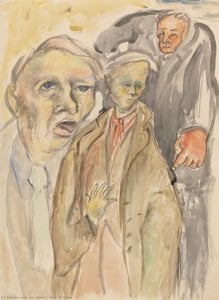
Joy St Clair Hester's *Mujer Desnuda Reclinada*, painted in 1955, is not merely a depiction of the human form; it’s an intimate exploration of vulnerability, loss, and the quiet power of observation. This arresting work, rendered primarily in shades of white, cream, and charcoal against a profound dark background, embodies the core tenets of Hester's distinctive Expressionist style – a language born from personal experience and imbued with a haunting emotional resonance.
The subject, a reclining nude female figure, is presented with an arresting directness. Her pose, relaxed yet subtly alert, suggests both vulnerability and a quiet strength. The artist’s masterful use of fluid, almost hesitant lines defines the contours of her body, avoiding any overtly sensual portrayal. Instead, Hester focuses on capturing the essence of the form – its curves, its weight, its inherent dignity – through a deliberate restraint that amplifies the emotional impact. The simplicity of the palette and the emphasis on line create an atmosphere of profound introspection, inviting the viewer to contemplate the figure’s inner world.
To fully appreciate *Mujer Desnuda Reclinada*, it's crucial to understand its context within the vibrant artistic circles of 1950s Australia. Hester was a key member of both the Heide Circle, centered around the Reed family’s home, and the Angry Penguins group – movements that challenged traditional art practices and sought to forge a distinctly Australian modern identity. The influence of these groups is evident in Hester's willingness to break free from academic constraints and embrace a more personal, emotionally charged approach to her work.
Her early life, marked by the loss of her father at a young age, profoundly shaped her artistic vision. This experience, coupled with the anxieties surrounding World War II and her own battle with Hodgkin’s disease, fueled a deep exploration of mortality and the human psyche – themes that resonate powerfully in *Mujer Desnuda Reclinada*. The painting can be seen as a meditation on fragility, resilience, and the enduring beauty found within moments of quiet contemplation.
Hester’s technique is characterized by a remarkable economy of line. She eschews detailed rendering in favor of bold, expressive strokes that define form and convey emotion with exceptional subtlety. The varying weights of the lines – thick for outlining major contours, thinner for suggesting texture and shadow – create a dynamic interplay of visual elements. The predominantly monochromatic palette further emphasizes this linear approach, allowing the lines themselves to carry the weight of meaning.
The painting’s flatness—a deliberate choice by Hester—contributes to its immediate impact. There's no illusion of depth or spatial perspective; instead, the viewer is drawn into a close encounter with the subject, invited to engage with her presence on an emotional level. The dark background serves not as a mere backdrop but as a crucial element in defining the figure’s luminosity and emphasizing her vulnerability.
*Mujer Desnuda Reclinada* transcends a simple depiction of a nude form; it's a potent symbol of introspection, resilience, and the quiet dignity of the human spirit. The reclining pose itself suggests surrender, acceptance, and a willingness to confront one’s own vulnerabilities. The figure’s averted gaze invites the viewer to share in her silent contemplation, fostering a sense of empathy and connection.
Ultimately, this painting is a testament to Hester's extraordinary ability to distill complex emotions into simple, yet profoundly moving forms. It remains a powerful example of Australian Modernism—a poignant exploration of the human condition rendered with remarkable grace and emotional depth.

1920 - 1960 , 澳大利亚


 效果预览
效果预览
 切换至版画销售渠道
 分享
分享 分享
分享
 详情
详情

 下载
下载
 相似作品
相似作品 X射线
X射线 幻灯片播放
幻灯片播放 统计数据
统计数据


 展开详情
展开详情