
由我们的艺术家按需定制,为您提供您所选尺寸及画框的布面手工油画。 ( 切换至版画销售渠道 切换至数字图像销售渠道)
从与原作比例一致的预设尺寸中进行选择。

您可以输入自定义尺寸,以适配特定的画框或空间。如果所选尺寸与原图比例不符,我们将通过裁剪作品或添加手绘元素来扩展画面。数字样稿将在制作开始前发送给您确认。
请注意,屏幕预览无法准确反映实际的裁剪或扩展效果,只有样稿才能真实呈现最终的构图。
虽然我们提供定制尺寸服务,但为了保留原作比例,建议您从预设列表中选择尺寸。

Mme. Gruffanuff
复制品尺寸

Joshua Charles Taylor (1917-1981) wasn’t merely an American artist; he was a meticulous observer, a scholar of light, and a profound interpreter of the human form. His legacy resides not in grand, sweeping canvases but in a quiet intensity—a dedication to capturing the subtle nuances of observation, rendered with a remarkable sensitivity to detail and imbued with a distinctly Hudson River School aesthetic. Born in Hillsboro, Washington, Taylor’s artistic journey began modestly, studying at the Portland Museum art school before pursuing formal training at Reed College and later Princeton University. His early career involved design work for theatrical productions, a period that likely honed his eye for composition and dramatic lighting – skills he would later apply to his landscape paintings.
Taylor’s artistic trajectory took a pivotal turn with his appointment as the director of the Smithsonian American Art Museum in 1970. This role wasn't simply administrative; it was transformative. He recognized the museum’s potential as a center for rigorous scholarship and a platform for exploring the rich tapestry of American art history. During his tenure, he championed a more nuanced approach to collecting, prioritizing works that offered insights into the cultural context surrounding them. He famously eschewed “blockbuster” exhibitions in favor of smaller, deeply researched presentations, believing that true understanding came from careful study and thoughtful engagement.
Taylor’s artistic development was profoundly shaped by his academic background and a deep appreciation for the traditions of landscape painting. His studies at Princeton under figures like Pierre-Henri de Valenciennes, a French painter known for his meticulous observation of nature and his theoretical writings on capturing light, were particularly influential. Valenciennes' emphasis on “plein air” painting – working directly from nature – resonated deeply with Taylor’s own approach. He wasn’t interested in simply replicating a scene; he sought to distill the essence of a place, its atmosphere, and its inherent qualities into a single image.
Furthermore, Taylor's exposure to the Hudson River School—a movement characterized by romanticized depictions of American landscapes—provided a crucial foundation. Artists like Thomas Cole and Frederic Church, with their dramatic lighting, evocative compositions, and celebration of the American wilderness, served as both inspiration and a point of departure for Taylor’s own work. However, unlike the often idealized portrayals of the Hudson River School, Taylor's paintings possess a grounded realism, reflecting his meticulous attention to detail and his commitment to capturing the specific characteristics of each location.
One particularly compelling example of Taylor’s artistic philosophy is "Study for a Puppet," a pencil drawing housed within the Smithsonian collection. This seemingly simple sketch reveals a remarkable level of technical skill and an acute awareness of form. The meticulous rendering of hands, faces, and drapery demonstrates his dedication to understanding the underlying structure of the human figure—a cornerstone of his approach to landscape painting as well. The drawing isn’t merely a preparatory study; it's a testament to Taylor’s belief that all art begins with careful observation and a deep engagement with the subject matter.
The title itself, “Study for a Puppet,” hints at a deeper layer of meaning. It suggests an exploration of representation—how we create illusions through line, shadow, and color. Taylor wasn’t simply depicting a scene; he was actively constructing it, carefully manipulating the elements to achieve a desired effect. This deliberate process underscores his intellectual approach to artmaking.
Joshua Charles Taylor's impact extends beyond his individual artwork. He played a crucial role in shaping the Smithsonian American Art Museum into a leading institution for the study and exhibition of American art history. His emphasis on scholarship, meticulous research, and thoughtful presentation set a new standard for museum practice. His book, *Learning to Look: A Handbook for the Visual Arts*, published in 1957, became a seminal text for generations of students, instilling in them a fundamental appreciation for observation, analysis, and critical thinking.
Taylor’s work continues to be appreciated for its quiet beauty, technical mastery, and profound understanding of light and shadow. He reminds us that art isn't simply about aesthetics; it's about engaging with the world around us in a thoughtful and deliberate way—a lesson embodied in every meticulously rendered detail of his paintings.

1917 - 1981

Discover the ethereal beauty of watercolor through an art-historical lens. Master the delicate balance of light, fluidity, and pigment to capture the luminous essence of nature, inspired by the legendary techniques of the Old Masters and Impressionist greats.
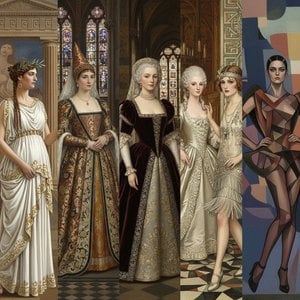
Explore the breathtaking intersection of fine art and high fashion. Discover how iconic masterpieces from Art Deco to Impressionism have shaped the world of luxury couture and timeless design in this curated visual journey.
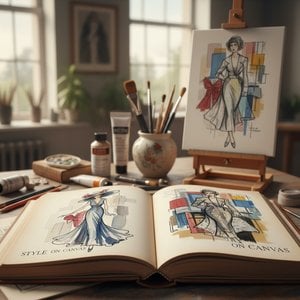
Discover the exquisite world of fashion illustration art. From Art Deco elegance to bespoke oil reproductions, explore how timeless sartorial beauty transforms luxury interiors through masterfully crafted canvas works and curated historical masterpieces.


 效果预览
效果预览
 分享
分享 分享
分享
 详情
详情 指南
指南

 下载
下载
 相似作品
相似作品 X射线
X射线 幻灯片播放
幻灯片播放 统计数据
统计数据
 展开详情
展开详情






































 玻璃选项仅适用于110厘米以下的尺寸。


