x


从与原作比例一致的预设尺寸中进行选择。

您可以输入自定义尺寸,以适配特定的画框或空间。如果所选尺寸与原图比例不符,我们将通过裁剪作品或添加手绘元素来扩展画面。数字样稿将在制作开始前发送给您确认。
请注意,屏幕预览无法准确反映实际的裁剪或扩展效果,只有样稿才能真实呈现最终的构图。
虽然我们提供定制尺寸服务,但为了保留原作比例,建议您从预设列表中选择尺寸。

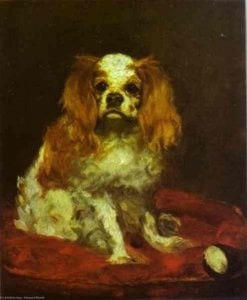
Two dogs
复制品尺寸

Joseph Denovan Adam, born in the historic heart of Edinburgh in 1842, stands as a profound chronicler of a vanishing era. A British genre painter of exceptional sensitivity, his artistic legacy is inextricably linked to the soul of the Scottish Highlands. Through his brush, the rugged landscapes of Scotland were transformed into more than mere scenery; they became living, breathing narratives of pastoral tranquility and the quiet dignity of rural existence. Adam possessed a rare ability to capture the essence of Highland life, populating his canvases with the rhythmic movement of cattle and sheep amidst sweeping vistas, alongside intimate, tender glimpses into the domestic rhythms of the countryside.
His journey as an artist was shaped by the rigorous academic traditions of the Victorian era, yet it was infused with a modern eye for light and texture. From 1867, Adam refined his craft at the Royal Scottish Academy, studying under esteemed luminaries such as David Octavius Hill and Robert Muir. This period of formal training was particularly significant due to the influence of photography on the contemporary artistic landscape. The photographic expeditions of his mentors instilled in Adam a sophisticated understanding of tonal gradation and precise compositional balance. He learned to observe how light interacts with form, a skill that would later allow him to imbue his paintings with an almost palpable atmosphere.
To describe Adam’s style is to speak of Romantic Realism—a delicate equilibrium between meticulous accuracy and emotive depth. While his work is firmly anchored in the faithful observation of nature, it transcends mere documentation through its ability to evoke mood. He did not seek the spectacle of grand historical dramas or the shock of dramatic gestures; instead, he found greatness in the subtle. His canvases capture the soft glow of a setting sun over a shepherd’s dwelling or the quiet stillness of a morning mist settling over a meadow. This approach allowed him to convey a deep-seated reverence for the Scottish landscape and the enduring spirit of those who labored upon it.
His technical prowess is most evident in his treatment of livestock and the natural world. In works such as Feeding the Calves, one can sense the warmth and vitality of the scene, rendered with a meticulousness that honors the subject. His ability to manipulate light—often referred to as a "golden" quality in his more celebrated pieces—creates a sense of nostalgia and peace. This mastery is further displayed in:
Throughout a prolific career spanning several decades, Adam produced over 150 paintings that serve as a vital visual record of 19th-century Scottish life. His work does not merely depict animals and landscapes; it preserves the dignity of a way of life that was beginning to face the pressures of industrialization. By focusing on the symbiotic relationship between humans, animals, and the land, he created a body of work that resonates with a universal longing for simplicity and connection to nature.
Today, the works of Joseph Denovan Adam continue to hold a significant place in the annals of British art. Collectors and scholars alike are drawn to his ability to marry the precision of a realist with the heart of a romantic. His paintings remain enduring symbols of the Scottish spirit, offering a window into a world defined by the quiet beauty of the Highlands and the timeless rhythms of the pastoral landscape. Through his dedication to capturing the subtle nuances of light and life, Adam ensured that the essence of rural Scotland would remain eternally vibrant on the canvas.

1842 - 1896 , United Kingdom


第一时间获取最新的艺术新闻、独家优惠及装饰灵感。
向我们介绍您的项目需求,我们的艺术专家将为您提供 3 个个性化的艺术品推荐。
由我们的专家为您精选 3 款心仪之作 —— 完全免费!


 效果预览
效果预览
 购买印刷品
购买印刷品 分享
分享 分享
分享
 详情
详情

 下载
下载
 相似作品
相似作品 X射线
X射线 幻灯片播放
幻灯片播放 展开详情
展开详情






































 玻璃选项仅适用于110厘米以下的尺寸。