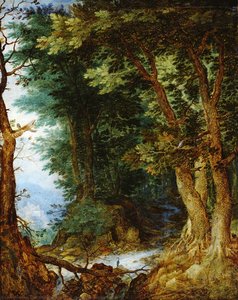
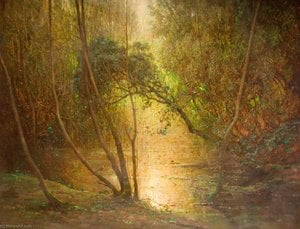
博物馆级艺术微喷或帆布版画,制作高效,并提供多种饰面选择。 ( 订购纯手工绘制画作 切换至数字图像销售渠道)
您可以从与原作比例一致的预设尺寸中进行选择。

请输入您所需的宽度和高度,以适配您的画框或墙面。由于印刷品只能进行裁剪,无法超出原图尺寸,因此若比例不一致,画面的一部分将会被裁切。在正式印刷之前,我们会为您发送一份数字效果图供您确认。本页面显示的图片并非最终裁剪后的效果——只有效果图才能展示真实的裁剪情况。
A path through a forest
复刻品尺寸

In the grand tapestry of nineteenth-century European art, few threads are as delicately woven as those left by Joseph August Knip. Born in the Dutch town of Tilburg in 1777, Knip emerged from an artistic lineage that deeply informed his early sensibilities. As the son of the decorative painter Nicolaas Frederik Knip, his first lessons were not merely about pigment and brush, but about the very essence of ornamentation and structure. This foundational training, combined with a childhood spent amidst the shifting political tides of Napoleonic Europe, prepared him for a life of profound observation. When tragedy struck his family—the blindness of his father forcing the young Knip to become the household breadwinner at just nineteen—he did not falter; instead, he channeled his necessity into a relentless pursuit of artistic mastery, eventually becoming a mentor to his own sister, the celebrated painter Henriëtte Ronner-Knip.
Knip’s journey was one of constant movement and cultural immersion, a nomadic spirit that allowed him to capture the soul of various European landscapes. His relocation to Paris in 1801 marked a transformative era in his development. In the vibrant, intellectual atmosphere of the French capital, Knip transitioned from a talented draughtsman to a sophisticated chronicler of urban life. It was during this period that he gained prestige, even serving as a drawing master to Louis Napoléon. His Parisian works are characterized by an exquisite topographical precision, where the architectural grandeur of the city meets the intimate, fleeting moments of street life. He possessed a rare ability to document the topographical truth of a location while imbuing it with a romantic, atmospheric light that suggested the passage of time and the weight of history.
The true breadth of Knip’s genius is perhaps most visible in his travels through Italy and the Mediterranean. Between 1809 and 1812, drawn by the luminous allure of the south, Knip traversed the landscapes of Rome and Naples. In doing so, he became a notable member of the Italianisanten—a group of Northern artists captivated by the serene atmosphere and brilliant clarity of the Italian sun. His works from this period, such as his evocative depictions of Genzano and Lake Nemi, demonstrate a masterful command of watercolor over graphite. He did not merely sketch ruins or vistas; he captured the way light dances upon water and how shadows cling to ancient stone, creating panoramic landscapes that felt both monumental and deeply personal.
Technically, Knip was a virtuoso of the watercolor medium. His approach involved a sophisticated layering of washes, a technique that allowed him to achieve a sense of luminosity and depth rarely seen in topographical art. Unlike the grand, often idealized history painters of his era, Knip found beauty in the authentic. Whether he was rendering the rugged terrain of the Sabine Hills or the bustling streets of a French municipality, his focus remained on an unflinching realism. This commitment to detail, paired with an expressive handling of color, allowed him to elevate the commonplace into something transcendent. His ability to balance the precise architectural line with the soft, atmospheric blur of a distant horizon remains a hallmark of his enduring legacy.
The historical significance of Joseph August Knip lies in his role as a bridge between the meticulous traditions of Dutch topographical drawing and the emotive freedom of the Romantic movement. He stood at the intersection of documentation and art, providing future generations with a visual record of a Europe in transition. His influence extended through his family and his students, leaving an indelible mark on the landscape traditions of both the Netherlands and France.
To reflect upon Knip’s contributions is to appreciate the following:
Today, Knip’s works reside in prestigious collections such as The Metropolitan Museum of Art, serving as windows into a lost world of elegance and quiet observation. He remains a master of the subtle, reminding us that there is profound beauty to be found in the careful study of the world around us.

1777 - 1847 , Netherlands
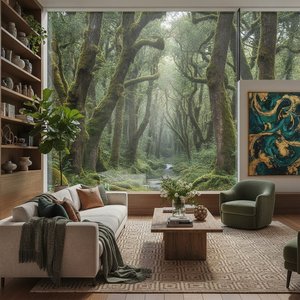
Transform your sanctuary with the serene beauty of enchanting forest landscapes. Discover a curated collection of woodland masterpieces—from Impressionist light to bespoke oil commissions—designed to elevate sophisticated interiors with museum-quality elegance and timeless grace.

Explore the profound emotional power of Romantic landscape art. Discover how masters like Friedrich captured the sublime through breathtaking nature, and learn to curate these evocative masterpieces for your luxury interior collection.

Discover the profound serenity of timeless pastoral landscapes. From Impressionist masterpieces to bespoke oil commissions, explore how curated fine art brings the enduring beauty and tranquility of nature into your luxury home interior.

Explore the profound emotional depth of Romantic landscape painting. Discover how masters captured the sublime through light, shadow, and untamed nature, and learn to bring this timeless, atmospheric beauty into your collection with museum-quality fine art reproductions.


 实景预览
实景预览
 分享
分享 分享
分享
 详情
详情 指南
指南

 下载作品
下载作品
 相似作品
相似作品 X射线
X射线 幻灯片播放
幻灯片播放 Q&A
Q&A 统计数据
统计数据
 展开全文
展开全文






































 玻璃选项仅适用于110厘米以下的尺寸。