
 Pop Art
 1968Modern
 34.0 x 49.0 cm
 布宜诺斯艾利斯现代艺术博物馆
博物馆级艺术微喷或帆布版画,制作高效,并提供多种饰面选择。 ( 购买手绘画作 切换至数字图像销售渠道)





























从与原作比例一致的预设尺寸中进行选择。

您可以输入自定义尺寸,以适配特定的画框或空间。如果您选择的尺寸与原图比例不符,我们将对作品进行裁剪,或通过镜像填充/纯色填充边缘的方式来扩展图像。在开始制作之前,我们会向您发送一份数字效果图供您确认。
请注意,屏幕上的预览并不能反映实际的裁剪或扩展效果。只有效果图才能准确展示最终的构图。
虽然我们提供定制尺寸,但为了保持原图比例,我们建议您从预设列表中选择尺寸。

Flirt
复制品尺寸
In the vibrant, restless landscape of late 1960s Latin American art, few works capture the electric tension of human interaction as vividly as Jorge de la Vega’s "Flirt." Created in 1968, this masterpiece serves as a window into a world where the boundaries between reality and surrealist distortion begin to blur. The painting centers on a captivating scene of social interplay, featuring two women in bikinis who command the viewer's gaze through their poised yet suggestive stances. One figure rests upon the ground, grounded and earthy, while her companion stands nearby, creating a dynamic compositional tension that pulls the eye across the canvas. As the title suggests, there is an undeniable sense of playfulness—a rhythmic, almost musical quality to their movements that hints at the unspoken dialogues of attraction and social performance.
Beyond the central duo, de la Vega weaves a complex tapestry of secondary figures, including a man kneeling in close proximity to the women. This layering of bodies creates a sense of a crowded, bustling environment, perhaps a sun-drenched social gathering where glances are exchanged and secrets are whispered. The composition is far from static; it breathes with a kinetic energy that reflects the artist's ability to capture the "seismographic" shifts of his era. For the collector or interior designer, this piece offers more than just a visual focal point; it provides a narrative depth that invites long periods of contemplation, making it an ideal centerpiece for spaces that value intellectual stimulation and avant-garde flair.
Technically, "Flirt" is a testament to de la Vega’s departure from the rigid constraints of his early architectural training. Moving away from geometric abstraction, he embraced a more fluid, neo-figurative style that allowed for greater emotional expression. The brushwork in this piece possesses a certain urgency, where colors and forms are applied with a confidence that mirrors the spontaneity of the subject matter itself. The artist utilizes a palette that balances the warmth of human skin tones with the vibrant, sometimes jarring accents characteristic of his mid-career evolution. This technique does not merely depict a scene; it reconstructs it, using texture and form to evoke the heat and the psychological weight of the moment.
The symbolism within "Flirt" operates on multiple levels. While at first glance it appears to be a celebration of leisure and summer vitality, there is an underlying layer of social commentary typical of de la Vega’s work. The way the figures are integrated into the background—sometimes merging with the environment or appearing slightly fragmented—suggests the instability of identity in a rapidly changing modern world. It captures the essence of 1968: a year of global upheaval, where the surface-level "flirtation" of society often masked deeper, more profound transformations. To possess a reproduction of this work is to hold a fragment of history, a piece that resonates with the spirit of rebellion and the beauty of metamorphosis.
For those looking to curate an art collection or design a sophisticated living space, "Flirt" offers a unique opportunity to introduce a sense of movement and historical gravity. Its medium-sized format (34 x 49 cm) makes it incredibly versatile, capable of anchoring a gallery wall or serving as a singular, powerful statement in a minimalist study. The painting’s ability to evoke both nostalgia for the late sixties and a timeless fascination with human connection ensures that it remains relevant across changing decor trends.
Investing in a high-quality hand-painted reproduction of this work allows the admirer to experience the tactile soul of de la Vega's vision. The interplay of light, the deliberate distortion of form, and the evocative subject matter provide an emotional resonance that mass-produced prints simply cannot replicate. Whether you are drawn to its bold aesthetic or its complex psychological layers, "Flirt" stands as a profound testament to the enduring power of Argentine modernism, promising to inspire anyone who encounters its captivating, rhythmic beauty.


1930 - 1971 , 阿根廷

Explore the profound influence of geometry and line in fine art. Discover how structural composition creates visual impact, from Cubist mastery to Op Art precision, and learn to curate sophisticated, mathematically balanced collections for discerning art connoisseurs.
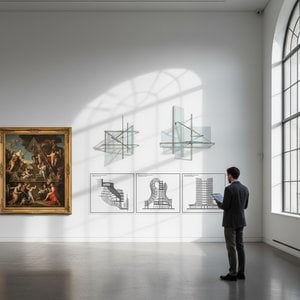
Discover the profound impact of composition on fine art. Explore how masters use geometry, light, and structural harmony to breathe life into masterpieces—an essential guide for discerning collectors seeking depth in every brushstroke.


 效果预览
效果预览
 分享
分享 分享
分享
 详情
详情

 下载
下载
 相似作品
相似作品 X射线
X射线 幻灯片播放
幻灯片播放 统计数据
统计数据 展开详情
展开详情









 玻璃选项仅适用于110厘米以下的尺寸。


