
 Neoclassicism
 1780
1780 91.0 x 71.0 cm
 大都会艺术博物馆
由我们的艺术家按需定制,为您提供您所选尺寸及画框的布面手工油画。 ( 切换至版画销售渠道 切换至数字图像销售渠道)





























从与原作比例一致的预设尺寸中进行选择。

您可以输入自定义尺寸,以适配特定的画框或空间。如果所选尺寸与原图比例不符,我们将通过裁剪作品或添加手绘元素来扩展画面。数字样稿将在制作开始前发送给您确认。
请注意,屏幕预览无法准确反映实际的裁剪或扩展效果,只有样稿才能真实呈现最终的构图。
虽然我们提供定制尺寸服务,但为了保留原作比例,建议您从预设列表中选择尺寸。

George Washington and William Lee
复制品尺寸
John Trumbull's "George Washington and William Lee," painted in 1780, isn’t merely a portrait; it’s a meticulously crafted tableau that encapsulates the nascent ideals of American independence while simultaneously grappling with the complexities of its founding. This monumental canvas, now residing within the Metropolitan Museum of Art, offers a rare glimpse into a pivotal moment – Washington contemplating his future leadership against the backdrop of the Hudson River, a landscape imbued with both promise and the lingering shadows of conflict.
Trumbull’s background as an aide-de-camp to General Washington during the Revolutionary War profoundly shaped this work. He witnessed firsthand the arduous journey toward self-governance, capturing not just Washington's physical presence but also a sense of his weighty responsibility and quiet determination. The painting’s genesis lies in Trumbull’s memory, pieced together years later from observations made while serving on Washington’s staff – a testament to the artist’s keen eye for detail and his ability to distill complex experiences into a single, powerful image. The deliberate choice of depicting Washington from a slightly elevated vantage point reinforces his authority and strategic thinking, suggesting a leader poised to guide his nation through turbulent times.
Perhaps the most striking element of “George Washington and William Lee” is the inclusion of William Lee, Washington’s enslaved valet, standing attentively beside the General's horse. This figure, rendered with a deliberate, almost stylized realism – his turban and attire echoing European "orientalist" conventions popular at the time – immediately draws the viewer’s attention. Trumbull’s decision to portray Lee in this manner has sparked considerable debate among art historians. Some interpret it as a subtle commentary on the hypocrisy of fighting for liberty while simultaneously upholding the institution of slavery, a glaring contradiction at the heart of the American experiment.
Others suggest that Trumbull, acutely aware of the social complexities of his era, was attempting to elevate Lee’s status through artistic representation. The turban, reminiscent of depictions of powerful figures in the East, could be seen as a symbolic gesture of respect and recognition – a poignant acknowledgment of Lee's indispensable service. Regardless of the artist’s intent, Lee’s presence forces us to confront the uncomfortable realities of the past and consider the human cost of revolution.
Trumbull’s technique is characterized by a remarkable blend of realism and theatricality. The landscape, rendered with meticulous detail, establishes a sense of vastness and grandeur, anchoring Washington within the context of his nation's future. His military uniform, meticulously painted, speaks to his role as commander-in-chief, while the scroll in his hand hints at the weighty decisions he must make. Noticeably, Trumbull employs a technique known as “contre-jour,” where Washington is illuminated from behind, creating a dramatic effect and emphasizing his importance within the composition.
The use of color is restrained yet effective, with muted tones dominating the palette – browns, blues, and grays reflecting the rugged beauty of the Hudson River Valley. The subtle gradations of light and shadow contribute to the painting’s overall sense of depth and realism. Furthermore, Trumbull's attention to detail extends to the smallest elements, from the folds in Washington’s coat to the texture of Lee’s clothing – a testament to his dedication to capturing both the physical likeness and the psychological essence of his subjects.
"George Washington and William Lee" remains a profoundly resonant work, offering a complex and layered portrait of an era defined by ideals of liberty and shadowed by the realities of slavery. Today, high-quality reproductions allow us to appreciate Trumbull’s artistic skill and engage with the painting's enduring questions about American identity. When selecting a reproduction, consider the medium – oil on canvas offers the most authentic representation of Trumbull’s original technique, capturing the nuances of light, color, and texture that contribute to the painting’s power and emotional impact.
This iconic image continues to inspire discussion and reflection, reminding us that history is rarely simple or straightforward. It serves as a powerful reminder of the complexities inherent in the birth of a nation – a nation striving for freedom while grappling with its own internal contradictions.


1756 - 1843 , 英国
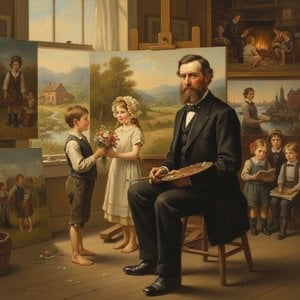
Explore the captivating genre paintings of John George Brown, celebrated for his realistic depictions of 19th-century American life. Discover his legacy & find museum-quality reproductions at WahooArt.

探索康斯塔布尔的25幅传世杰作!沉浸于英国田园风光,感受浪漫主义绘画大师的光影与色彩。高清油画复制、艺术品购买尽在WahooArt.com,为您的家居增添经典之美。立即在线探索完整系列!
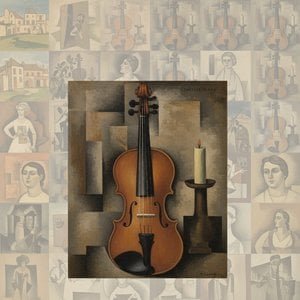
探索乔治·布拉克25幅大师杰作,领略立体主义的魅力与现代艺术的精髓。从早期作品到经典油画,WahooArt为您呈现法式优雅与家居装饰灵感。高清艺术复制品,点亮您的空间!立即在WahooArt.com发现更多。
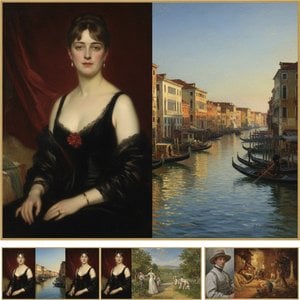
探索约翰·辛格·萨金特25幅传世杰作!深入了解这位美国印象派大师的肖像画技巧、金色时代风格与艺术故事。WahooArt.com提供高品质油画复制品,点亮您的室内设计,打造奢华艺术空间。立即在线探索完整系列!
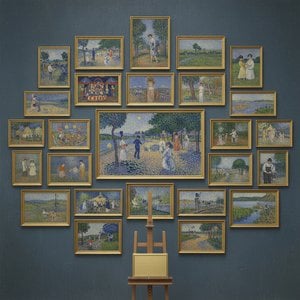
探索乔治·修拉25幅传世杰作!深入了解点彩画法、后印象派的艺术魅力,感受光与色彩的奇妙。WahooArt.com提供高品质修拉作品复制品,为您的家居空间增添经典艺术气息。立即在线探索完整系列!


 效果预览
效果预览
 分享
分享 分享
分享
 详情
详情 指南
指南

 下载
下载
 相似作品
相似作品 X射线
X射线 幻灯片播放
幻灯片播放 统计数据
统计数据 展开详情
展开详情









 玻璃选项仅适用于110厘米以下的尺寸。


