
 布面丙烯墙面艺术品Anglo-American Portraiture
 1773
1773 90.0 x 73.0 cm
 大都会艺术博物馆
博物馆级艺术微喷或帆布版画,制作高效,并提供多种饰面选择。 ( 订购此收藏品的纯手工复刻画作 切换至数字图像销售渠道)





























您可以从与原作比例一致的预设尺寸中进行选择。

请输入您所需的宽度和高度,以适配您的画框或墙面。由于印刷品只能进行裁剪,无法超出原图尺寸,因此若比例不一致,画面的一部分将会被裁切。在正式印刷之前,我们会为您发送一份数字效果图供您确认。本页面显示的图片并非最终裁剪后的效果——只有效果图才能展示真实的裁剪情况。
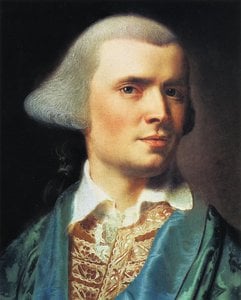
Mrs John Winthrop
复刻品尺寸说明
John Singleton Copley’s “Mrs. John Winthrop” – painted in 1773, just before his departure for England – is more than a simple likeness; it's a meticulously crafted window into the world of colonial Boston society and the burgeoning ideals of American identity. The portrait captures Hannah Winthrop (née Fayerweather), wife of the prominent Harvard professor and mathematician, John Winthrop, in an atmosphere of quiet elegance and understated wealth. Copley’s skill lies not just in his ability to render the textures of silk and lace with astonishing detail – observe the delicate folds of her blue gown, the intricate embroidery of the white collar, or the subtle sheen of the apple in her hand – but also in conveying a sense of inner composure and dignified bearing. The painting speaks volumes about the social standing and intellectual pursuits of its subject, reflecting a period defined by both prosperity and profound political uncertainty.
Copley’s style in “Mrs. John Winthrop” is firmly rooted in the Neoclassical tradition, yet infused with a distinctly American sensibility. He employs a technique known as ‘finished realism,’ prioritizing meticulous detail and polished surfaces – a hallmark of his Boston studio practice. Note the sharp contrasts between light and shadow, expertly used to sculpt the forms of Hannah’s face and hands, drawing the viewer's eye to her expressive gaze. The composition is carefully balanced, with the parrot perched on her hand acting as a focal point, subtly hinting at the exotic influences permeating colonial life. Copley masterfully utilizes color – the rich blues and creams of the gown juxtaposed against the warm tones of the background – to create a visually harmonious and intellectually stimulating image. The use of a red background is particularly noteworthy; it provides a dramatic backdrop that emphasizes Hannah’s presence and adds a touch of theatricality to the scene.
Beyond its aesthetic qualities, “Mrs. John Winthrop” is rich in symbolic meaning. The apple, held delicately in Hannah’s hand, alludes to both the biblical story of Adam and Eve and the family's renowned cultivation of rare fruits – a testament to their wealth and status within Boston society. The parrot, a common pet during this era, represents intelligence, beauty, and exoticism—reflecting the cosmopolitan influences present in colonial Boston. John Winthrop himself was a man of considerable intellectual standing, deeply involved in mathematics, natural history, and education. His position at Harvard College underscored his importance within the community, and Copley’s portrait serves as a visual affirmation of this influence. The inclusion of the two chairs subtly suggests a scene of domestic tranquility and intellectual discourse – a glimpse into the refined life of a prominent Boston family.
Despite its formal presentation, “Mrs. John Winthrop” possesses a remarkable emotional resonance. Hannah’s expression is not one of overt joy or sorrow, but rather a quiet serenity and dignified composure. Her eyes hold a hint of intelligence and perhaps even melancholy – reflecting the complexities of life within a rapidly changing society. Copley captures this subtle nuance with exceptional skill, creating an image that invites contemplation and offers a poignant reminder of the individuals who shaped the early history of America. The painting’s enduring appeal lies in its ability to transcend mere representation, offering a profound insight into the character and spirit of a remarkable woman and the world she inhabited.
“Mrs John Winthrop”营造出一种典雅的氛围。
约翰·辛格尔顿·科普利 的《Mrs John Winthrop》 被归类为 墙面艺术品。该类别描述了原作的艺术形式。
约翰·辛格尔顿·科普利 的《Mrs John Winthrop》 的推荐搭配:在 起居空间 中悬挂尺寸为 中型 的版画。

1738 - 1815 , 英国

Explore the refined world of Neoclassical portraiture. Discover the mastery of line, light, and order through an expert exploration of academic art history, from Jacques-Louis David to Jean-Antoine Houdon. Immerse yourself in the timeless elegance of classical realism.


 实景预览
实景预览
 发送
发送 分享
分享
 详情
详情 指南
指南

 下载图片
下载图片
 相似作品
相似作品 X射线
X射线 幻灯片播放
幻灯片播放 统计数据
统计数据 阅读全文
阅读全文









 玻璃选项仅适用于110厘米以下的尺寸。


