
 Oil On CanvasWallArtNeo-Classical Style
 176519th Century
 101.0 x 126.0 cm
博物馆级艺术微喷或帆布版画,制作高效,并提供多种饰面选择。 ( 购买手绘画作 切换至数字图像销售渠道)





























从与原作比例一致的预设尺寸中进行选择。

您可以输入自定义尺寸,以适配特定的画框或空间。如果您选择的尺寸与原图比例不符,我们将对作品进行裁剪,或通过镜像填充/纯色填充边缘的方式来扩展图像。在开始制作之前,我们会向您发送一份数字效果图供您确认。
请注意,屏幕上的预览并不能反映实际的裁剪或扩展效果。只有效果图才能准确展示最终的构图。
虽然我们提供定制尺寸,但为了保持原图比例,我们建议您从预设列表中选择尺寸。

Mrs.George Watson (Elizabeth Oliver)
复制品尺寸
John Singleton Copley’s “Mrs. George Watson (Elizabeth Oliver),” completed in 1765, stands as a cornerstone of American Neoclassical portraiture – a testament to the burgeoning artistic identity taking shape across the Atlantic. This exquisite painting, measuring 101 x 126 cm and executed in oil on canvas, transcends mere representation; it’s an immersive experience of elegance, poised serenity, and the subtle complexities of early 18th-century society. Copley, a Boston native born in 1738, was a true innovator, bridging the gap between European artistic traditions and the developing sensibilities of his American contemporaries. His meticulous attention to detail – evident in the delicate folds of Elizabeth Oliver’s pink silk gown adorned with white lace, the realistic rendering of her flowers, and the carefully considered composition – speaks volumes about his dedication to capturing not just a likeness, but the very soul of his subject.
Copley’s work is firmly rooted in the principles of Neo-Classicism, a style that swept through Europe and America during this period. Inspired by the art and architecture of ancient Greece and Rome, Neo-Classicism championed order, balance, and moral virtue. Notice how Copley employs clean lines, symmetrical proportions, and a restrained palette to evoke a sense of timeless beauty and intellectual seriousness. The composition itself – Elizabeth Oliver standing beside a wall, a symbol of domesticity and societal status – aligns perfectly with the movement’s emphasis on idealized forms and rational thought. This wasn't simply about depicting a fashionable woman; it was about presenting an image of refined virtue, reflecting the values prized within the upper echelons of colonial society.
Copley's technical skill is immediately apparent in the painting’s remarkable detail. He employed a technique known as “impasto,” applying thick layers of paint to create texture and depth, particularly noticeable in the fabric of Elizabeth Oliver’s dress. The subtle gradations of light and shadow – achieved through careful observation and masterful brushwork – lend a luminous quality to the portrait, enhancing the subject's beauty and creating an illusion of three-dimensionality. The artist’s ability to capture the sheen of silk, the delicate petals of the flowers, and the soft texture of Elizabeth Oliver’s skin demonstrates his profound understanding of materials and their effects under light.
Beyond its aesthetic qualities, “Mrs. George Watson” offers a fascinating glimpse into the social and cultural landscape of 1765 Boston. Elizabeth Oliver’s attire – the pink silk gown, the white lace, the flowers – were all indicators of wealth and status within colonial society. The setting itself, a simple wall, suggests a domestic scene, emphasizing her role as a wife and homemaker. Copley's portrait was commissioned by George Watson, reflecting the importance of social connections and familial alliances in this era. The painting’s eventual acquisition by the Smithsonian American Art Museum underscores its significance not just as an artistic masterpiece, but also as a valuable historical document.
Experience the timeless beauty and artistry of “Mrs. George Watson (Elizabeth Oliver)” with a meticulously crafted hand-painted reproduction from WahooArt.com. Our reproductions are created using traditional techniques, ensuring exceptional detail and color accuracy, faithfully capturing Copley’s original vision. Perfect for adorning your home or office, this artwork is more than just decoration; it's an investment in art history.

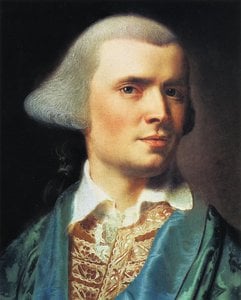
1738 - 1815 , 英国

Discover the profound elegance of Neoclassicism. Explore how the pursuit of order, symmetry, and Greco-Roman ideals created a timeless aesthetic for collectors seeking grandeur and intellectual depth in fine art and architecture.

Explore the raw energy of Jean-Michel Basquiat and Neo-Expressionism. Discover how urban rebellion redefined modern art through a lens of luxury, identity, and profound emotional intensity for the discerning collector.

Discover the profound beauty of Academic Classicism. Explore the principles of order, anatomical precision, and the enduring legacy of Neoclassical masters through this expert guide to timeless elegance and technical perfection in fine art.


 效果预览
效果预览
 分享
分享 分享
分享
 详情
详情

 下载
下载
 相似作品
相似作品 X射线
X射线 幻灯片播放
幻灯片播放 统计数据
统计数据 展开详情
展开详情









 玻璃选项仅适用于110厘米以下的尺寸。


