

获取远超网页预览效果的印刷级文件。我们销售的每一张数字图像均源自库存数据库中的高分辨率母版——宽度通常在 5,000 至 15,000 像素之间——因此您可以放心地进行大幅打印、局部裁剪或还原细腻的细节。
每一件作品在离开我们的工作室前都经过了精心的处理。数字影像专家会对照原作核对色彩,并在必要时进行校正,随后利用专业修图工具提升清晰度与细节表现——且始终忠实于艺术家的笔触与风格。最终呈现的图像宛如原作本身,而非仅仅是一张加了滤镜的扫描件。
您可以在最终定稿前进行审核:我们的专家将在 72 小时内通过电子邮件向您发送图像以供审阅。如果不满意?您可以要求改进或修正;若质量未达预期,亦可申请退款。
这也是出版商、设计工作室、画廊及印刷厂所信赖的品质。
选择 WahooArt.com,您获得的不仅仅是一张图像——您收到的是经过专业级增强、精雕细琢的数字艺术作品,并享有满意保证。以下是您的订单中自动包含的所有内容:
您的高分辨率数字图像文件将在下单后 72 小时内通过电子邮件发送给您 —— 即可立即使用。
您的艺术品经过专业优化,结合先进的 AI 技术与人工修饰,确保呈现极致的细节、清晰度与色彩准确度。
不小心删除了文件或找不到了?没关系——我们将随时为您免费重发。
即刻拥有您的艺术作品,无需支付任何关税、税费或运费——数字下载始终免税。
我们通过专业工具与色彩管理技术,确保您的数字图像尽可能真实地还原原作色彩。
如果您对所购数字图像不满意,我们将在100天内为您进行修改或提供100%的全额退款——无需任何理由。
不满意?在收到数字文件后的100天内,您可以申请全额退款——无需任何理由。
购买 3 张享 10% 折扣 - 购买 5 张享 15% 折扣 - 购买 10 张以上享 20% 折扣。非常适合创意项目、画廊及机构使用。
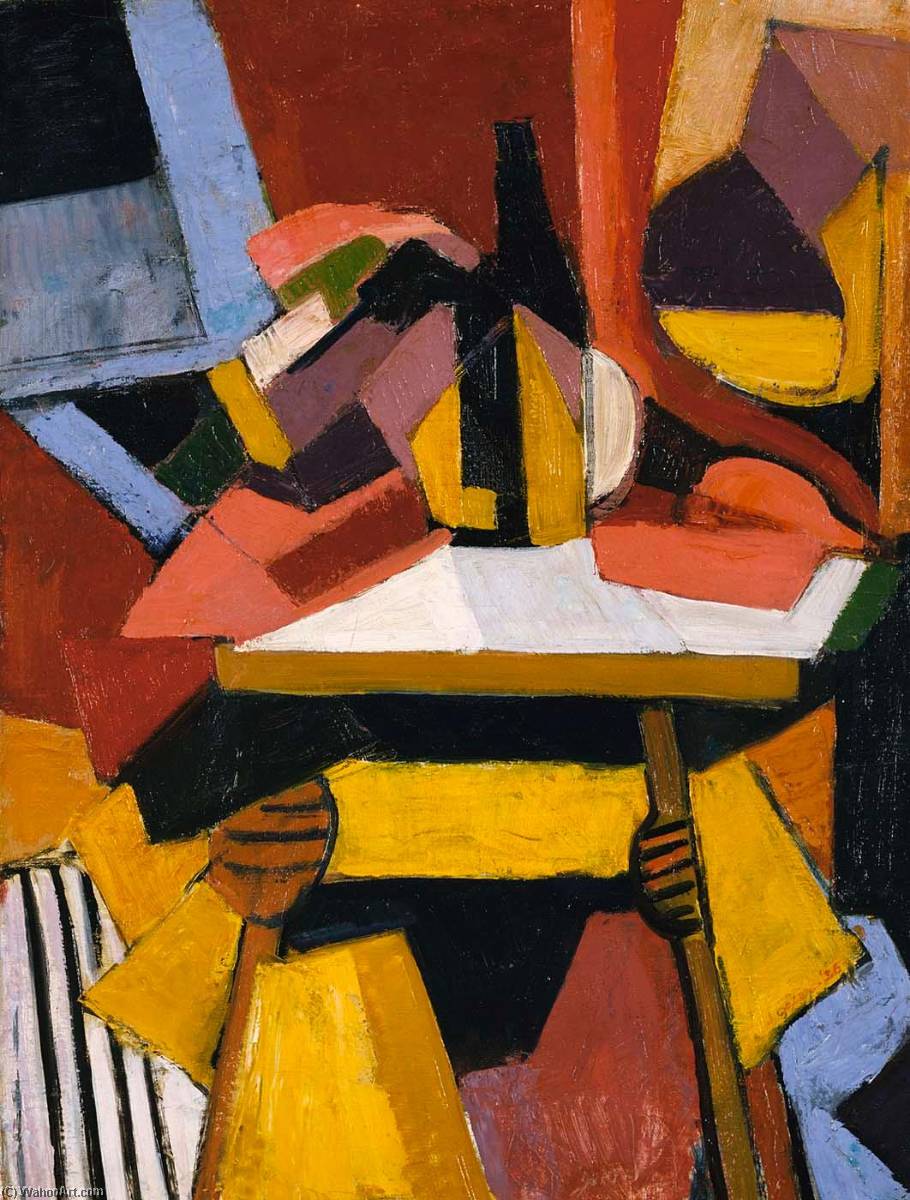
John Opper 在 27 岁时创作了《Untitled》。艺术家出生于 1908,该作品创作于 1935 年。
通过“Untitled”的效果预览页面,您可以在下单前预览艺术品。
John Opper 的《Untitled》 是一幅 Portrait 构图的作品。在选择打印尺寸之前,建议先确认其比例。

In the grand tapestry of American modernism, few threads are as vibrantly woven as those left by John Opper. A painter who mastered the delicate balance between the tangible world and the ethereal realm of pure emotion, Opper’s journey was one of profound transformation. Born in Chicago in 1908, his early years were marked by a burgeoning fascination with the visual language of form, nurtured through rigorous studies at the Cleveland School of Art and the Art Institute of Chicago. This foundational period instilled in him a technical discipline that would later serve as the scaffolding for his most radical experiments. As he moved through the 1930s, Opper began to shed the weight of representational accuracy, moving toward a style that whispered of Cubism while yearning for something far more primal and unconstrained.
The landscape of the American West acted as a silent collaborator in his artistic evolution. During a pivotal expedition to Wyoming in 1937, the vastness of the horizon and the raw, elemental power of the terrain ignited a fascination with color as a vessel for memory and feeling. It was during this era that Opper’s work began to pulse with a new kind of energy, moving away from the structured geometry of his early training toward a more fluid, atmospheric exploration. He viewed the 1930s as a "great gestation period," a time when he learned to perceive the unseen forces and tensions vibrating within the picture plane, preparing him for the monumental stylistic shift that would define his legacy.
As the mid-20th century approached, Opper emerged as a vital voice within the Abstract Expressionist movement. His transition from semi-abstract landscapes to fully realized abstraction in the 1950s was not merely a change in subject matter, but a complete reimagining of what a canvas could achieve. He became a founding member of the American Abstract Artists (AAA), a group dedicated to liberating the medium from the constraints of literal depiction. In his hands, painting became an act of constructing intensity through the juxtaposition of color. He possessed a singular ability to create drama on the picture plane by arranging more-or-less rectangular areas of pigment, creating a rhythmic tension that drew the viewer into a state of deep contemplation.
Opper’s technique was deeply aligned with the principles of Color Field painting, echoing the spiritual depth found in the works of contemporaries like Mark Rothko. However, Opper maintained a unique identity through his specific handling of texture and light. His canvases were not merely flat surfaces but luminous environments where color seemed to breathe. He avoided the coldness of hard-edge abstraction, preferring instead a style that felt organic and evolved from nature itself. To Opper, the essence of art lay in its ability to be more than just a sum of parts; it was an immersive experience where the boundaries between the viewer and the pigment dissolved into a singular, emotive moment.
The historical significance of John Opper lies in his role as a bridge between the structured modernism of the early century and the explosive freedom of the post-war era. His work remains a testament to the power of chromatic exploration, proving that color alone can communicate the complexities of the human condition. Throughout his career, which spanned until his passing in 1994, he remained steadfast in his belief that art should not be bound by rigid definitions or conceptual labels. He famously described his school of art as one that was neither purely geometric nor strictly conceptual, but simply an evolution of natural forces.
Today, the presence of Opper’s work in prestigious institutions like the Smithsonian American Art Museum ensures that his contribution to the American avant-garde is never forgotten. His paintings continue to captivate new generations of enthusiasts, offering a window into a period of unparalleled artistic bravery. To look upon an Opper canvas is to witness a master at work, orchestrating light, color, and space to create a lasting resonance that transcends the boundaries of time.

1908 - 1994 , United States
 实景预览
实景预览
 切换至版画销售渠道
 分享
分享 分享
分享
 详情
详情 指南
指南

 下载作品
下载作品
 相似作品
相似作品 X射线
X射线 幻灯片播放
幻灯片播放 问答
问答
 统计数据
统计数据
 展开全文
展开全文


