
 Oil On CanvasWallArtRomanticism
 1783
1783 154.0 x 184.0 cm
 泰特不列颠美术馆
博物馆级艺术微喷或帆布版画,制作高效,并提供多种饰面选择。 ( 购买手绘画作 切换至数字图像销售渠道)





























从与原作比例一致的预设尺寸中进行选择。

您可以输入自定义尺寸,以适配特定的画框或空间。如果您选择的尺寸与原图比例不符,我们将对作品进行裁剪,或通过镜像填充/纯色填充边缘的方式来扩展图像。在开始制作之前,我们会向您发送一份数字效果图供您确认。
请注意,屏幕上的预览并不能反映实际的裁剪或扩展效果。只有效果图才能准确展示最终的构图。
虽然我们提供定制尺寸,但为了保持原图比例,我们建议您从预设列表中选择尺寸。

Peasant Family
复制品尺寸
John Opie's "Peasant Family in an Interior," painted circa 1783-85, is more than just a depiction of a domestic scene; it’s a poignant meditation on the dignity and resilience of rural life in late 18th-century England. This remarkably intimate canvas, currently residing within the hallowed halls of the Tate Gallery in London, offers a rare glimpse into the heart of a family striving for quiet contentment amidst the hardships of their existence. The painting immediately draws the viewer in with its warm, inviting light – emanating from a single window that casts a soft glow upon the figures huddled around a simple hearth. Opie masterfully employs chiaroscuro, the dramatic contrast between light and shadow, to sculpt the forms of the family members, imbuing them with a palpable sense of humanity and vulnerability.
The composition itself is deceptively straightforward. A mother, her face etched with the quiet strength of years spent tending hearth and home, holds a young child close to her breast. Beside her stands another child, perhaps her son, gazing intently at a wooden toy – a small, unassuming object that speaks volumes about the simple joys available to these people. The father, seated before the fire, appears absorbed in his work, likely mending clothing or preparing for the day ahead. The arrangement isn’t overly formal; it feels utterly natural, as if the viewer has stumbled upon a private moment within their home. Opie's skill lies not just in capturing likenesses but in conveying an atmosphere of genuine connection and shared experience.
John Opie’s story is itself remarkable – a testament to the power of innate talent nurtured against considerable odds. Born in 1761 in Harmony Cottage, Trevellas, Cornwall, he was the youngest son of a carpenter, an upbringing that initially seemed destined for a life of manual labor. However, from a young age, Opie displayed an extraordinary aptitude for both drawing and mathematics, skills he honed independently through evening classes and self-study. His father, recognizing his son’s exceptional abilities, reluctantly agreed to allow him to pursue his artistic ambitions, defying the traditional expectations of Cornish society. This early struggle against societal constraints profoundly shaped Opie's artistic vision – a deep empathy for the marginalized and a commitment to portraying the realities of everyday life.
Opie’s rise to prominence coincided with a burgeoning interest in genre painting—scenes depicting ordinary people engaged in their daily activities. This trend, fueled by Enlightenment ideals emphasizing humanism and social observation, provided fertile ground for Opie's talent. He quickly gained recognition for his ability to capture the nuances of rural life with remarkable accuracy and emotional depth. His work was championed by influential figures like Sir Joshua Reynolds, who famously compared him to the masters of the Baroque era – a bold assertion that underscored Opie’s exceptional artistic promise.
Beyond its immediate visual appeal, “Peasant Family” is rich in symbolic meaning. The humble setting—a sparsely furnished interior dominated by the warmth of the fire—underscores the family's modest circumstances. Yet, there’s no sense of despair or resignation; rather, a quiet dignity and resilience pervades the scene. The mother’s protective embrace of her child speaks to the enduring bonds of family and the importance of nurturing future generations. The father’s focused attention on his work symbolizes his role as provider and protector, while the child's toy represents the fleeting joys of childhood—a reminder that even in hardship, there is always room for simple pleasures.
The muted color palette – dominated by earthy tones of brown, ochre, and gray – reinforces the painting’s sense of realism. Opie eschews bright colors or dramatic embellishments, opting instead to focus on capturing the subtle textures and nuances of everyday life. This restrained approach allows the viewer to connect with the subjects on a deeply emotional level, recognizing their shared humanity.
“Peasant Family” remains a powerful testament to John Opie’s artistic vision and his profound understanding of human nature. It's a painting that invites contemplation—a reminder of the dignity and resilience of rural communities, and the importance of preserving their traditions and values. Reproductions of this iconic work offer an opportunity to bring its quiet beauty and poignant message into homes and spaces, serving as a timeless symbol of family, community, and the enduring spirit of England’s past. The painting's continued appeal lies in its ability to transcend time and place, speaking to universal themes of love, loss, and the simple joys of human connection.


1761 - 1807 , United Kingdom

Discover the profound allure of oil on canvas. Explore the mastery of impasto textures, the science of pigment longevity, and expert guides to selecting museum-quality reproductions that elevate your collection with timeless elegance and tactile depth.

Transform your most cherished family moments into timeless heirlooms with WahooArt's custom hand-painted oil portraits. Enjoy up to 3 faces free in a bespoke masterpiece designed to last generations. Experience premium artistry, professional transparency, and our 100% satisfaction guarantee.
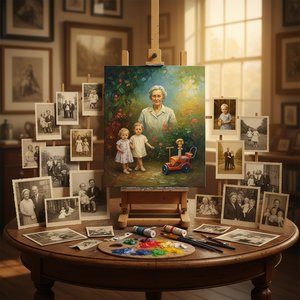
Transform scattered family photos into timeless oil masterpieces with WahooArt. Our master artists hand-paint bespoke portraits that turn precious memories into elegant, generational heirlooms. Experience premium quality, digital previews, and a 100% satisfaction guarantee.

Transform your most cherished family memories into breathtaking oil masterpieces. Discover the elegance of bespoke, hand-painted portrait commissions, meticulously crafted by academy-trained artists to create a timeless legacy for your home and generations to come.

Discover the enduring allure of oil on canvas. Explore how master techniques like impasto and glazing create the depth, texture, and emotional resonance found in the world's greatest masterpieces. An essential guide for fine art enthusiasts and discerning collectors.


 效果预览
效果预览
 分享
分享 分享
分享
 详情
详情 指南
指南

 下载
下载
 相似作品
相似作品 X射线
X射线 幻灯片播放
幻灯片播放 统计数据
统计数据 展开详情
展开详情









 玻璃选项仅适用于110厘米以下的尺寸。


