
购买高分辨率增强版数字图像,其品质远超在线预览。
每一份文件都由我们的内部专家使用先进工具与专业的后期润色技术精心打造。我们确保每一张图像都具备卓越的清晰度、精准的色彩还原度以及细腻的细节表现。
最终文件将在 72 小时内通过电子邮件交付,并针对专业、编辑及印刷用途进行了优化。其品质与顶级设计工作室、出版社和画廊所信赖的标准完全一致。
选择 WahooArt.com,您获得的不仅仅是一张图像——您收到的是经过专业级增强、精雕细琢的数字艺术作品,并享有满意保证。以下是您的订单中自动包含的所有内容:

您的高分辨率数字图像文件将在下单后 72 小时内通过电子邮件发送给您 —— 即可立即使用。

您的艺术品经过专业优化,结合先进的 AI 技术与人工修饰,确保呈现极致的细节、清晰度与色彩准确度。

不小心删除了文件或找不到了?没关系——我们将随时为您免费重发。

即刻拥有您的艺术作品,无需支付任何关税、税费或运费——数字下载始终免税。

我们通过专业工具与色彩管理技术,确保您的数字图像尽可能真实地还原原作色彩。

如果您对所购数字图像不满意,我们将在100天内为您进行修改或提供100%的全额退款——无需任何理由。

不满意?在收到数字文件后的100天内,您可以申请全额退款——无需任何理由。

购买 3 张图片可享 10% 折扣 - 购买 5 张可享 15% 折扣 - 购买 10+ 张可享 20% 折扣。非常适合创意项目、画廊和机构使用。

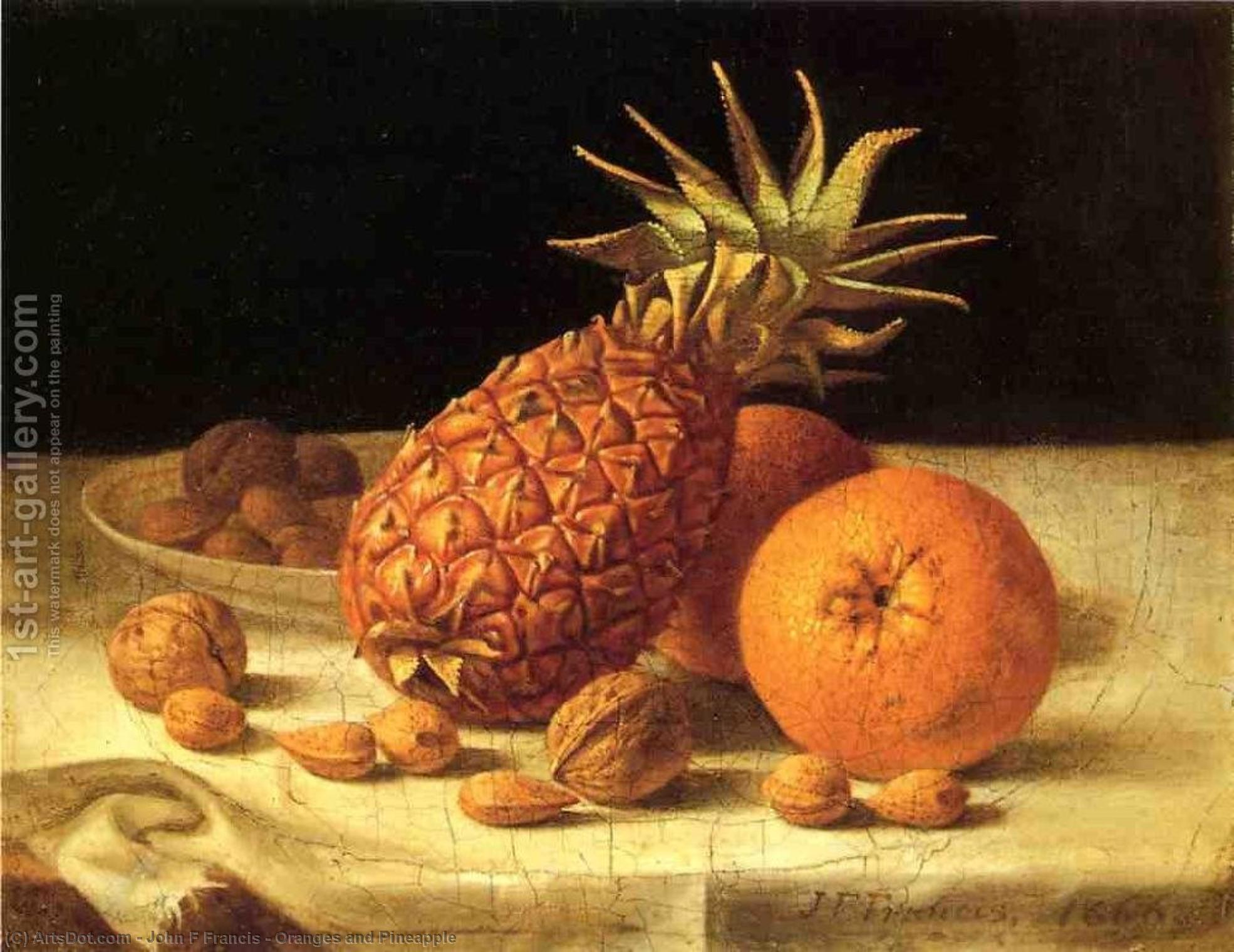
In the vibrant and often boisterous landscape of nineteenth-century American art, there existed a corner of profound stillness and delicate beauty, inhabited by the masterful hand of John F. Francis. Born in Philadelphia on August 13, 1808, to French Catholic parents, Francis emerged from a city steeped in artistic tradition to become one of the most respected practitioners of tonalism. While his contemporaries often sought the spotlight through grand historical narratives or flamboyant portraiture, Francis found his true calling in the quiet observation of the everyday. His life was a journey of refinement, moving from the structured demands of portraiture to the ethereal, light-drenched world of the still life, where he captured the very essence of texture and atmosphere.
The early years of Francis’s life remain somewhat veiled in mystery, yet his talent for drawing was unmistakable. Growing up in the shadow of Philadelphia's great artistic legacies, such as that of Charles Willson Peale, he developed an innate ability to perceive minute details. This foundational skill served him well during his early career in the 1830s and 40s, when he established himself as a sought-after portrait painter across central and eastern Pennsylvania. During this period, his work was characterized by a meticulous attention to likeness, earning him commissions from influential figures such as Governor Joseph Ritner. His growing reputation was further bolstered by the support of prestigious institutions like the Pennsylvania Academy of Fine Arts and the Philadelphia Art Union, which helped integrate his talent into the broader American artistic consciousness.
Around 1850, a profound shift occurred in Francis’s artistic trajectory, marking his transition from the human face to the silent beauty of inanimate objects. Influenced by the rising popularity of the still life genre in Philadelphia—a movement championed by artists like Raphael Peale—Francis abandoned portraiture to focus on the arrangement of fruit, flowers, and household items. This was not merely a change in subject matter, but a complete evolution of his aesthetic philosophy. He moved away from the literal representation of personality toward a more atmospheric exploration of light, form, and color.
His mature works are celebrated for their tonalistic qualities, utilizing soft brushwork and a pastel palette to create compositions that feel both tangible and dreamlike. In masterpieces such as "Still Life with Yellow Apples" (1858), one can witness his unparalleled ability to render the subtle play of light upon a smooth skin of fruit or the delicate weight of a basket. His technique allowed him to imbue simple tabletop arrangements with an evocative, almost spiritual atmosphere, where the boundaries between object and light begin to blur. This mastery of texture—the velvet of a peach, the cool sheen of a grape, or the rustic surface of a wooden table—became his artistic signature.
The historical significance of John F. Francis lies in his ability to elevate the humble still life to a level of high art through sheer technical precision and emotional depth. While he may not have possessed the theatricality of Thomas Sully, his contribution to the American tradition of tonalism is undeniable. He taught viewers to find wonder in the ephemeral: the way a single beam of light strikes a piece of fruit or the quiet dignity of a decaying petal.
Today, his works remain cherished treasures in major collections, such as the Detroit Institute of Arts, serving as enduring testaments to his skill. His legacy is defined by several key artistic achievements:
In the end, the work of John F. Francis invites us to slow down. In an era of rapid change, his paintings offer a sanctuary of quiet observation, reminding us that there is profound beauty to be found in the most silent and overlooked corners of our world.

1905 - 1990 , United States of America

 效果预览
效果预览
 切换至版画销售渠道
 分享
分享 分享
分享
 详情
详情

 下载
下载
 相似作品
相似作品 X射线
X射线 幻灯片播放
幻灯片播放 统计数据
统计数据
 展开详情
展开详情


