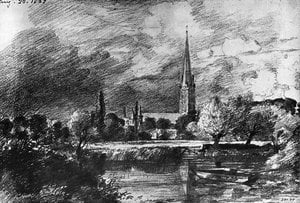
WatercolorWallArtRomantic Landscape
 183419th Century
 300.0 x 487.0 cm
 维多利亚和阿尔伯特博物馆
博物馆级艺术微喷或帆布版画,制作高效,并提供多种饰面选择。 ( 订购此收藏品的纯手工复刻画作 切换至数字图像销售渠道)





























您可以从与原作比例一致的预设尺寸中进行选择。

请输入您所需的宽度和高度,以适配您的画框或墙面。由于印刷品只能进行裁剪,无法超出原图尺寸,因此若比例不一致,画面的一部分将会被裁切。在正式印刷之前,我们会为您发送一份数字效果图供您确认。本页面显示的图片并非最终裁剪后的效果——只有效果图才能展示真实的裁剪情况。
Old Sarum
复刻品尺寸说明
In the vast, sweeping expanse of John Constable’s "Old Sarum," we are invited into a moment where time seems to hold its breath. Completed in 1834, this monumental watercolor is far more than a mere topographical record of an English landmark; it is a profound meditation on the ephemeral nature of human endeavor against the enduring majesty of the natural world. As your eyes wander across the canvas, you are immediately struck by the dramatic interplay of light and shadow, a hallmark of the Romantic movement. The scene is dominated by a massive, verdant hill, its summit crowned with the skeletal, crumbling remains of Sarum Cathedral. This juxtaposition of ancient, decaying stone against the vibrant, living pulse of the grassy slopes creates a tension that is both haunting and deeply tranquil.
The atmosphere of the piece is thick with the scent of impending rain. Constable, a master of capturing the "fleeting moment," has rendered a sky that is restless and alive. Swirling clouds in shades of slate, pearl, and charcoal drift across the upper half of the composition, suggesting a heavy, moisture-laden air that threatens to break into a summer storm. This brooding sky does not merely serve as a backdrop; it acts as a psychological force, casting soft, diffused light across the landscape and imbuing the entire vista with a sense of sublime drama. For the collector or designer, this piece offers an unparalleled emotional depth, bringing a sense of quiet contemplation and historical weight to any curated space.
To gaze upon "Old Sarum" is to witness Constable’s technical brilliance in the medium of watercolor. He achieves a remarkable sense of three-dimensionality through the painstaking layering of translucent washes. By applying thin glazes of color in successive stages, he creates a luminous effect, as if the light itself is trapped within the paper. This technique allows for a sophisticated use of atmospheric perspective; notice how the colors soften and lose their sharpest contrasts as the eye moves toward the distant horizon, perfectly mimicking the way mist and air obscure far-off objects.
The artist’s brushwork is equally expressive, oscillating between delicate precision and bold, gestural strokes. Short, rhythmic dabs of pigment delineate the rugged texture of the windswept grass and the tangled foliage, while broader, more fluid sweeps of the brush capture the turbulent movement of the clouds. This variation in texture prevents the eye from resting too long in one place, instead encouraging a continuous journey through the landscape. The muted, earthy palette—rich with ochre, deep greens, and weathered greys—anchors the work in a naturalistic reality, making the scene feel intimately connected to the very soil of the English countryside.
Historically, "Old Sarum" stands as a testament to the rise of landscape painting as a high art form. During an era when much of the academic focus remained on idealized classical subjects, Constable championed the beauty of the local and the observed. He sought to paint not just what he saw, but what he felt. The ruins atop the hill serve as powerful symbols of the passage of time—a memento mori that reminds us of the inevitable cycle of growth and decay. Yet, there is no despair in this decay; rather, there is a sense of peace found in the way nature reclaims and integrates these human remnants into its own grand design.
For those looking to adorn a home or gallery with a piece of art history, a high-quality reproduction of "Old Sarum" provides more than just decoration. It offers a window into the soul of the Romantic era. Whether placed in a sunlit study or a sophisticated contemporary living room, the painting’s ability to evoke both movement and stillness makes it a timeless centerpiece. It is an invitation to slow down, to breathe with the wind, and to find beauty in the weathered, the wild, and the wonderful.


1776 - 1837 , 英国

Journey through history with 10 iconic landscape paintings that capture the soul of nature. From Impressionist light to dramatic vistas, explore the stories behind these timeless masterpieces and find museum-quality reproductions for your decor. Discover all masterpieces on WahooArt.com

Explore the profound legacy of John Constable. Discover how his mastery of light, atmosphere, and the English landscape redefined Romanticism through timeless, museum-quality oil reproductions for discerning collectors.
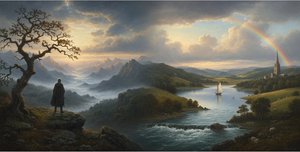
Journey through the sublime beauty of Romantic landscape paintings. Explore 10 iconic masterpieces, from Caspar David Friedrich to dramatic nature scenes, perfect for museum-quality decor. Discover the stories and techniques behind these timeless works on WahooArt.com.

Journey through the sublime beauty of Romantic landscape painting. Explore 10 iconic masterpieces by legends like Friedrich and Turner that capture nature's raw emotion. Find museum-quality art reproductions for your decor. Discover all masterpieces on WahooArt.com.


 实景预览
实景预览
 发送
发送 分享
分享
 详情
详情 指南
指南

 下载图片
下载图片
 相似作品
相似作品 X射线
X射线 幻灯片播放
幻灯片播放 统计数据
统计数据 阅读全文
阅读全文









 玻璃选项仅适用于110厘米以下的尺寸。